Handmade in small batches · Free tracked shipping over $139
Silk Lineage logoSilk Lineage
Chanhua MakingFeatured

How to Make Silk Flower Leaves — Chanhua Leaf Tutorial

Making the leaves for a Chinese chanhua jasmine hairpin — real time, no cuts, no speed-up.

This is the part most beginners find hardest: keeping the two strands of silk parallel, wrapping firmly enough, and shaping the leaf at the end. The tutorial goes slowly through every step, from cutting the wire to burning off the fuzzy edges.

You'll need: two cardstock leaf templates, a piece of wire about 18 cm long (0.4 mm is easiest for beginners), and about two meters of silk floss, folded to work with a double strand.

Everything used in this video is in our blue trailing jasmine hairpin kit.

Read the transcript

Chanhua (缠花) is a Chinese folk craft: dyed silk floss is wound, strand by strand, around a shaped copper-wire frame until a flower appears. It is three-dimensional and sculptural — closer to making a tiny silk sculpture than to sewing or embroidery.

In this video we make the leaves for a jasmine hairpin.

Materials. For each leaf you'll need two cardstock templates, cut in advance, and a piece of wire about 18 cm long. Steel or copper wire both work. If you're new to this, use 0.4 mm wire — it's easier to control. For the silk, about two meters of green silk floss, folded in half, wrapped as a double strand. If you run out mid-leaf you can join on more thread.

Starting the wrap. Leave about 3 cm of bare wire at the front. Hold the end of the thread down with your left thumb, and wind clockwise with your right hand, bringing the thread across to the left. Wind about 1 cm like this until it's secure, then lay the first paper template on top. Keep the two strands parallel — don't let them twist around each other. When you need to let go, pinch the wrapped section at the back with your left index finger. Keep your left hand close, and wrap firmly; if the thread is loose, the leaf will come apart later.

The second template. Once that section is wrapped, wind three more turns around the wire, then lay the second template on top and wrap it the same way.

Folding and shaping. When both sides are wrapped, fold the two halves together and wind a few more turns around the wire. Tuck the thread end between the wires, pull it tight, and snip it off. Pinch the top into a point, wrap the leaf around a pen to shape it, slide it off, and stretch it out gently. One leaf done — you'll need five for this hairpin.

Tidying the edges. Run a lighter quickly along the edges to tidy up the fuzzy fibers. Use an ordinary lighter, not a windproof or torch lighter — those burn too hot and will scorch the leaf.
More videos

How to Make a Chinese Silk Flower Hairpin | Chanhua Tutorial
Chanhua Making

How to Make a Chinese Silk Flower Hairpin | Chanhua Tutorial

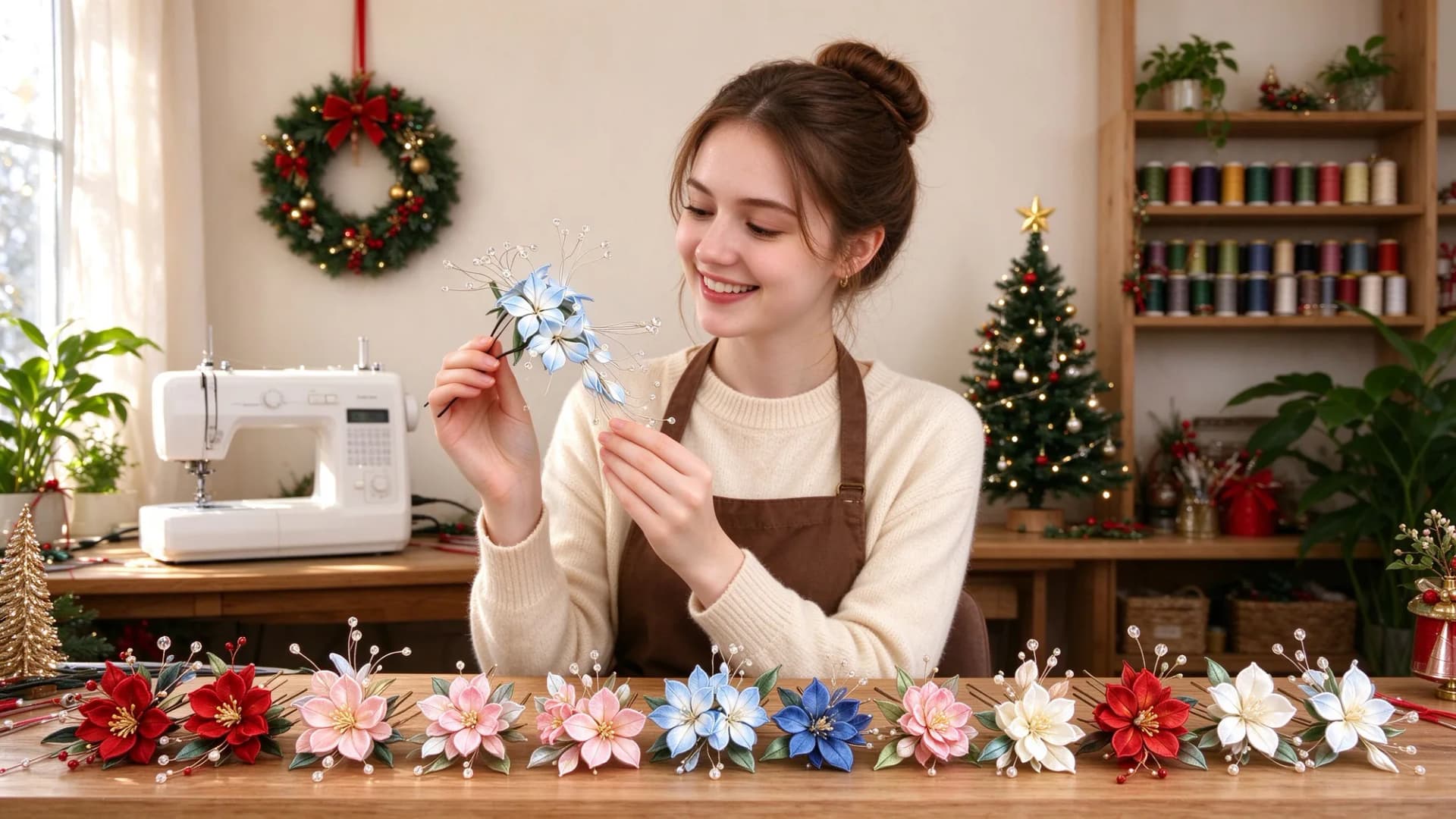
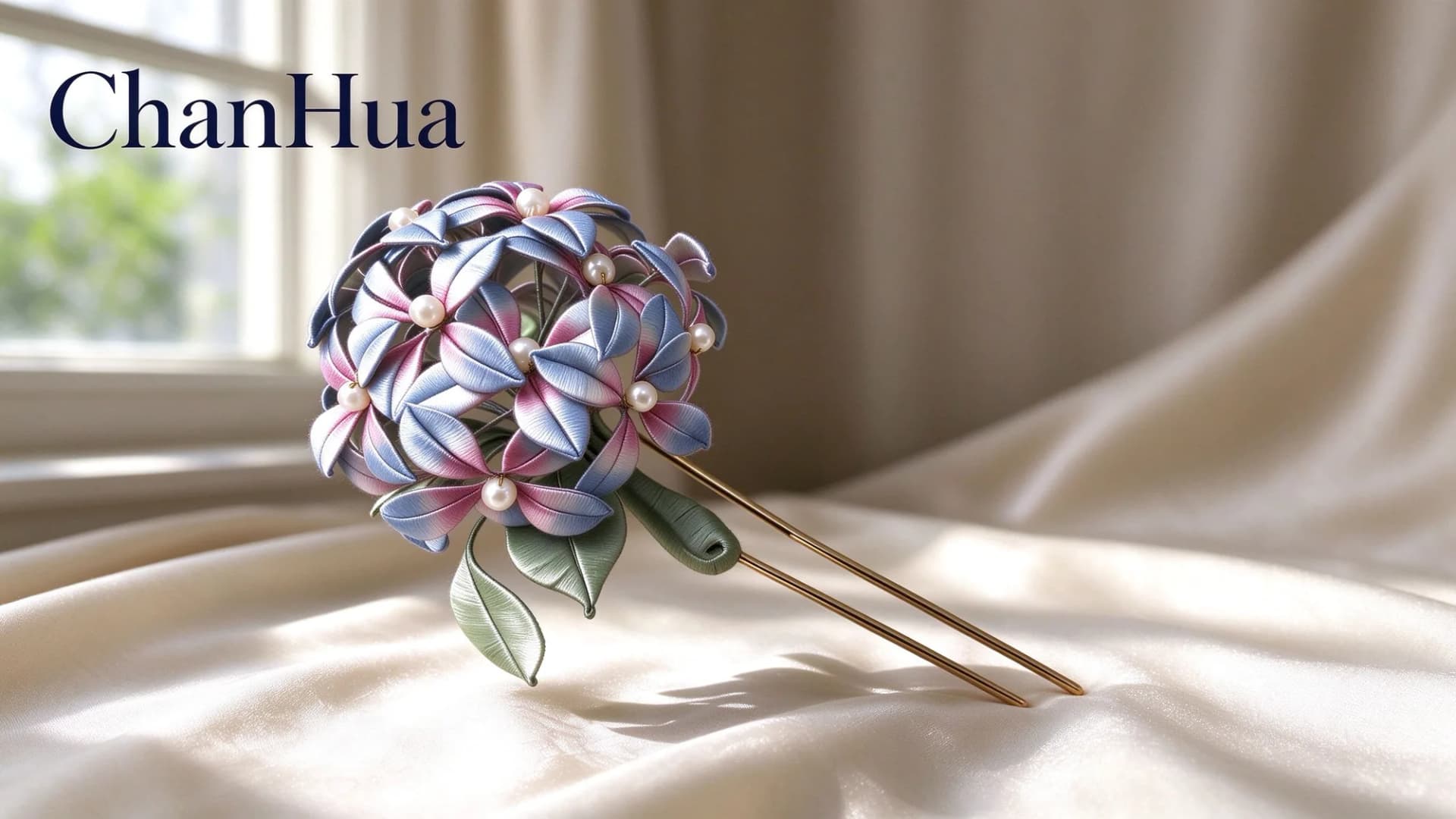
A silk flower hairpin, made from the first cut to the finished pin — dyed silk floss wound strand by strand over a shaped copper-wire frame. The craft is chanhua (缠花), and nothing about it is printed or molded: every petal is wrapped by hand. ## What happens in this video The whole method, in order: cutting the paper templates and the wire, wrapping the silk evenly around both, sealing the thread ends with a flame, shaping each petal, and fixing the finished piece onto the hairpin base. ## What you need of your own Three things: scissors, a lighter, and a cylindrical pen. The lighter seals the thread ends so the silk does not fray, and the pen barrel is what you shape the petals around — the small brush that comes in a kit is too thin for it. ## How long it takes A first piece runs from four to seven hours for a compact design such as the hydrangea hairpin, up to six to nine hours for a long stem like the trailing jasmine. Most of that time is the winding. You can stop at any point — wound silk holds its shape. ## Why the technique is different Chanhua is three-dimensional. It is closer to making a tiny silk sculpture than to sewing or embroidery: the silk is not stitched into fabric, it is wrapped around a wire skeleton until a flower appears. The same method builds every design in the shop — the wire frames decide which flower you get. ## Read more - What chanhua actually is: /blog/what-is-chinese-silk-flower-art-chanhua - How the silk is wrapped around the wire: /blog/how-to-wrap-silk-thread-around-a-wire-frame Wound by hand in Guang'an, Sichuan, by Hong.

Making a Blue Phoenix Brooch in Silk — 25 Quiet Minutes (No Talking)
Chanhua Making

Making a Blue Phoenix Brooch in Silk — 25 Quiet Minutes (No Talking)

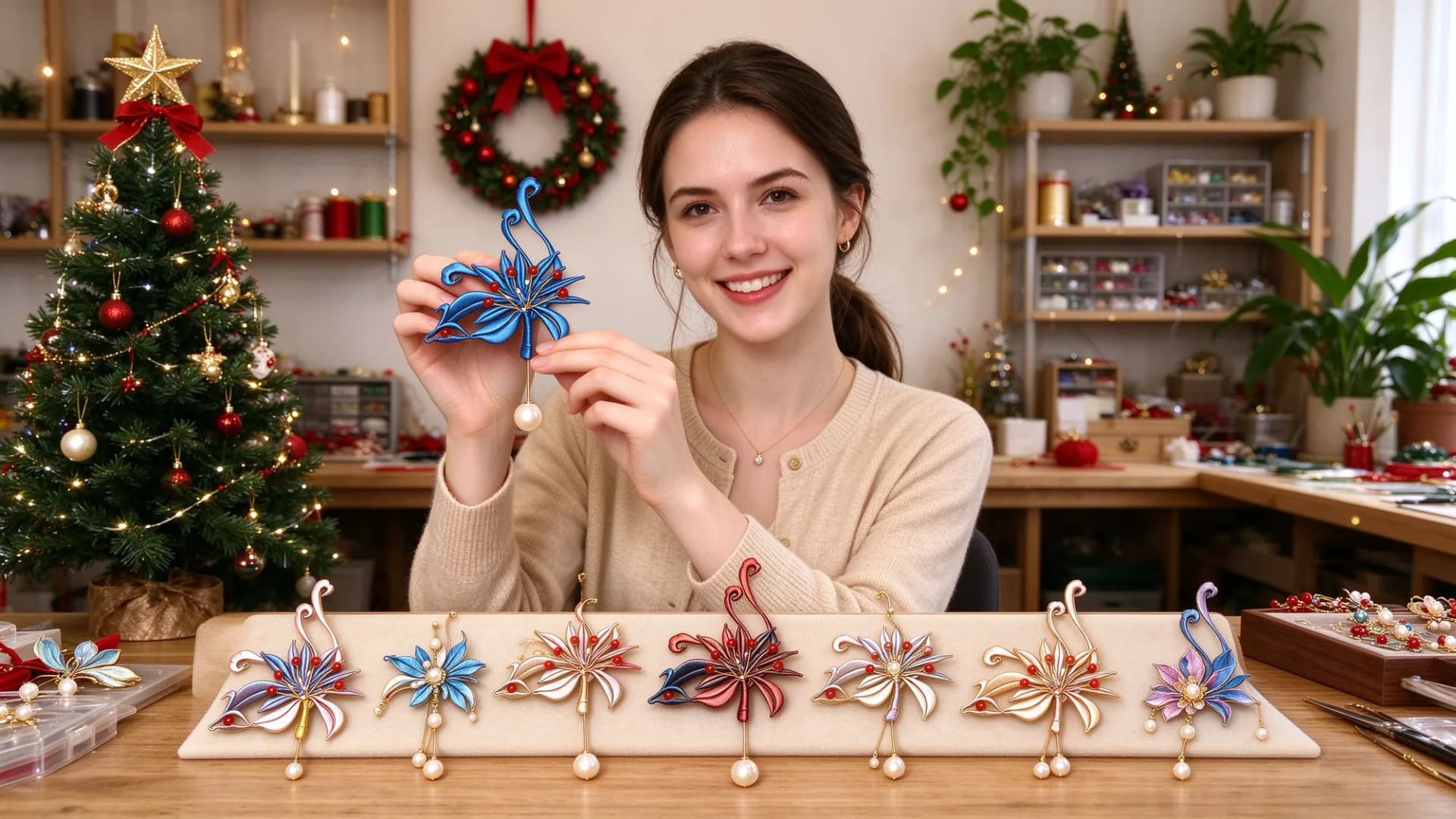
A blue phoenix brooch, wound from dyed silk floss over a copper-wire frame — twenty-five quiet minutes of chanhua, with no voice-over anywhere in it. What you hear is rain, quiet music, and the work itself: silk against wire, scissors, a lighter. There is nothing to follow and nothing to remember. Watch it while you study, while you work, or while you fall asleep. The brooch is built petal by petal and every petal is wrapped separately. Nothing here is printed and nothing is molded — the whole piece is wound by hand, and it takes six to nine hours. Wound in Guang'an, Sichuan, by Hong.

How to Make a Blue Trailing Jasmine Hairpin — Full Chanhua Tutorial
Chanhua Making

How to Make a Blue Trailing Jasmine Hairpin — Full Chanhua Tutorial

Making a blue trailing jasmine hairpin from start to finish — dyed silk floss wound over copper wire, the Chinese craft of chanhua. Fifteen centimeters of stem, and every bloom is wound separately. That is why one piece takes six to nine hours: there is no shortcut, and no machine does this. **You'll need:** scissors, a lighter and a cylindrical pen. The lighter seals the thread ends so the silk does not fray, and the pen barrel is what you shape the petals around. Everything used in this video is in our [blue trailing jasmine hairpin kit](/products/chanhua-trailing-jasmine-hairpin) — the same kit also covers the leaves in the [leaf tutorial](/videos/chanhua-leaf-tutorial). [Finished pieces](/products/chanhua-trailing-jasmine-hairpin) are available for anyone who would rather not make one.

Why collectors trust us