A Short History of Silk in China
Where did silk come from?
China. Silk was first produced there roughly five thousand years ago, from the cocoons of the domesticated mulberry silkworm, and for centuries the process was a state secret worth protecting with law. Everything else about silk — the trade routes, the prices, the prestige — follows from that one fact.
The most famous story about its origin is a legend: Leizu, said to be the wife of the Yellow Emperor, is credited with discovering silk when a cocoon dropped into her tea and began to unravel. It is a good story and it explains why the craft mattered. It is not a record of what happened.
How does a cocoon become thread?
Five steps, and the first one is the reason silk is different from every other fiber.
| Step | What happens |
|---|---|
| Sericulture | Silkworms are raised on mulberry leaves and spin cocoons to pupate |
| Reeling | The cocoon is softened in warm water and the filament is unwound in one continuous strand |
| Throwing | Several filaments are twisted together into a stronger thread |
| Degumming | The natural gum is removed, leaving silk soft and able to take dye |
| Dyeing | The silk is colored, either as thread or as cloth |
That second step is the unusual one. A single cocoon can give a filament hundreds of meters long, which means silk can be reeled rather than spun — no short fibers twisted end to end, which is why the surface reflects light in a continuous line.
Why was silk a state secret?
Because the technology was the product. China controlled the silkworm and the reeling technique for centuries, and exporting the eggs or the method was restricted. Silk traveled west along the routes that were later called the Silk Road, but the knowledge did not travel with it at the same speed.
Silk also functioned as money. In several periods it was used to pay officials, to buy goods, and as a diplomatic gift, because it was light, stable, and universally wanted. A bolt of silk was easier to move than coin and harder to counterfeit.
What changed over the centuries?
Weaving became the prestige craft. Han and Tang workshops produced brocades with woven patterns, and by the Song dynasty silk textiles were a major export. The fiber stayed the same; what changed was the loom, the pattern, and who could afford it.
In the twentieth century, production industrialized, and other countries built their own silk industries. China remains the largest producer of raw silk, and the fiber is still reeled from cocoons rather than manufactured.
How does this connect to a hand-wound flower?
Two of the three crafts on this site depend on silk, prepared in opposite ways.
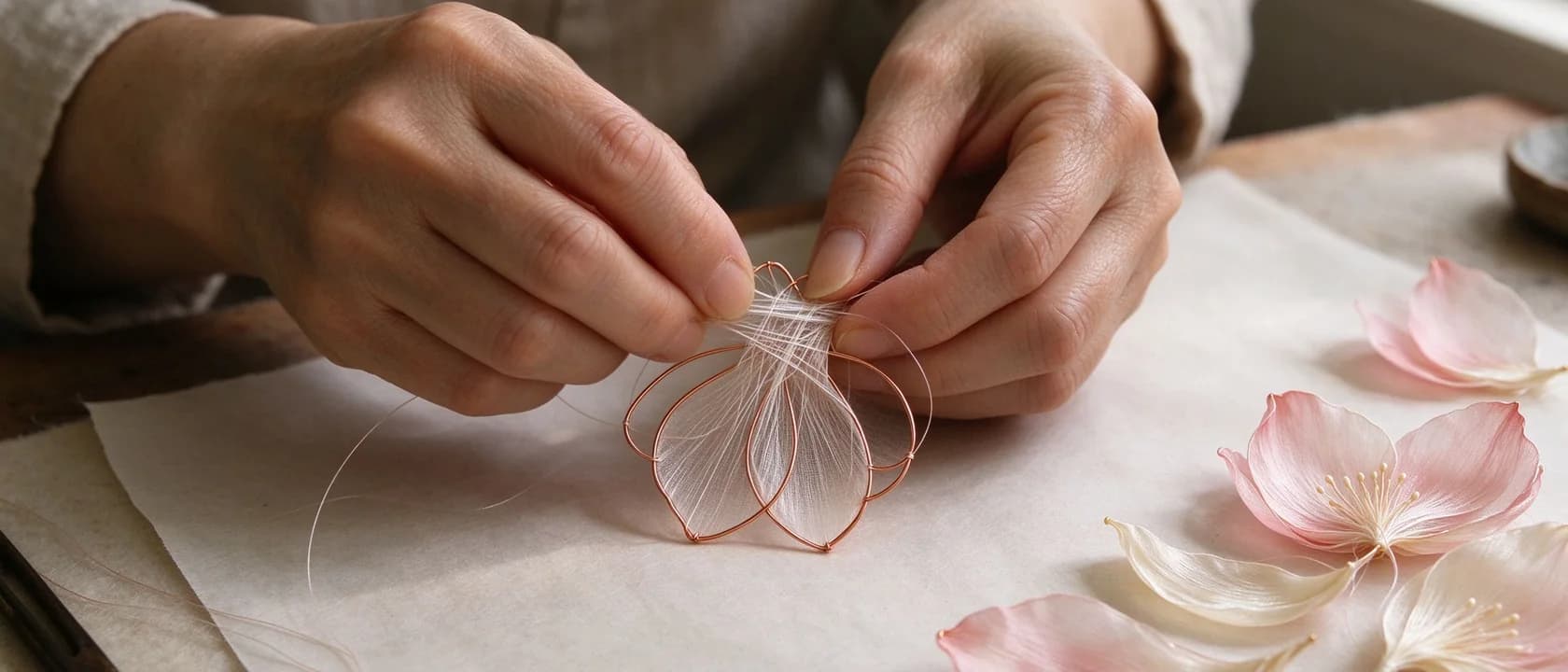
Chanhua uses dyed silk floss, wound flat around shaped copper wire. The floss is fine and takes color deeply, which is why a chanhua petal looks translucent and shows thread lines when the light rakes across it.
Ronghua uses degummed silk twisted into a dense cord. The same fiber, prepared to be soft and matte rather than glossy, which is why a ronghua bird or flower reads as velvet rather than satin.
The chanhua craft page and the ronghua craft page cover the two techniques. The history above is the reason both of them exist in the form they do: a fiber that can be reeled in one strand, dyed, and worked by hand without breaking.
If you are new to either craft, start with what Chinese silk flower art actually is before the technical pages — it covers the vocabulary the rest of this site uses.
What should you look for in the silk itself?
Four things, and they apply whether you are buying a finished flower or a kit.
- Color evenness. Dyed floss should be consistent across the whole skein. Patches mean the dye did not penetrate.
- Luster. Silk reflects in a soft line. A flat, chalky surface usually means the gum was not fully removed or the fiber is not mulberry.
- Strength. A single strand should take a firm pull without snapping. If it breaks under light tension, the fiber is short-staple or old.
- Shedding. Rub the floss between your fingers. A good silk sheds very little; a poor one leaves fibers on your skin.
None of this requires a laboratory. It requires handling the material, which is what the people who make these flowers do before they wind the first petal.
Why does any of this matter to a buyer?
Because the price of a handmade flower is not decoration. It is the fiber, the hours, and the fact that the material behaves in a particular way when it is worked.
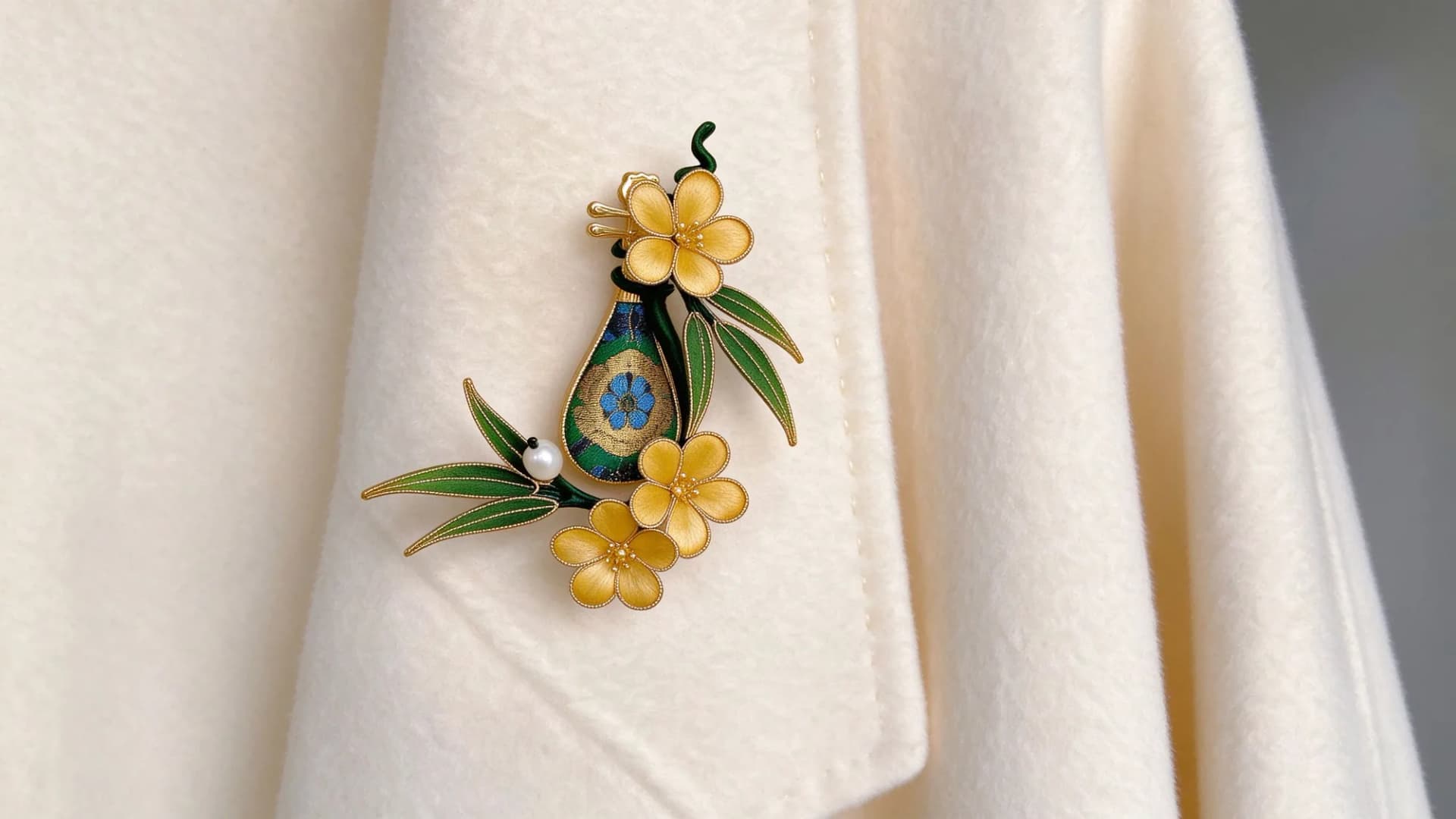
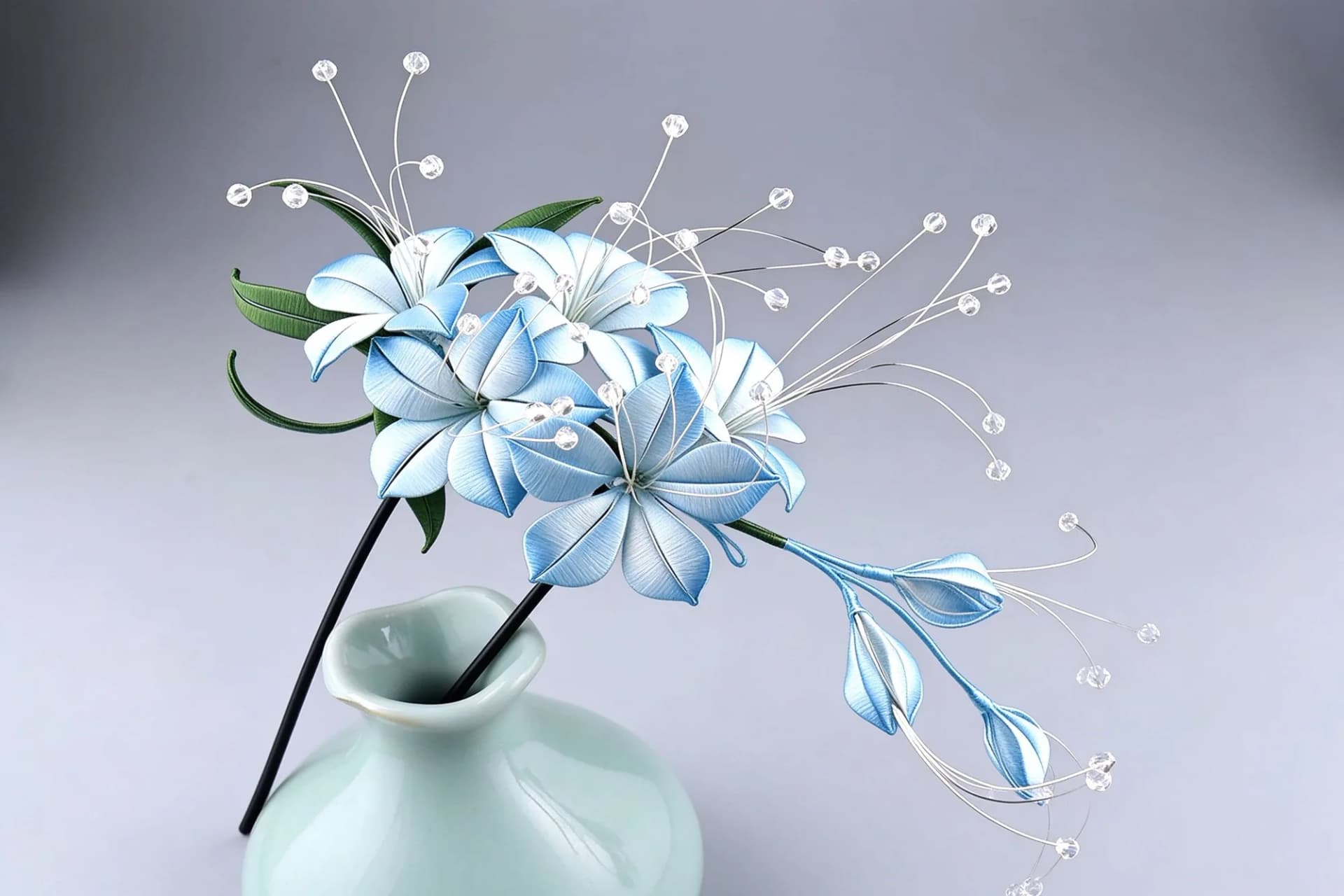
A phoenix brooch costs what it costs because the silk has to be reeled, dyed, wound petal by petal around shaped wire, and assembled so the tail holds a line. A hydrangea hairpin is the same story at a smaller scale, and a lily of the valley brooch shows how little silk a convincing flower actually needs.
Understanding where the fiber comes from does not make the flower cheaper. It makes the price legible, which is the more useful thing.
Frequently asked questions
Where was silk invented?
In China. The earliest evidence of silk production there goes back roughly five thousand years, and for a long period the process was kept inside the country. Other regions produced silk later, but the domesticated silkworm and the reeling technique began in China.
Is the story of Leizu true?
It is a legend, not a record. Leizu, said to be the wife of the Yellow Emperor, is credited in tradition with discovering silk when a cocoon fell into her tea. The story explains the craft's importance; it is not evidence of how it began.
What is the difference between mulberry silk and other silk?
Mulberry silk comes from silkworms raised on mulberry leaves, and it produces the longest, most uniform filament. Tussah silk comes from worms fed on other leaves and is coarser, with a natural beige color. Most fine Chinese craft work uses mulberry silk.
Why was silk so valuable?
Because it was light, strong, and difficult to make. A single cocoon yields one long filament that has to be reeled without breaking, and the process was controlled. Silk was used as payment and as diplomatic gifts long before it was an ordinary luxury good.
Is silk still made by hand?
The reeling and weaving are largely industrial now, but the craft uses of silk are still hand work. Chanhua winds dyed floss around shaped wire; ronghua twists degummed silk into cord. Both depend on the same fiber, prepared differently.