Chinese Wedding Traditions: What Guests Should Know
What happens at a Chinese wedding?
A tea ceremony with the families, a morning of games and door negotiations, a banquet with a seating order, and red everywhere. Guests are usually invited to the banquet and sometimes to the tea ceremony, and the two have completely different moods.
The most useful thing a guest can know is which part they are attending. Turning up to a tea ceremony dressed for a banquet is the equivalent of arriving at a rehearsal dinner in black tie.
What are the main traditions?
Five, in the order they usually happen.
| Ritual | What happens | The guest's role |
|---|---|---|
| Betrothal gifts | The groom's family sends gifts to the bride's family, often weeks before | None; it happens before the wedding |
| Door games | The groom's party must pass games to reach the bride | Watch, laugh, do not intervene |
| Tea ceremony | The couple serves tea to elders, who give envelopes or jewelry | Attend if invited; sit quietly and photograph only if allowed |
| Banquet | A long meal with speeches and toasts, often 10 to 20 courses | Your main event; arrive on time and sit where you are placed |
| Send-off | The couple leaves, sometimes with firecrackers or confetti | Stay until they have left |
Regional differences are large. Cantonese weddings, northern weddings, and weddings in Sichuan and Chongqing differ in food, timing, and how much of the ritual happens in public. If you are unsure, ask the couple or a member of the wedding party rather than relying on a guide — including this one.
What should guests wear?
Something festive, not white, not black, and not competing with the bride.
Red is welcome. So are jewel tones, florals, and anything that reads as celebration. The line is a heavily embroidered red gown, which is the bride's territory in most weddings.
If the invitation mentions a qipao or hanfu dress code, that is an invitation rather than a requirement, and a simple version is better than an elaborate one. The qipao guide covers what makes the silhouette work; the hanfu guide covers the layered alternative.
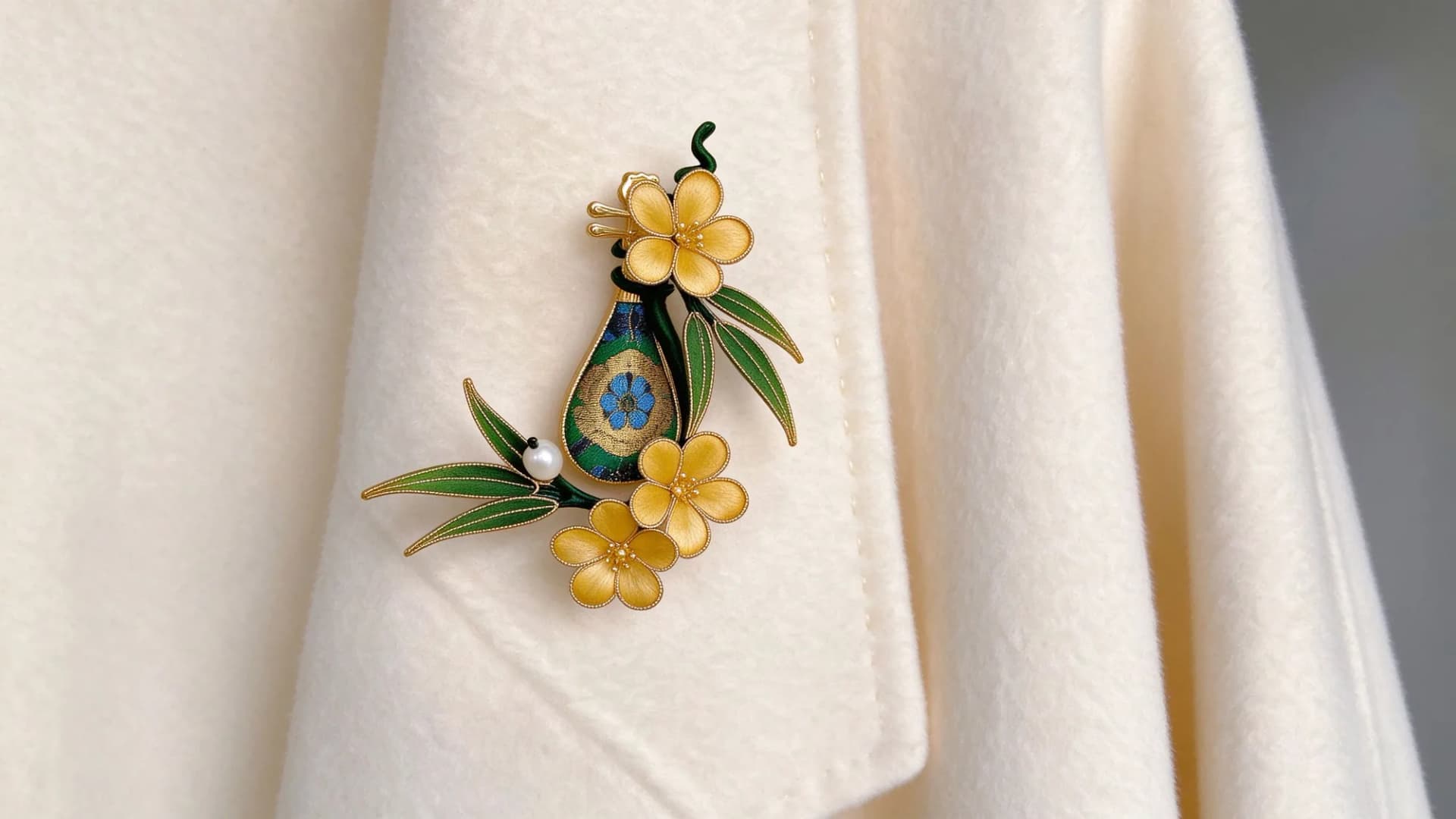
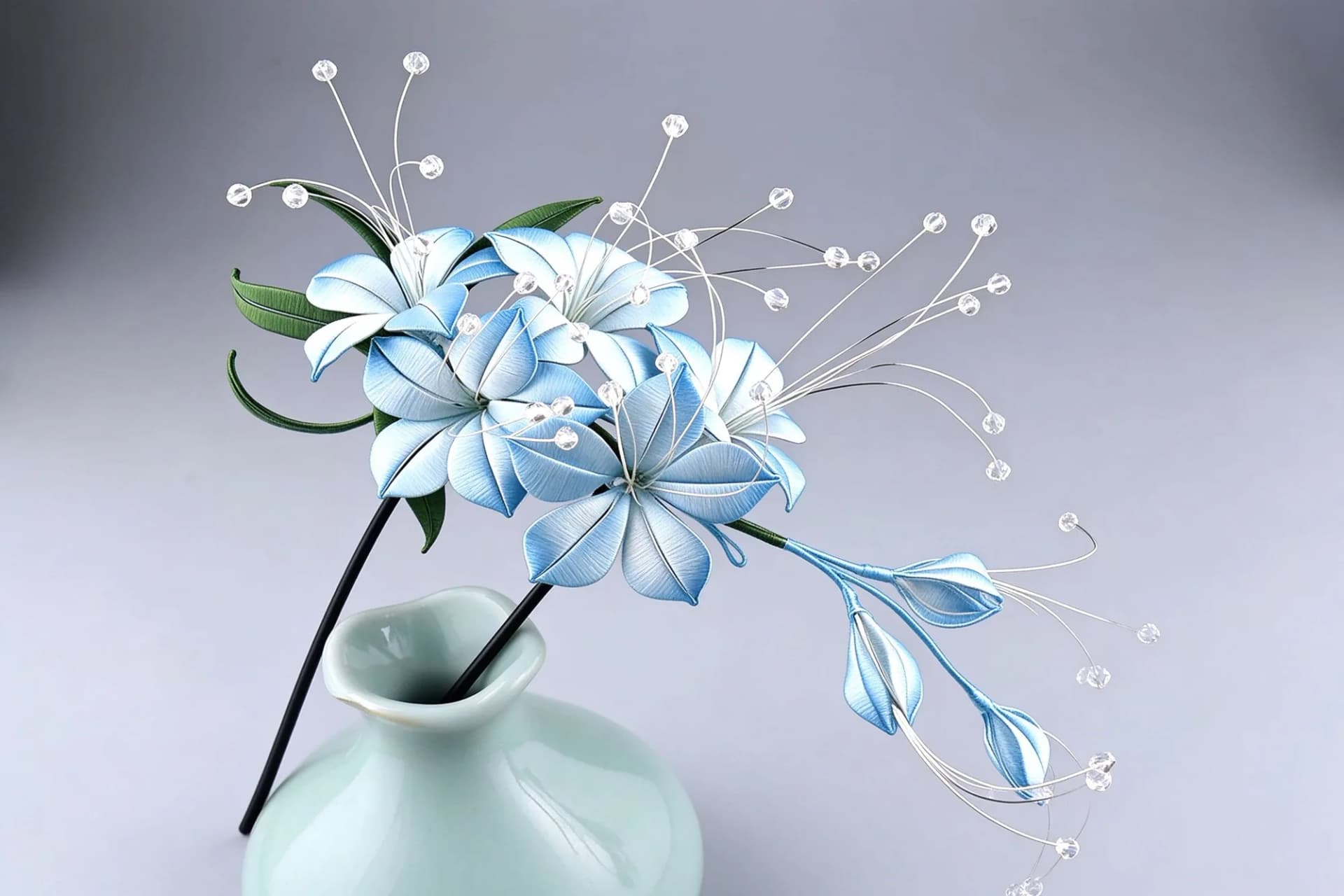
Accessories do more work than people expect. A single silk flower at the shoulder or in the hair reads as respect for the occasion without turning the outfit into costume — the phoenix brooch is the piece most often chosen for a Chinese wedding because the motif and the color both belong there. If your hair is up, the hydrangea hairpin does the same job at the head.
What should guests give?
In most of China, cash in a red envelope. The number should be even, and four should be avoided in any position because it sounds like the word for death. Eight is welcome. The amount depends on the city and your relationship with the couple, and it varies far more than most foreign guests expect.
If you want to give an object as well, keep it small and personal: a piece of craft, a good tea, something from your own country. Do not replace the envelope with the object unless you know the couple well enough to know they would prefer it.
Write your name on the envelope. At a large banquet, envelopes are logged by a family member at the reception desk, and an unmarked one creates work for someone on a very busy day.
What are the three things guests get wrong?
Wearing white or black head to toe. It reads as a funeral, and it is the mistake foreign guests make most often.
Photographing the tea ceremony without asking. It is the most private part of the day. Some families welcome photographs; others do not want the elders on social media. Ask once, and accept the answer.
Leaving before the couple does. The send-off is the ending of the wedding, and leaving early is noticed. If you must go, tell the couple or their parents quietly first.
How do toasts work?
The couple goes from table to table, and guests stand to toast them. The word is ganbei, which means empty the glass, but in practice you drink what you can and nobody checks. If you do not drink alcohol, holding the glass and taking a sip is enough.
Speeches happen early, usually before the food arrives in earnest, and they are shorter than Western speeches. A guest is not expected to speak unless invited.
What about the seating?
There is a seating plan, and it is not random. Tables near the front are for family, and the couple's parents place their own guests. Sit where your name card puts you and do not move to be with friends; the arrangement is a small map of the family.
If you are seated at a table where you know nobody, that is normal and usually deliberate. Chinese banquets are built for conversation between strangers, and the round table exists so that everyone can talk to everyone.
How does a handmade accessory fit into this?
It fits where jewelry fits: at the collar, at the shoulder, in the hair. Chinese weddings are one of the few occasions where a red silk flower is unambiguously correct, and where a piece with a meaning — a phoenix, a peony, a pair of flowers — reads as a wish rather than decoration.
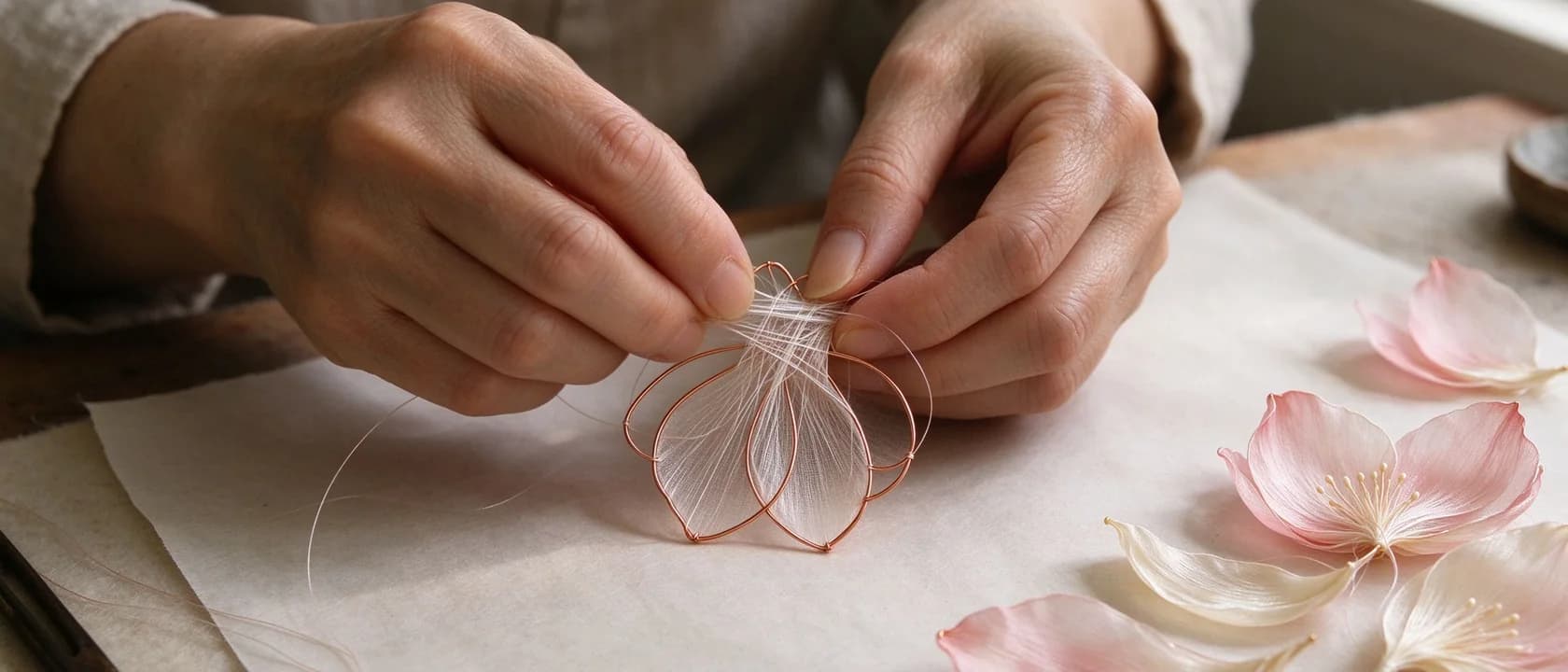
The chanhua craft page explains the symbolism and the technique. If you are choosing a piece for a mother of the bride or groom, wedding boutonnieres and corsages covers the sizes and the pinning.
For a winter wedding, the practical differences — cold, coats, and photographs outdoors — are in silk flowers for a winter wedding.
What is the one rule?
Dress for the celebration, give what the couple can use, and stay for the ending. Everything else — the games, the toasts, the seating — is a structure that tells you where to be, and the family will forgive a guest who is unsure far more readily than one who is not present.
Frequently asked questions
How much money goes in a Chinese wedding red envelope?
It depends on the city and how close you are to the couple. The rule that matters is the number: even amounts are preferred, and four is avoided because it sounds like the word for death. Ask someone in the wedding party if you are unsure, because the expected range varies enormously between regions.
Can guests wear red to a Chinese wedding?
Yes. Red is the color of celebration and guests wear it freely. The one thing to avoid is an outfit that competes with the bride, which in practice means not wearing a heavily embroidered red gown. A red top, a red accessory or a red bag is normal.
Should guests wear white or black?
Avoid an all-white or all-black outfit. White is associated with funerals and black with mourning, so either color head to toe reads as a mistake. A white shirt under a colored jacket is fine; a white dress is not.
What happens at the tea ceremony?
The couple kneels or bows and offers tea to their elders, who drink it and give a red envelope or jewelry in return. It usually happens at home or in a private room before the banquet, and it is the part of the day with the most family and the least performance.
Do you have to give cash instead of a gift?
Often, yes. Cash in a red envelope is the standard wedding gift in much of China, because it lets the couple pay for the banquet and set up a home. If you want to give an object instead, give something small and personally chosen, and still bring an envelope.