What Is a Buyao? The Chinese Hairpin That Moves
What is a buyao?
A buyao (步摇) is a Chinese hairpin with a hanging ornament that swings as the wearer walks. The name translates roughly as step-sway, and it describes the object's behavior rather than its shape: the pin holds the hair, and a dangle of beads, pearls or a tassel moves with every step. It appears in Han dynasty records and later became associated with formal court dress.
It is the one category of Chinese hair ornament that exists for motion rather than for silhouette, which is why it has outlived a great many more elaborate pieces.
What is inside the name?
Two characters, and both are doing work:
| Character | Meaning | What it tells you |
|---|---|---|
| 步 | Step | It is read while walking, not while standing |
| 摇 | Sway, shake | The hanging part is meant to move |
Compare that with the names of other ornaments, which describe form: 簪 is a pin, 钗 is a two-pronged pin, 梳 is a comb. A buyao is named after what it does.
What is the structure?
Every buyao is a pin with something suspended from it.
| Part | Function |
|---|---|
| Pin or fork | Anchors the piece in the hair |
| Connector | A small ring or loop that lets the dangle swing freely |
| Dangle | Beads, pearls, jade, a tassel or a small pendant |
| Counterweight | Sometimes a tiny bead at the base, so the dangle settles straight |
The connector is the part that matters and the part most often got wrong. A dangle that is wired rigidly looks like decoration glued to a hairpin; one that swings on a ring looks alive.
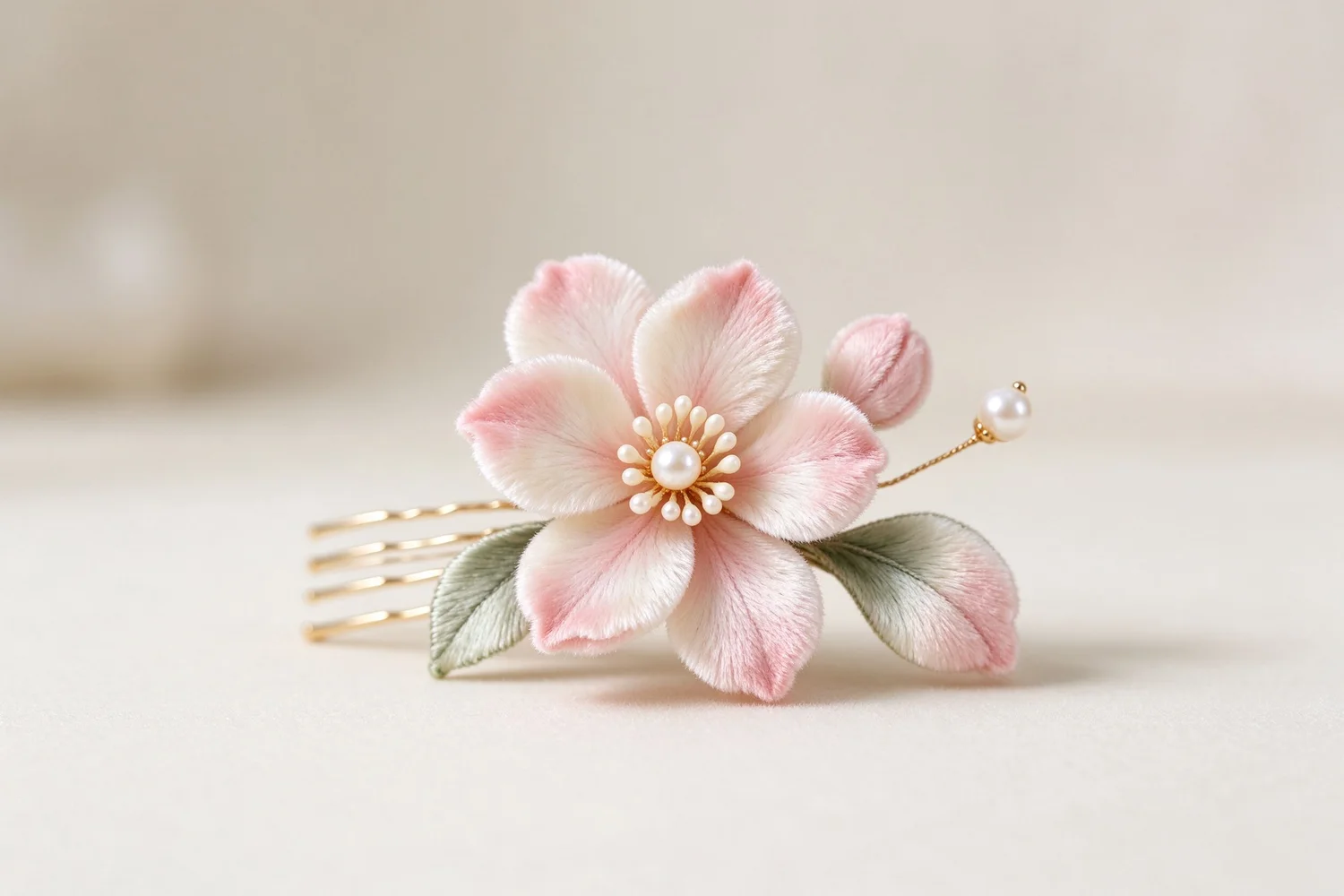
Why did it matter that it moved?
Because movement was a form of etiquette.
A swaying ornament only behaves well if the wearer moves deliberately. Walk quickly and it swings against the face; turn suddenly and it tangles. Wearing one was therefore a visible commitment to moving slowly, which is exactly what formal occasions asked of the people who wore them.
That is also why buyao appear in poetry and painting far more often than simpler pins: they gave the artist something to describe. A still ornament can only be drawn; a moving one can be caught mid-swing.
Where do you see them now?
Three places, in order of how often:
- Bridal styling. The single most common modern use. Movement reads well in video, and a bride's walk down an aisle is exactly the moment a swaying ornament is designed for.
- Hanfu photography. Full-length portraits and short films, where the dangle gives the frame a reason to be a video rather than a photograph.
- Formal modern outfits. Less common, and it takes a small, restrained piece: one dangle below a low bun, against plain clothing.
If you are choosing one for a wedding, the Chinese wedding hair accessory guide sets out the full set a bridal look normally contains, and where the buyao sits in it.
How do you wear one without looking like costume?
| Do | Don't |
|---|---|
| Keep it to one swaying piece | Layer three dangles in one style |
| Let the dangle hang below the bun | Let it swing across your face |
| Wear it with plain, dark clothing | Pair it with heavily patterned dress |
| Choose a small dangle for daywear | Wear a full bridal buyao to a party |
The rule underneath both columns is the same one that governs all Chinese hair ornament: one piece carries the look. A buyao is a strong piece by definition, because nothing else in the outfit moves.
What is it made of?
Historically, gold, silver, jade, pearl and silk tassels were all used, with the material signalling rank as much as taste. Some pieces also used kingfisher feathers — a technique that is no longer practised ethically, and which modern makers replace with dyed silk, enamel or dyed shell.
That substitution is worth knowing about if you are buying an antique-style piece: if a listing advertises genuine kingfisher featherwork, the honest answer is that it should not be on sale.
Where does the flower craft fit in?
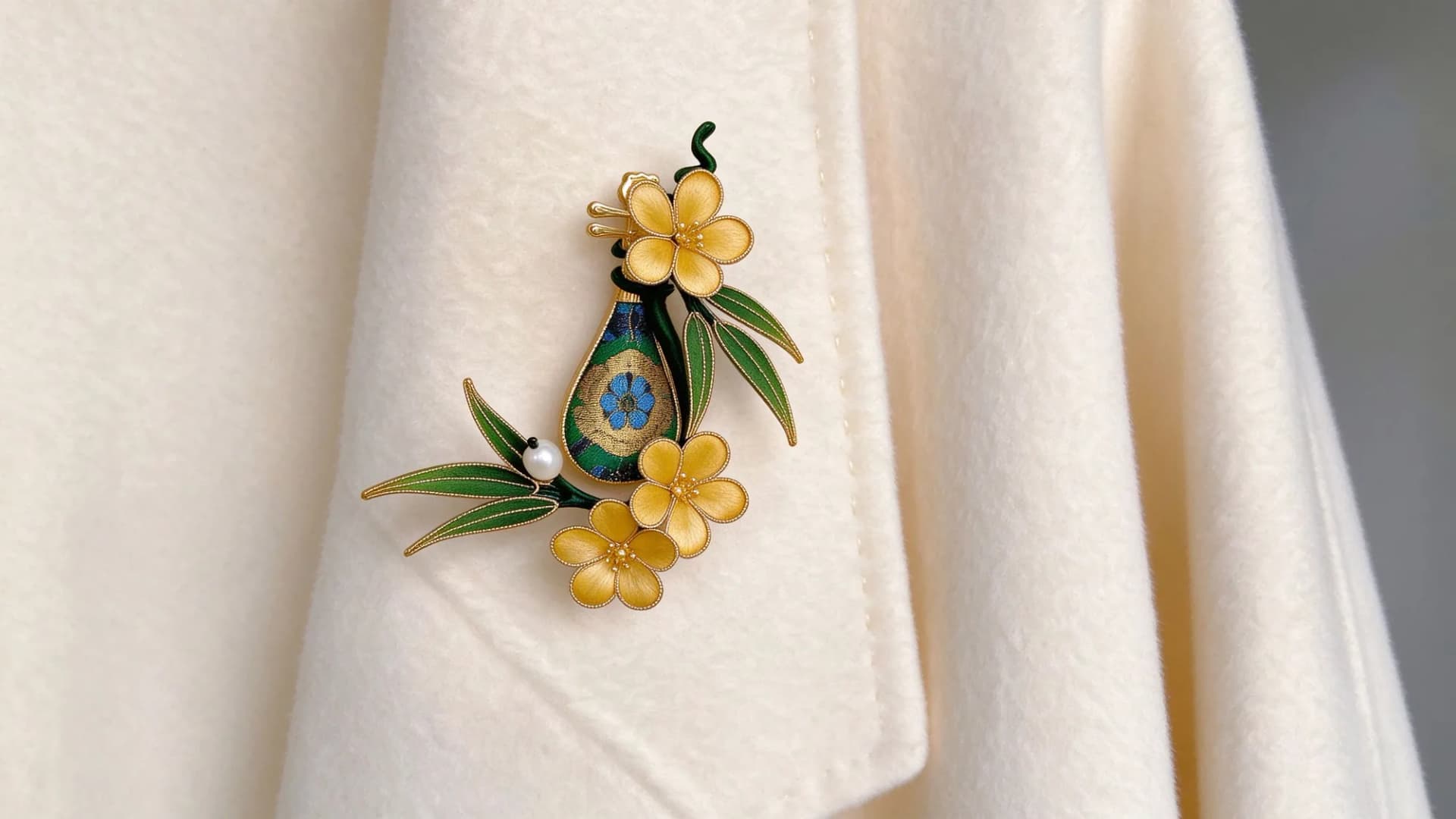
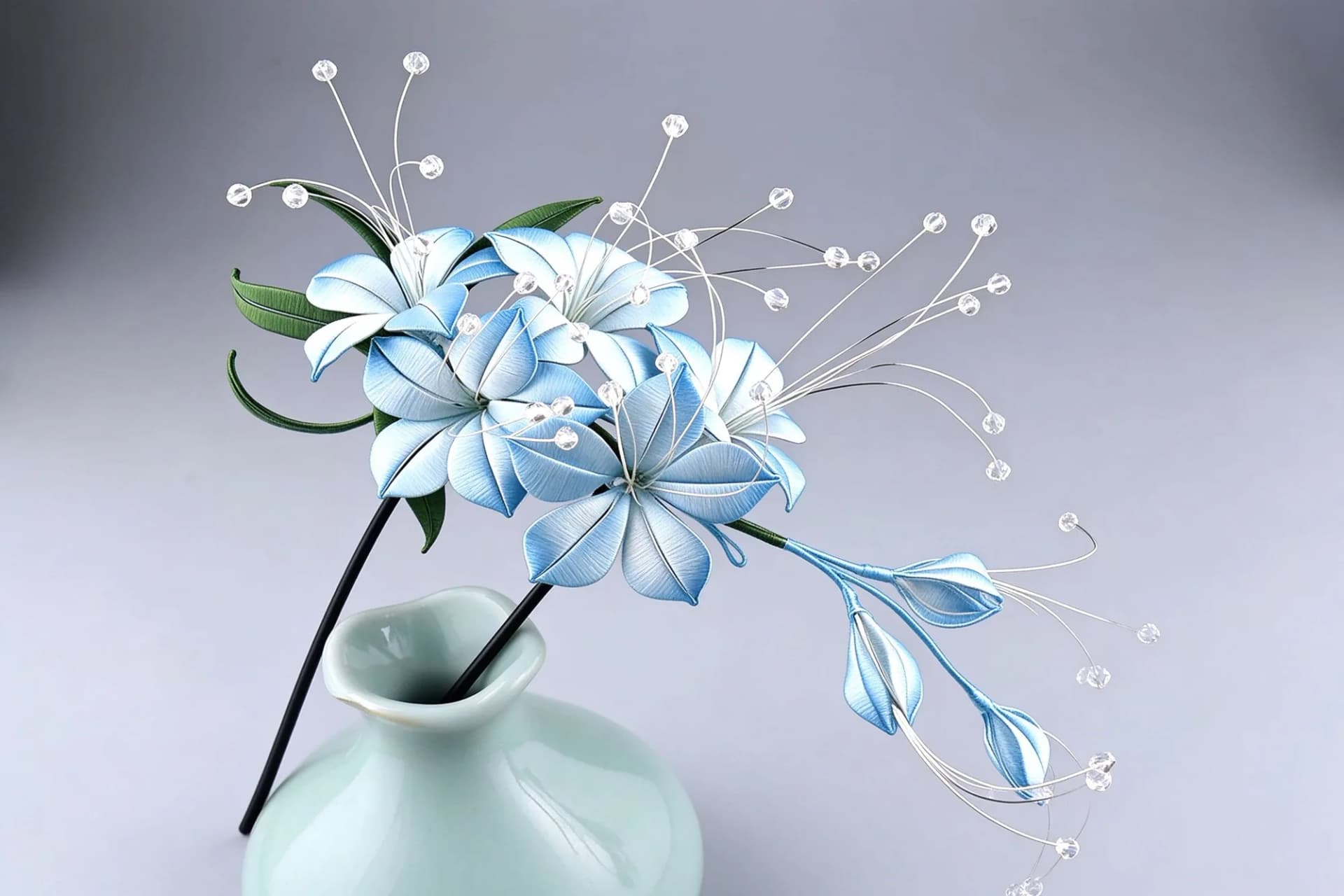
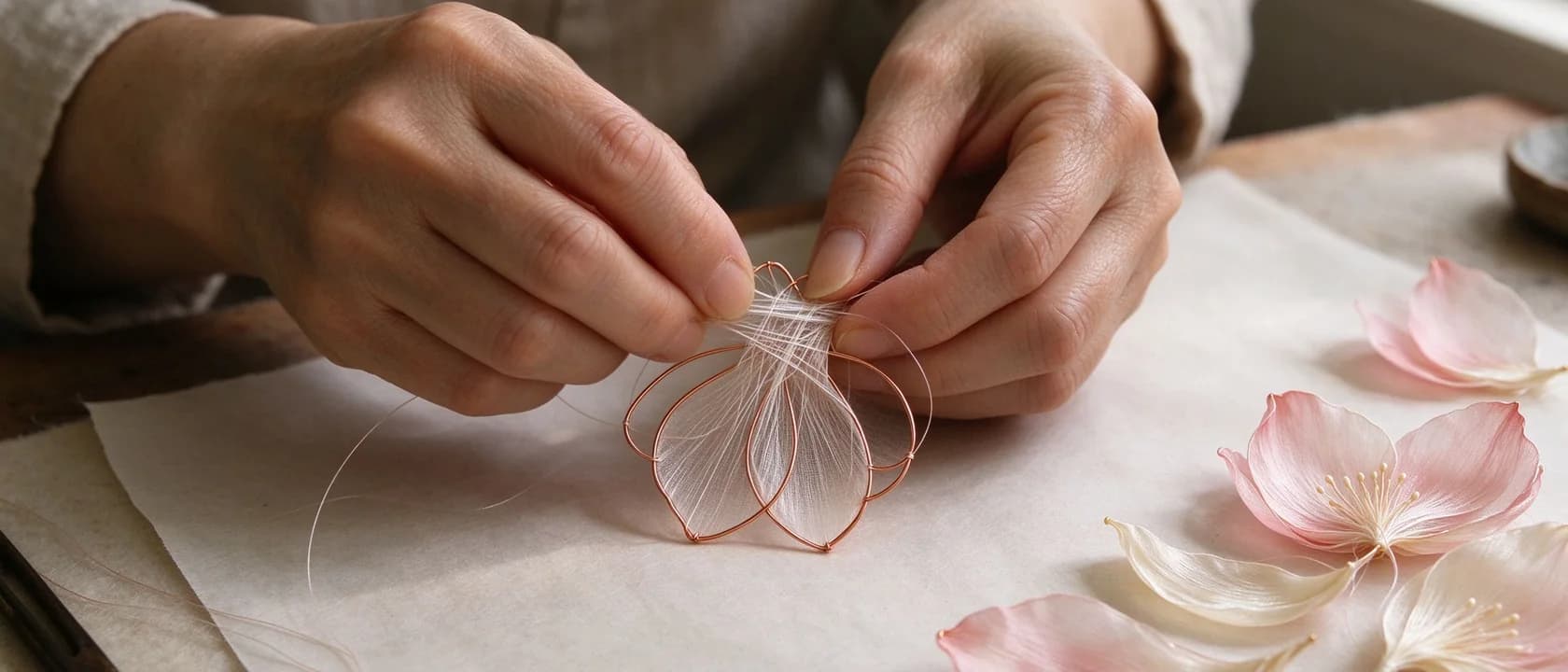
A buyao does not have to be metal. The swaying element is a separate part, so a hand-wound silk flower can carry the dangle — which is how a chanhua hairpin and a buyao overlap. A flower gives the piece its color and its body; the dangle gives it movement.
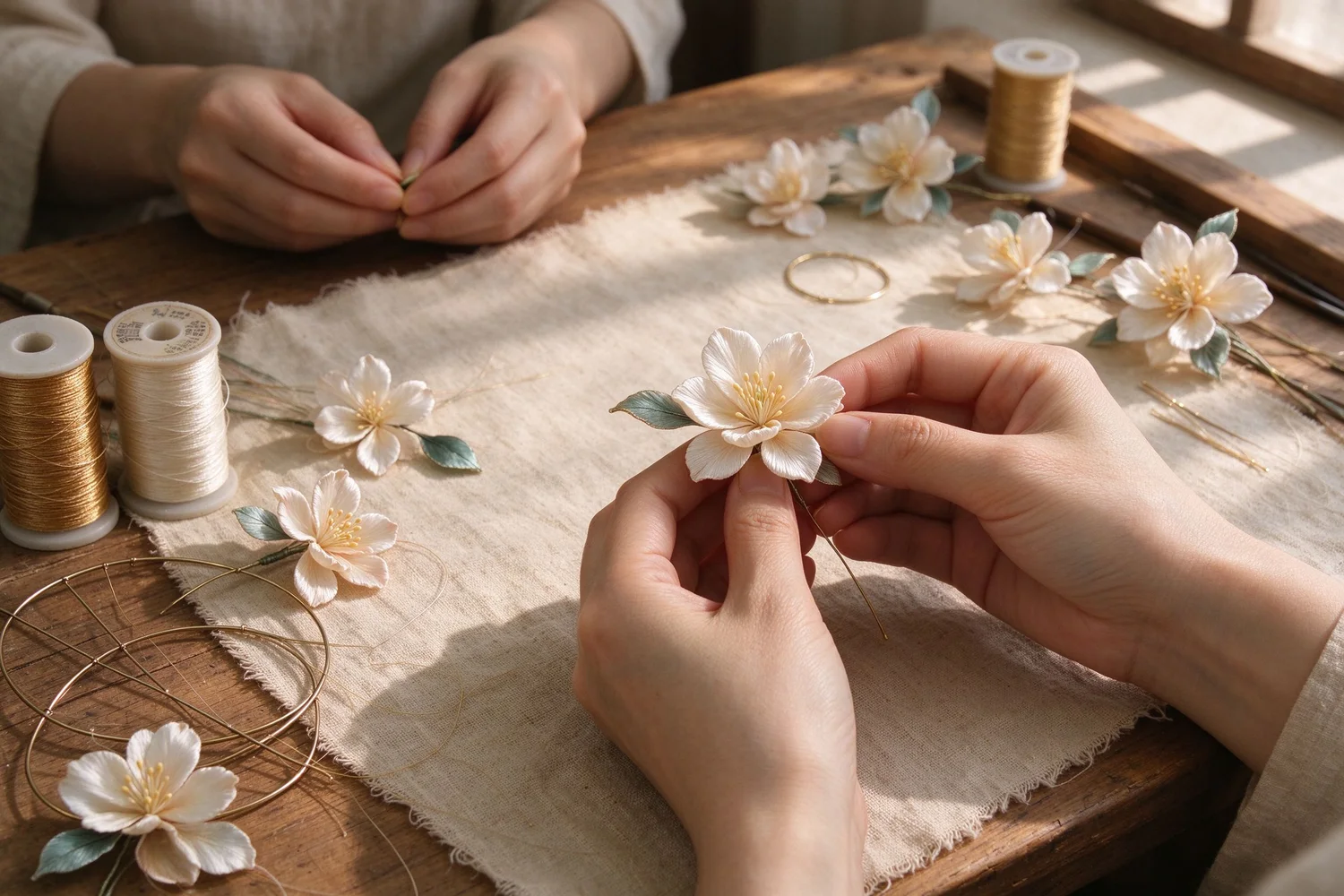
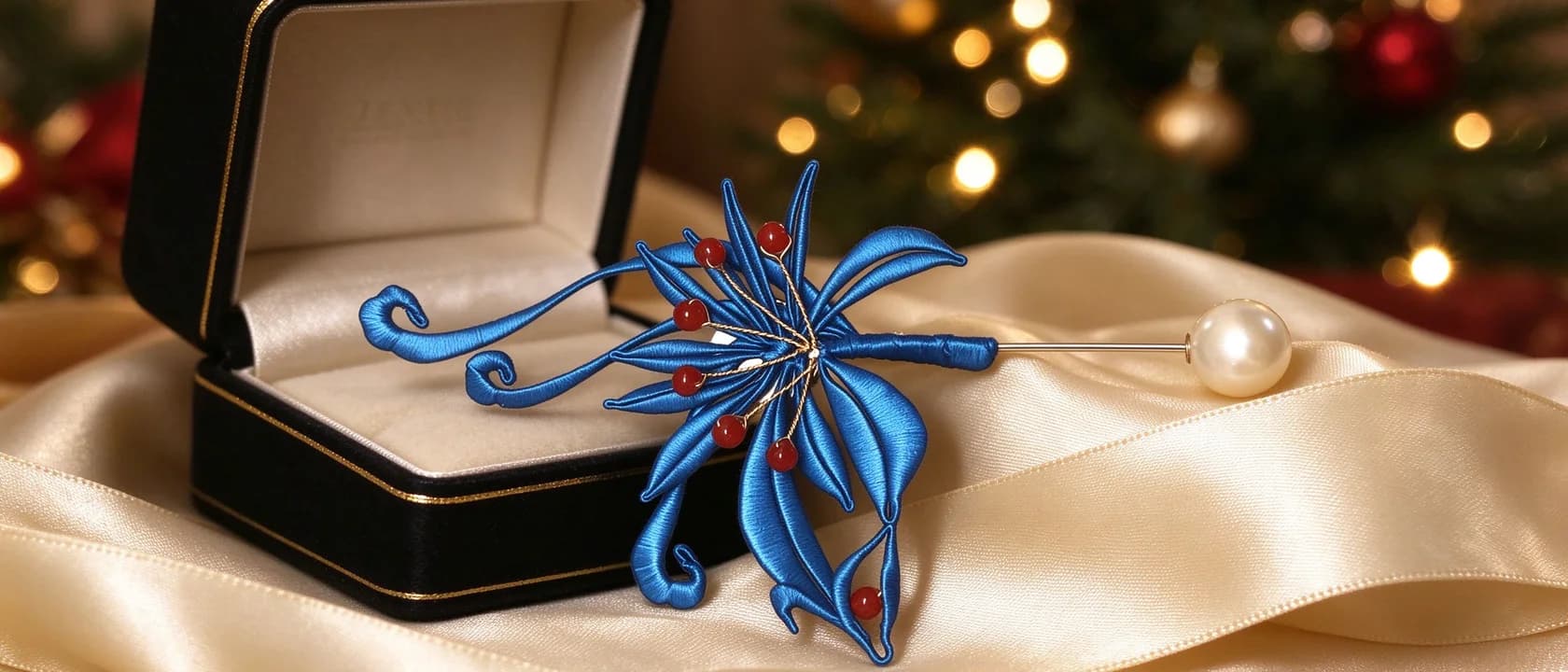
That combination is where most modern heritage pieces sit. If you want to see how the flowers themselves are made, what chanhua is explains the craft, and the Chinese intangible heritage guide covers how the ornaments were worn as a set. For the flower craft on its own, the Hydrangea Hairpin Kit is the shortest first build, and the Blue Phoenix Brooch Kit is the most sculptural piece we make.
Frequently asked questions
What does buyao mean?
It translates roughly as step-sway. The name describes the object's behaviour rather than its shape: the dangling pieces move when the wearer moves, so the ornament announces each step.
How is a buyao different from an ordinary hairpin?
An ordinary pin is a single solid piece. A buyao is a pin plus a hanging element - beads, a tassel, a small pendant - attached so that it swings freely. The pin holds the hair; the dangle does the work of being seen.
Who wore buyao historically?
It appears in Han dynasty records and later became associated with formal dress, particularly for women at court and in wealthy households. Its use was tied to ceremony rather than to everyday wear.
Why do brides still wear them?
Because movement photographs and films better than stillness. A swaying ornament gives a photographer something to capture and gives a walking bride a visible rhythm, which is why buyao survive in wedding styling while many other court ornaments do not.
Can I wear a buyao with modern clothes?
Yes, if you keep it small and let the dangle hang below the bun rather than across your face. One swaying piece with a plain outfit reads as jewellery; three read as costume.