Chinese Wedding Hair Accessories: A Complete Guide for Brides
What hair accessories does a Chinese bride wear?
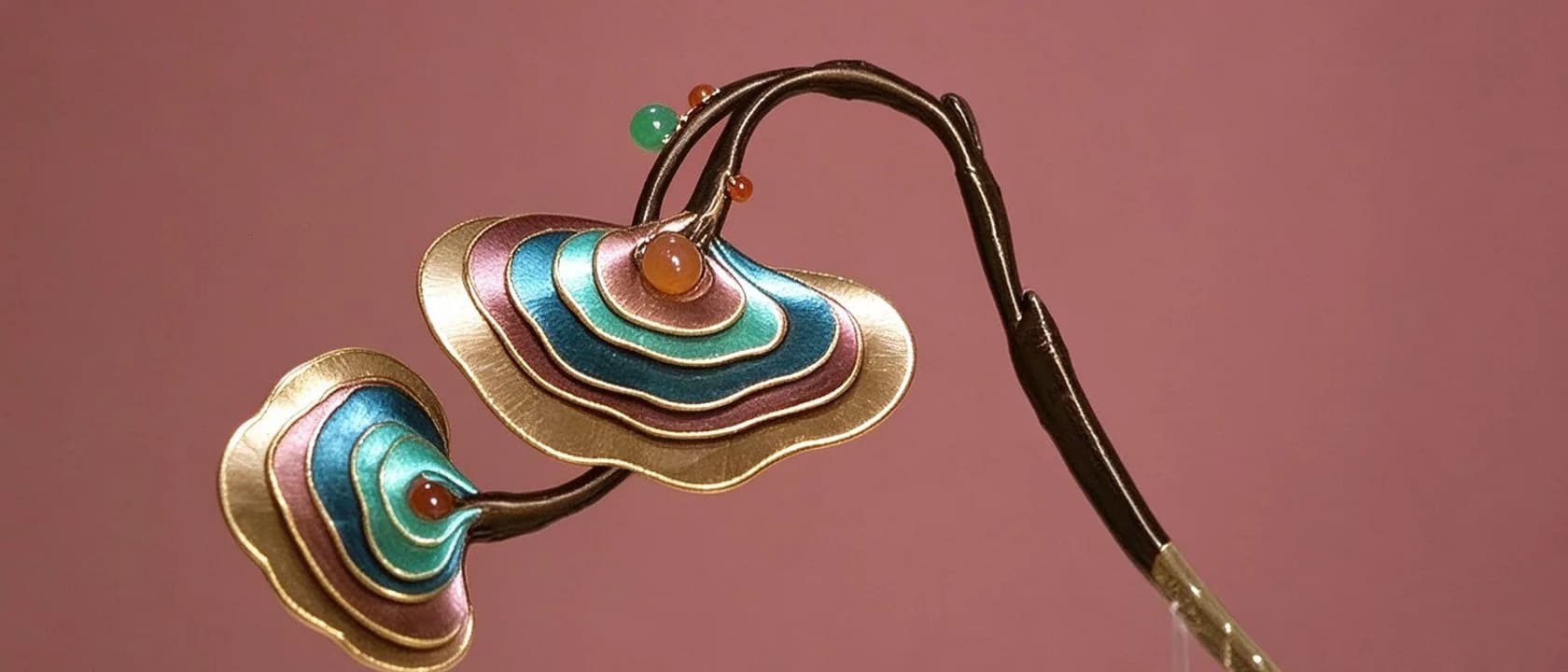
A traditional Chinese bridal hairstyle is not one ornament but a set of four to six, layered so the silhouette grows outward from the bun: a stick or fork to anchor the hair, one or two decorative pins above it, a dangling ornament at the sides, and a crown or comb to finish. Which pieces you need depends on the outfit — a Ming-style hanfu wedding and a modern xiuhe look use completely different sets.
This guide covers what each piece is called, which ones belong with which outfit, and how to choose a set you will still be happy with in the photographs.
What are the pieces called?
| Piece | Chinese | What it does |
|---|---|---|
| Hair stick | 簪 zan | A single pin pushed through the bun to hold it. The foundation piece |
| Hair fork | 钗 chai | Two prongs; holds more hair than a single stick and sits flatter |
| Swaying pin | 步摇 buyao | A pin with dangling beads or tassels that move as you walk |
| Crown | 发冠 faguan | A curved ornament across the front of the updo |
| Phoenix crown | 凤冠 fengguan | The full ceremonial crown, historically the most formal piece |
| Comb | 发梳 shuchai | Slotted comb worn at the back or side; adds height |
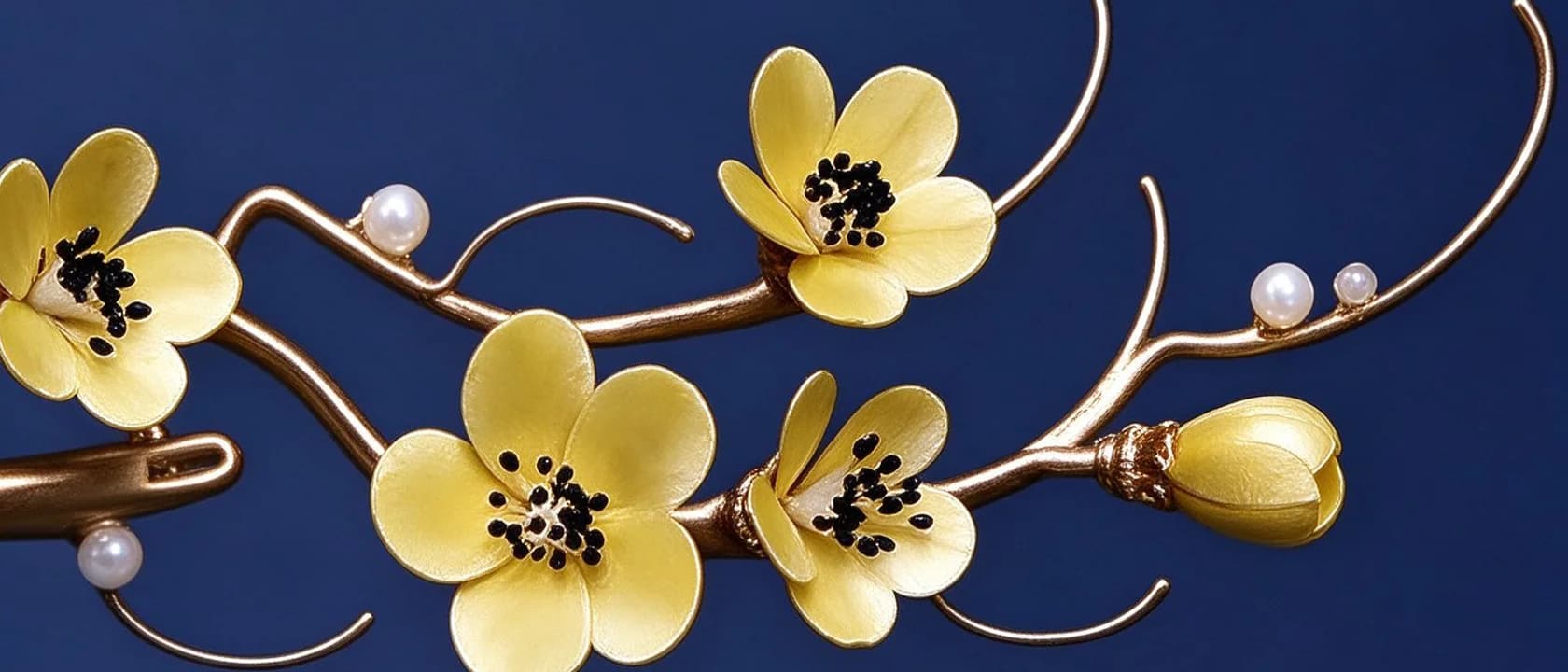
| Hairpin flowers | 缠花 / 绒花 | Silk flowers worn singly or clustered along the bun |
The names matter when you shop, because a listing translated simply as "Chinese hairpin" could be any of the seven.
Which pieces go with which outfit?
| Outfit | Hair style | Recommended pieces |
|---|---|---|
| Ming-style hanfu (明制) | High bun, hair swept up and back | Faguan or a comb set, two pins, side buyao |
| Xiuhe (秀禾服) | Low chignon, often with a fringe | Small faguan, gold-toned pins, pearl accents |
| Qun kwa (裙褂) | Tight low bun | One strong gold coronet; keep the rest minimal |
| Qipao | Sleek updo or a side roll | A single statement pin or a small silk flower cluster |
| White wedding dress | Soft updo, veil over the back | Small silver or pearl pins behind the veil line |
| Modern evening gown | Loose waves or a low bun | One silk flower pin, worn off-centre |
The rule underneath all of this: the more ornate the outfit, the simpler the hair, and the more ornate the hair, the simpler the outfit.
How do you choose the right set?
Work through four questions in order.
1. What is the actual hairstyle? Hair accessories are bought for a hairstyle, not for an outfit. A hair stick needs a firm bun to pass through; loose waves only hold a clip or a comb. Decide the style with your stylist first.
2. How heavy can the updo carry? Phoenix crowns and full faguan sets look spectacular and weigh enough to give you a headache by hour four. If your ceremony plus banquet runs eight hours, weight is the deciding factor, not appearance.
3. What metal tone? Gold tones suit red, xiuhe and Ming-style hanfu. Silver, pearl and cool tones suit white gowns, blue and green hanfu and modern evening wear. Mixing the two in one look rarely works.
4. Where will the photographs be taken? Dangling buyao reads beautifully in motion and badly in a tight formal portrait where it crosses your face. Silk flower pins photograph better in close-up than a crown does.
What does a set cost?
| Tier | What you get | Typical range |
|---|---|---|
| Single statement pin | One handmade silk flower or metal pin | $30–80 |
| Small set | Two or three pieces, one metal tone | $80–200 |
| Full bridal set | Crown or comb, pins, buyao, matching | $200–600 |
| Bespoke | Made to your outfit colours and hair plan | $600+ |
Handmade silk pieces sit at the lower end of each tier and are the easiest to match to a specific colour, because a maker can wind the thread to your dress. If you only buy one piece, buy the one that will be in the most photographs — usually the piece above the bun, not the largest one.
When should you order?
| Time before the wedding | What to do |
|---|---|
| 4–6 months | Decide the outfit and the hairstyle; start looking at makers |
| 3 months | Order handmade pieces; confirm the colour against a fabric swatch |
| 8 weeks | Hair trial with the real pieces in hand |
| 4 weeks | Adjust or add a second piece if the trial showed a gap |
| 1 week | Pack pieces in a hard box with a repair kit (see below) |
What should a bride pack for the wedding day?
- A hard box, not a pouch — a crushed crown cannot be fixed on the morning
- Two spare hair pins in the same metal tone
- Clear-drying craft glue and two hair ties
- A small brush for any velvet or silk flower that has flattened
- A photo of the finished trial look, for a stylist who has not seen it
Can you wear Chinese heritage hair pieces without a hanfu outfit?
Yes, and this is where silk flower pins have the widest range. A single chanhua or ronghua flower pin worn off-centre on a low bun works with a plain dress, a blazer or an evening gown — the ornament reads as jewellery rather than costume, because the flower is small and the material is soft. If you want to test the look before a wedding, see how to wear hanfu hair accessories with modern outfits.
Where to start
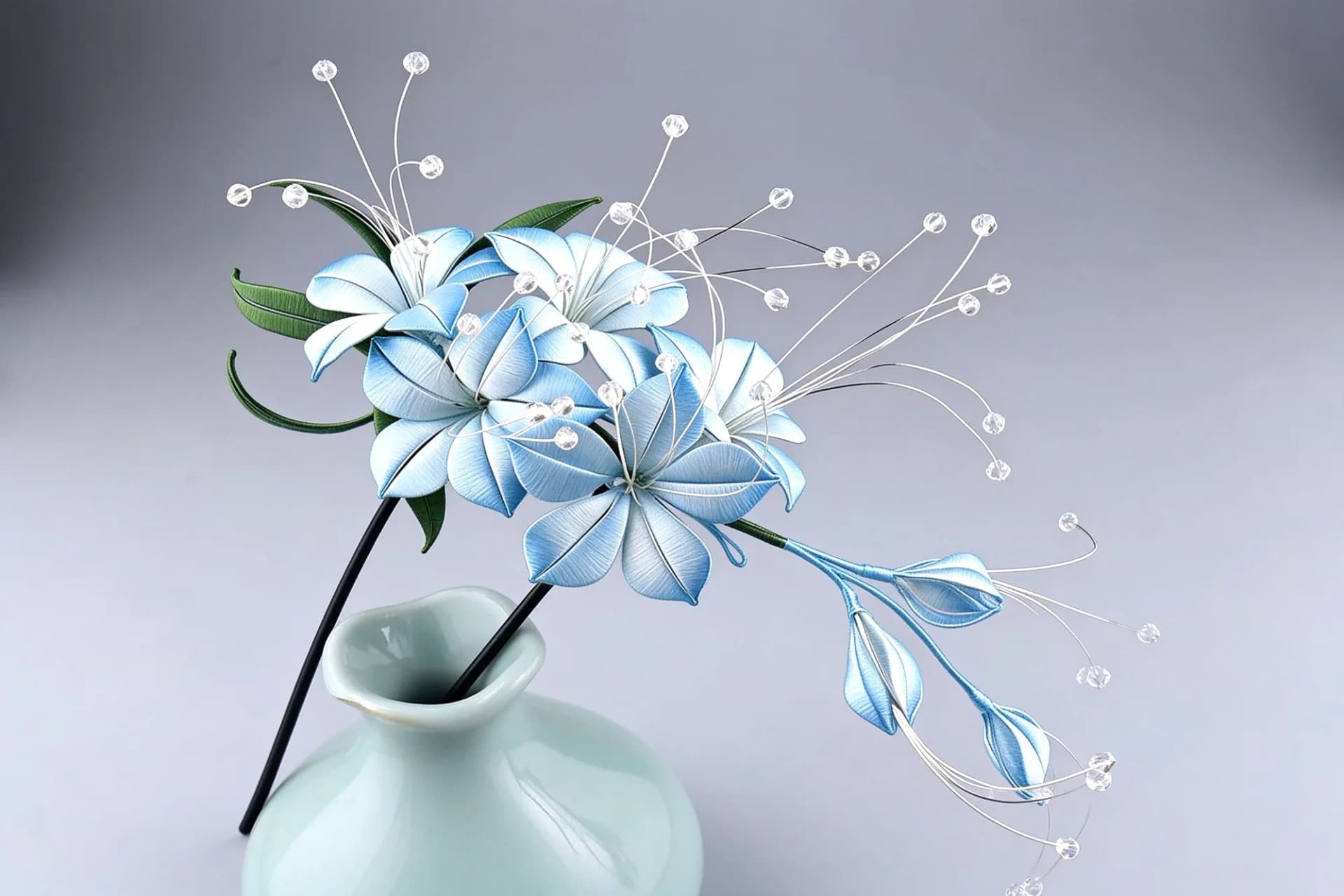
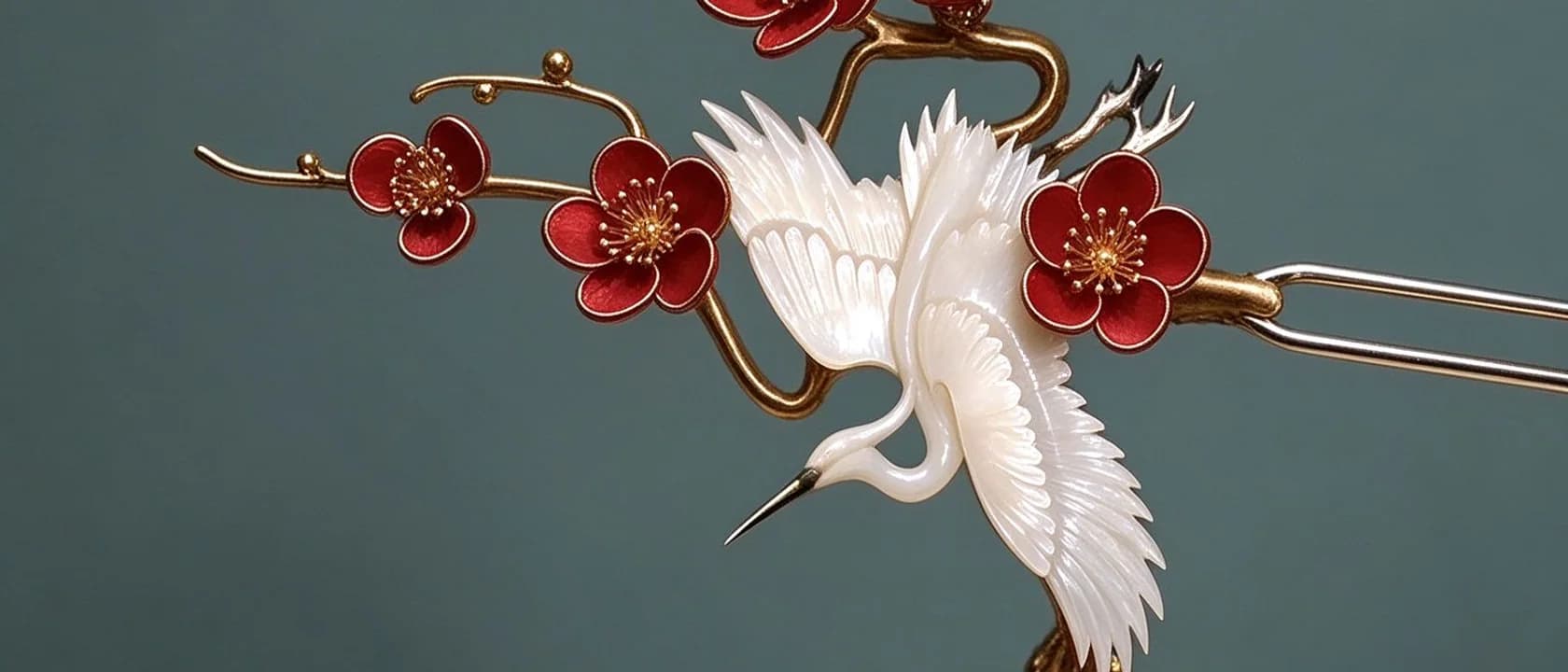
If you are buying one piece for a trial, the Blue Trailing Jasmine Hairpin is light enough to wear all day and small enough for a low bun. A pair of silk flower brooches can be pinned at both sides of a chignon for symmetry, and the Blue Phoenix Brooch is the piece for a bride who wants one strong ornament. For the symbolism behind the flowers themselves, see the Chinese intangible heritage guide.
Frequently asked questions
How many hair pieces does a Chinese bride need?
Usually four to six. A hair stick or fork holds the updo, one or two decorative pins sit above the bun, a dangling buyao or a headband adds movement at the sides, and a crown or comb finishes the silhouette. The exact set depends on the outfit, not on a fixed rule.
Can I wear Chinese hair accessories with a white wedding dress?
Yes, and it is increasingly common. Choose lighter, smaller pieces in silver or pearl and keep them to the back of the head so the veil sits over them without a struggle. Large red and gold pieces look wrong against a white gown.
What is a buyao?
A buyao is a hairpin with dangling beads or tassels that sway as the wearer moves, which is where the name comes from. Brides wear them for photographs and for the tea ceremony, where the movement reads beautifully on video.
Are real gold and jade pieces required?
No. Historically, gold and jade signalled family wealth, but a modern wedding set is normally made from brass, silver, silk and pearl. What matters is that the metal tone matches the outfit and that nothing is heavy enough to pull the updo down during a long day.
How far in advance should I order bridal hair pieces?
Eight to twelve weeks for anything handmade, and longer if the maker is outside your country. You need the pieces in hand for the hair trial, and a trial after a rush delivery defeats the purpose.