How Long Does It Take to Make a Chanhua Hairpin?
How long does it take to make a chanhua hairpin?
A small chanhua hairpin takes four to six hours of winding by hand, plus a day for the glue to cure. Our studio's most complex designs have taken about a month. A decorated graduation cap sits in between at 16 to 20 hours. Everything else is a variation on where the hours go.
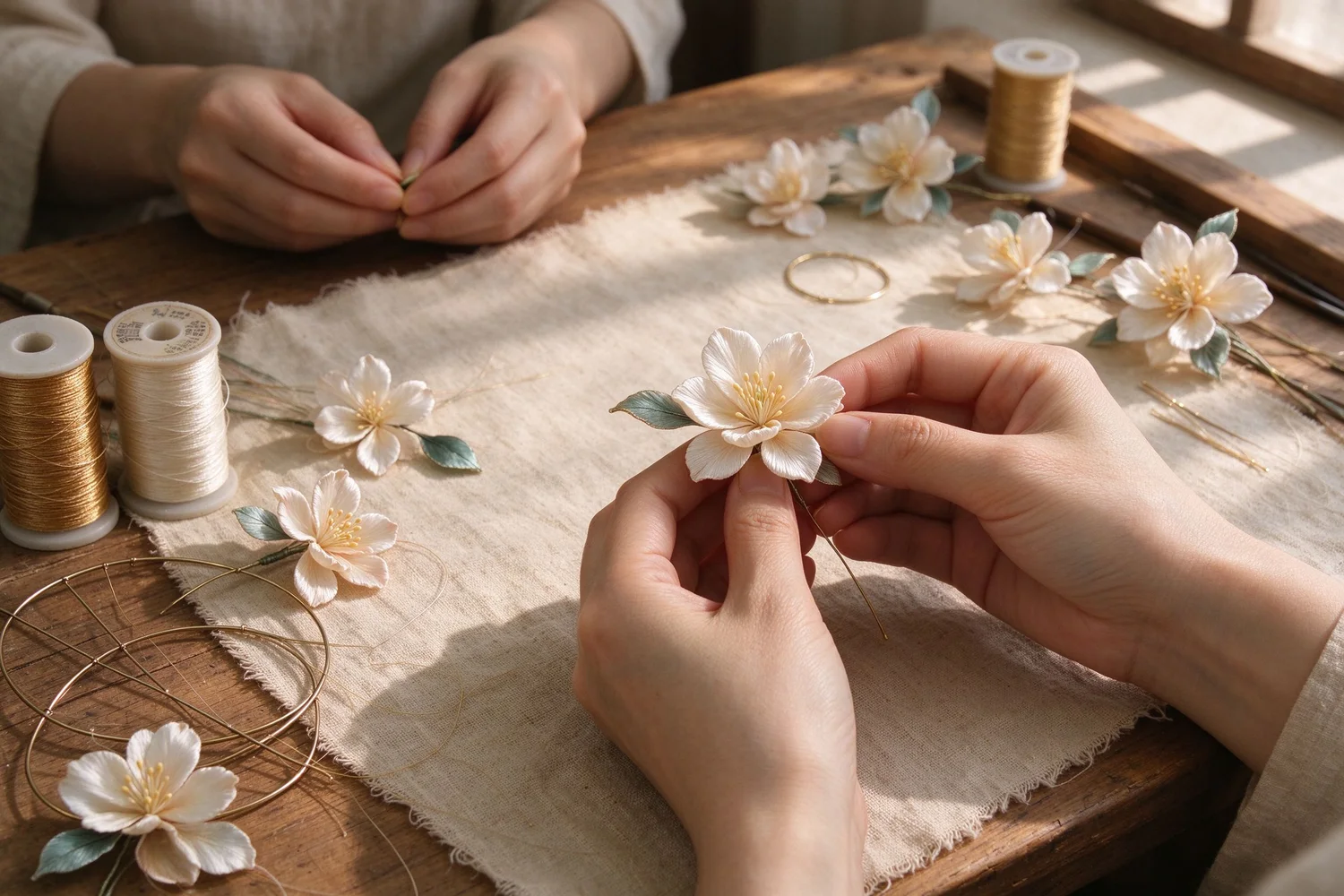
Those numbers come from our own bench in Guang'an, Sichuan, where the craft was passed down in the founder's family over six years — not from a catalogue estimate.
Where do the hours actually go?
Broken down, a simple hairpin looks like this:
| Stage | Beginner, first attempt | After three pieces |
|---|---|---|
| Sorting frames and planning color | 15 min | 5 min |
| Splitting the silk floss | 10 min | 3 min |
| Winding 6-8 petals | 2.5-3.5 h | 1.5-2 h |
| Shaping the petals | 30 min | 15 min |
| Assembly and mounting | 45 min | 25 min |
| Glue curing | 24 h (not hands-on) | 24 h (not hands-on) |
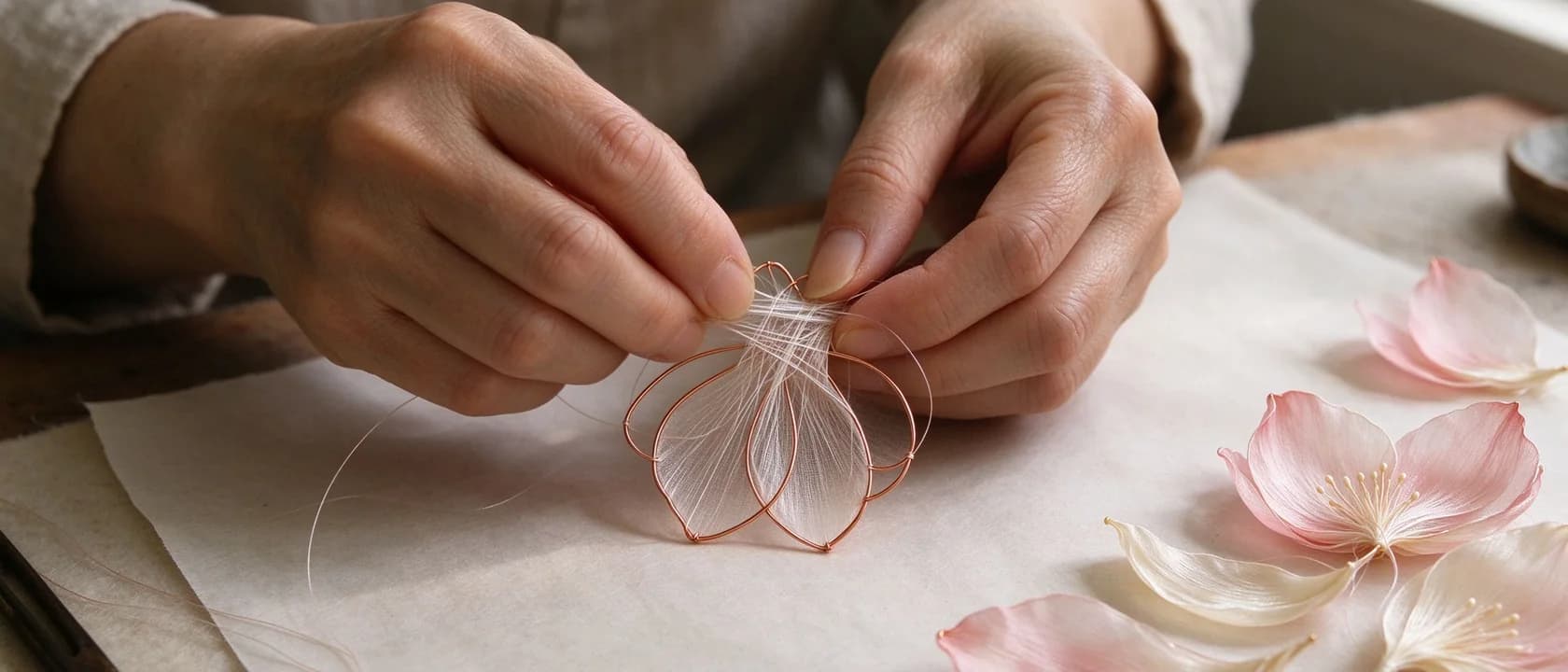
The striking thing is that 84% of the time is the winding — one motion, repeated. Everything else is quick. Which is why the honest answer to "how long does it take" is really "how long does it take to wind eight petals".
Why does the first one take so much longer?
Because most of the estimate is learning, not making.
The first petal can take twenty minutes and involve unpicking it twice. Your hands have never performed that movement, and silk has no stretch to absorb a mistake, so the only feedback is what your eyes tell you when you hold the petal against a lamp.
By the tenth petal, the same movement takes three to four minutes. That curve — from twenty minutes to four — is the single biggest factor in the difference between a first piece and a second.
| Piece | First attempt | Third attempt |
|---|---|---|
| Hydrangea hairpin | 4-7 h | ~3 h |
| Lily of the valley brooch | 4-6 h | ~2.5 h |
Both of those are hands-on figures. Add a day of curing either way.
What makes a piece take a month instead of an afternoon?
Two things: length of wire, and the number of shapes that have to match each other.
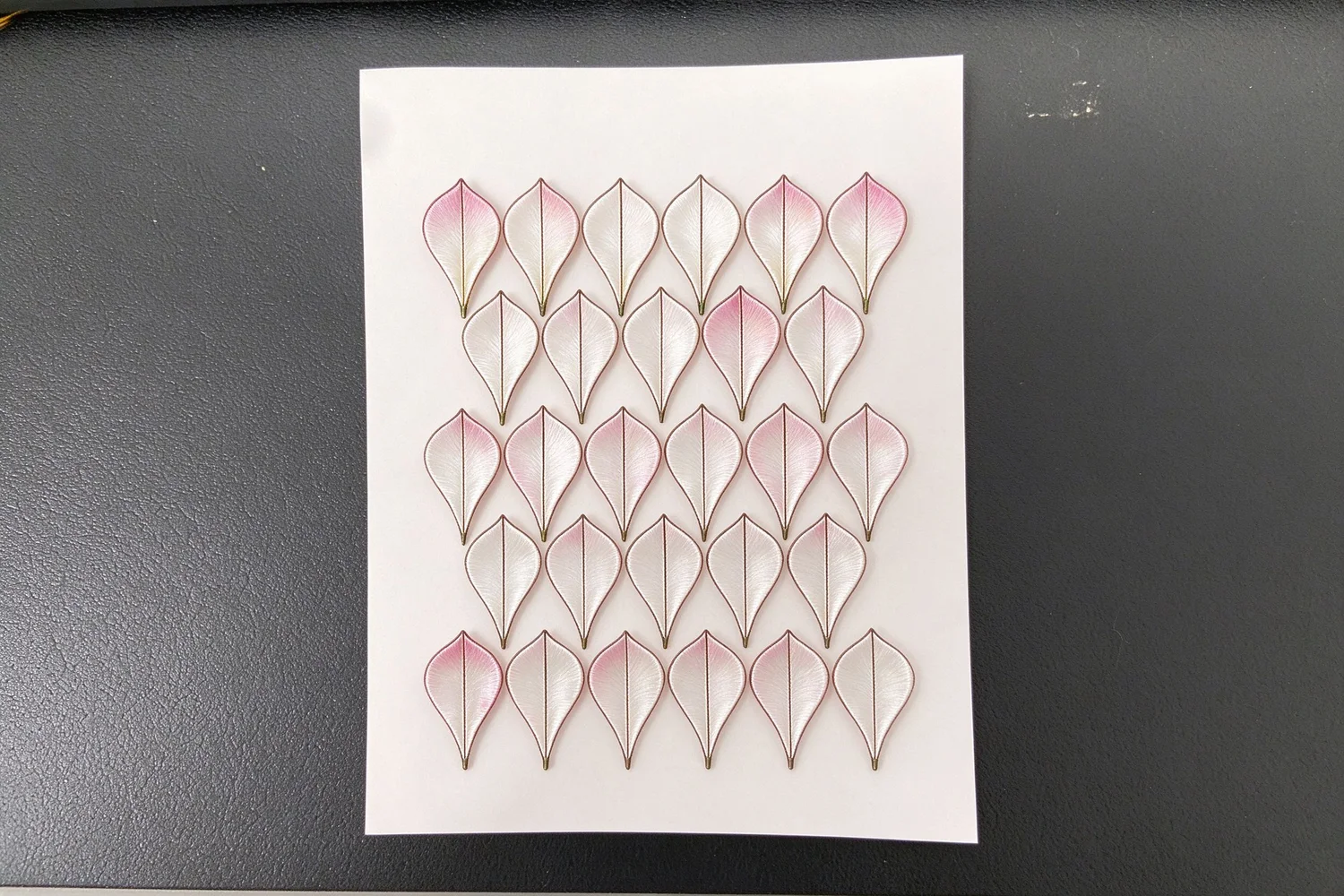
- Length of wire. A round bloom is built from short, broad petals. A phoenix is built from long tapered feathers, and a graduation cap is built from dozens of small blooms across a 26 x 26 cm board. The motion is the same; the total distance it has to travel is not.
- Matching. The more units a design has, the more they are compared with each other. A tail of nine feathers is read as a set. That means the maker checks, re-wraps and rejects far more work than the finished piece contains.
How does this compare with the alternative?
| Hand-wound chanhua | Machine-made silk flower | |
|---|---|---|
| Time per small piece | 4-6 hours | Seconds |
| Surface | Individual thread lines, slight variation | Uniform, molded or printed |
| Repairable | Yes — reshape by hand, re-wrap a petal | Usually not |
| Cost driver | Hours | Materials, tooling |
This is the whole reason handmade silk flowers cost what they do, and it is worth saying plainly rather than dressing it up: you are buying a person's hours. There is no version of this craft where the piece is fast and looks like this. Cutting the hours means cutting the winding density, and the difference is visible the moment the light hits it.
How long will it take me?
| If you are | Plan for |
|---|---|
| Buying a finished piece | Nothing — it arrives done |
| Making a small hairpin from a kit, first time | Two evenings, plus a day of curing |
| Making a brooch from a kit, first time | Three to four hours, plus curing |
| Making a second piece of the same design | About half the first attempt |
| Making a complex design | Weeks of evenings, not one sitting |
The most common planning mistake is assuming a kit is an afternoon. It is not, and the people who enjoy it most are the ones who spread it across several evenings rather than trying to finish in one.
Which pieces suit the time you have?
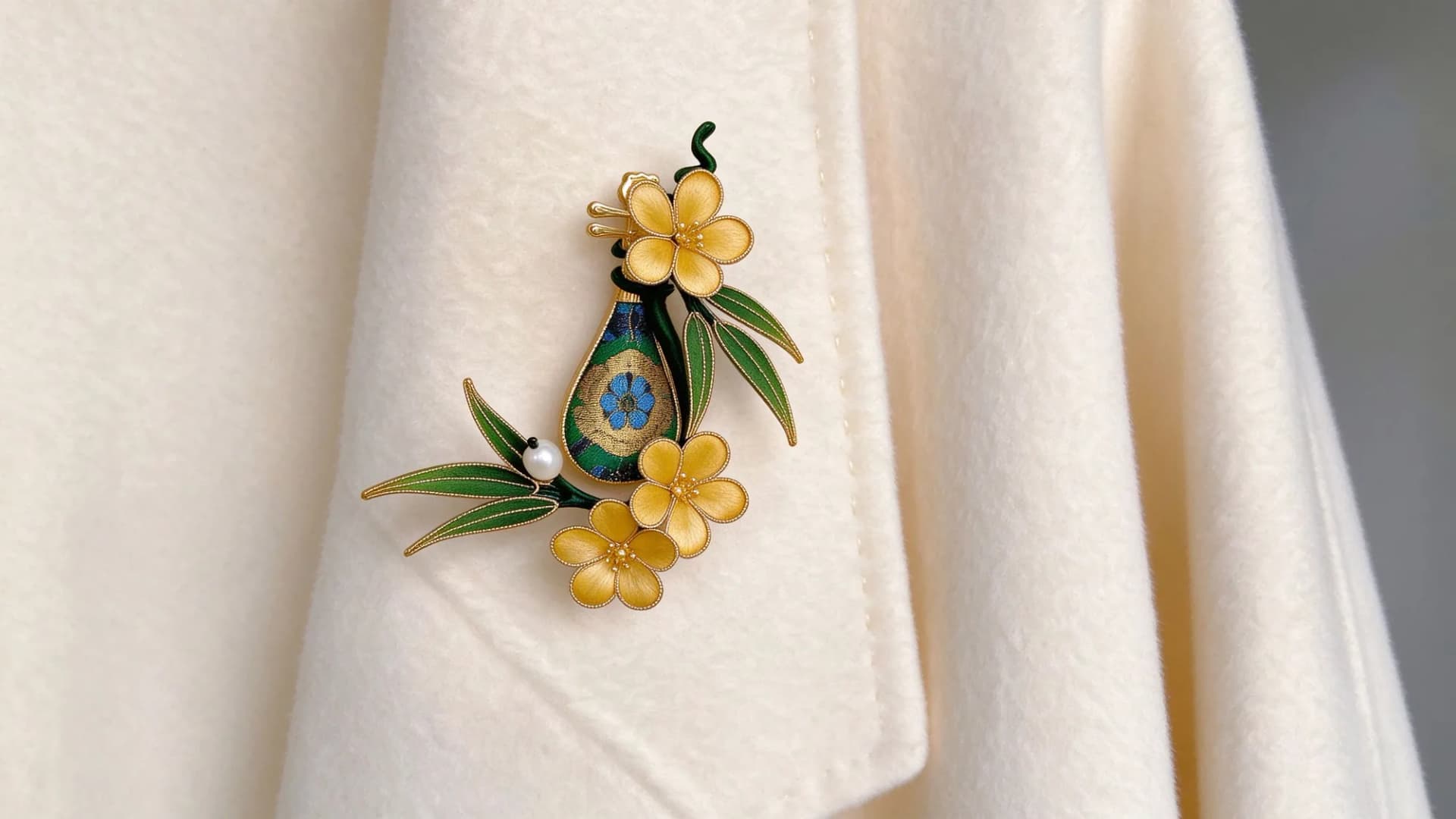
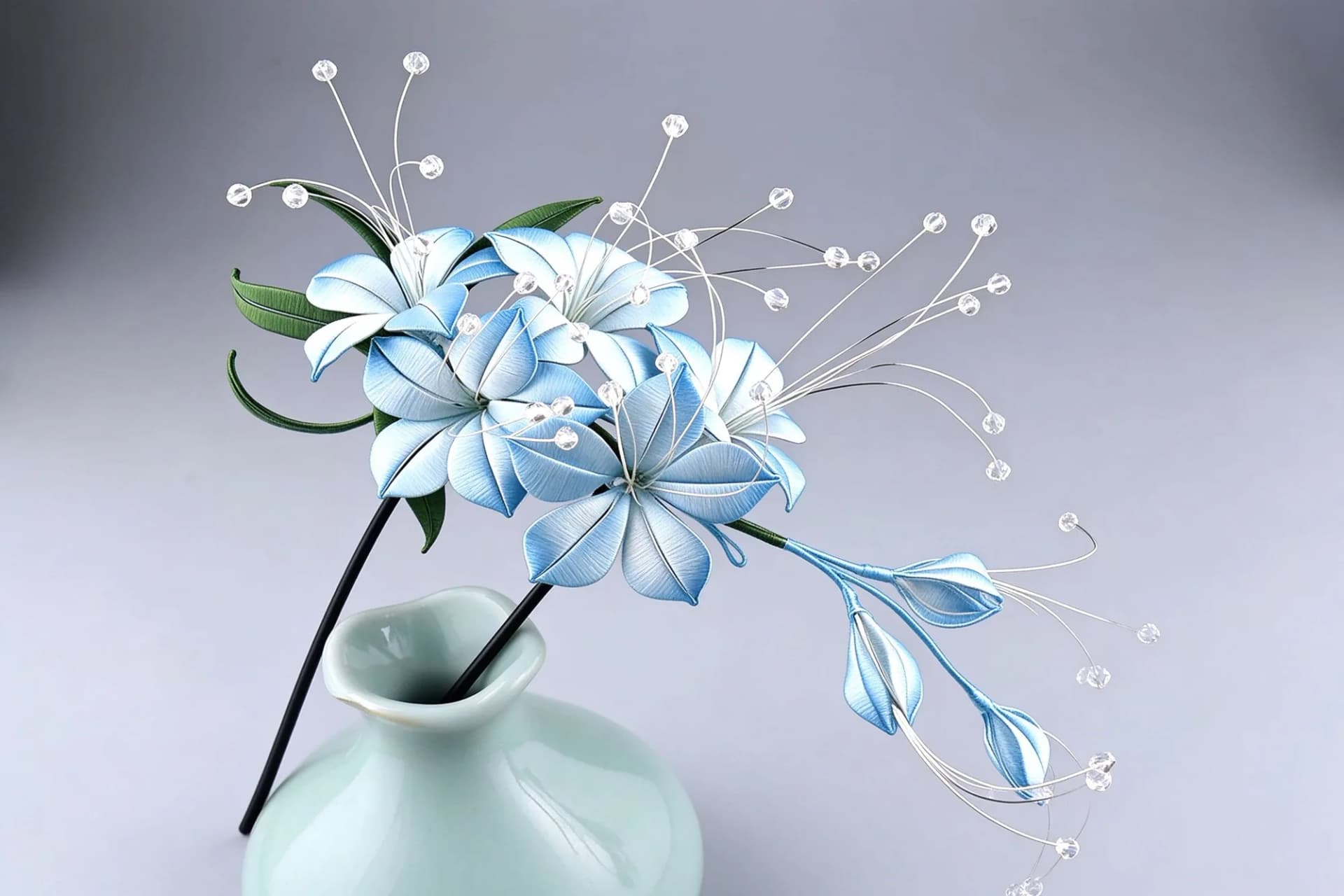
If you have one evening and want to finish, choose the smallest design: the Hydrangea Hairpin Kit is built from many small identical florets, so it moves quickly and forgives an uneven one. A Lily of the Valley Brooch Kit takes a similar amount of time and produces something wearable on a jacket.
If you want to understand the single motion that all of these hours are made of, how to wrap silk thread around a wire frame is the place to start, and what chanhua is explains the craft's history if you would rather read before you buy.
Frequently asked questions
How long does one chanhua hairpin take?
A small piece is four to six hours of winding by hand, plus a day for the glue to cure. A beginner working from a kit should plan for the longer end, because most of that time is the learning rather than the piece.
Why did a hairpin take me two evenings instead of one?
Because the motion is new. Wrapping silk flat around wire is a technique your hands have never done before, and the first petal can easily take twenty minutes on its own. By the tenth, the same petal takes three or four.
What is the longest a piece can take?
Our most complex designs have taken about a month of working sessions. A decorated graduation cap, for comparison, is a 16 to 20 hour build spread over three or four weeks.
Does the second one take less time?
Substantially less. The learning is paid once, so a second piece of the same design typically takes about half as long as the first.
Is that why handmade silk flowers cost more than machine-made ones?
Almost entirely. A machine can produce a similar-looking flower in seconds. What you are paying for in a hand-wound piece is hours of a person's attention, and there is no way to compress that without the surface showing it.