DIY Kit vs Finished Piece: Which Should You Buy?

Should you buy a DIY kit or a finished piece?
Buy the kit if the person enjoys making things and does not mind waiting a few evenings for the result. Buy the finished piece if you are unsure, if you need it soon, or if it is a gift for someone whose idea of a good evening is not sitting still with a needle. Price barely separates the two.
That is the short answer. The rest of this guide is the reasoning, because the choice comes up constantly and the wrong call wastes either money or a good evening.
Why does a kit cost almost as much as a finished piece?
This surprises people, and the reason is where the cost actually sits.
| What you are paying for | Kit | Finished piece |
|---|---|---|
| Materials — silk floss, wire, beads | Included | Included |
| Frames, shaped and prepared by hand | Included | Included |
| Templates and written instructions | Included | Not needed |
| The maker's wrapping hours | You supply them | Included |
| Glue curing time | Yours | Already done |
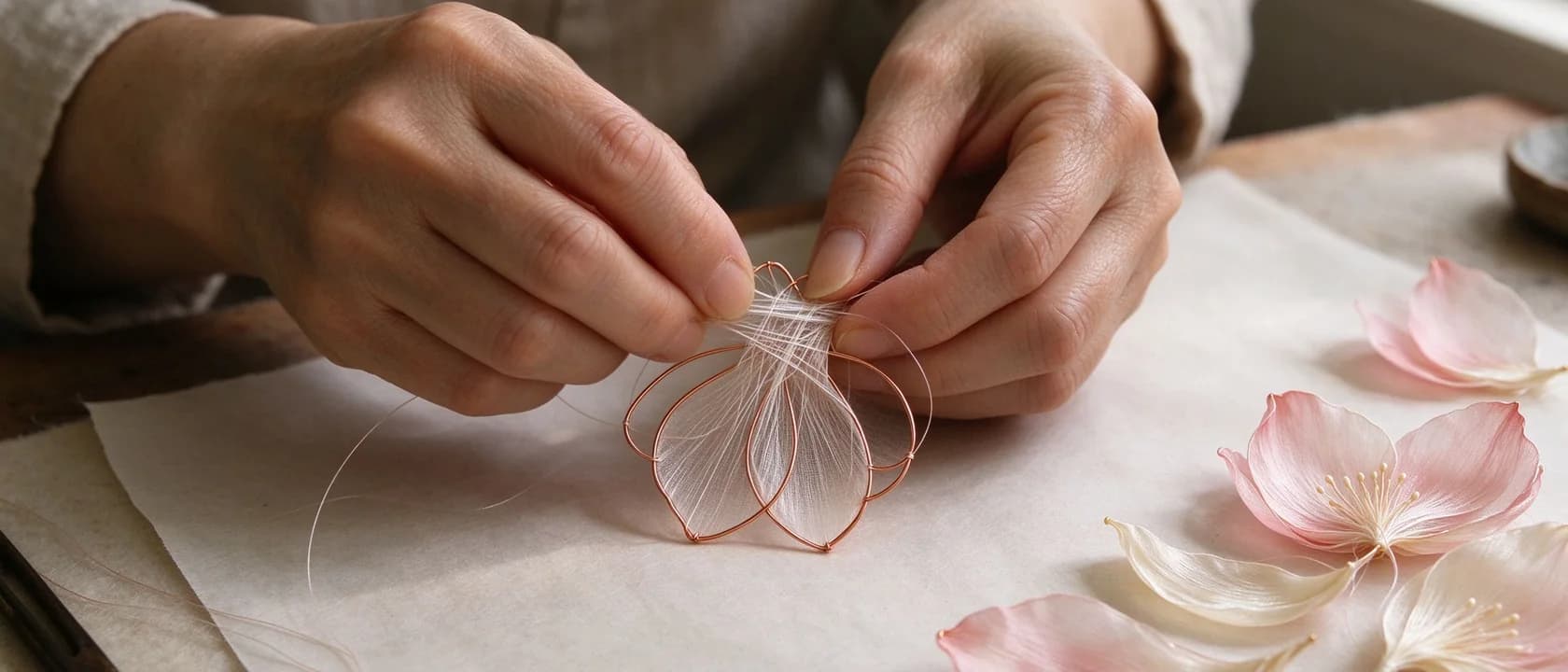
The materials and the preparation are the same in both boxes. The only real difference is who spends the hours wound around a wire. Since a small piece is four to six hours of work, that is what the price difference reflects — not the contents.
Which also means: if you buy a kit, you are not getting a cheaper object. You are trading money for time, in the direction of more time and slightly less money.
What actually arrives?
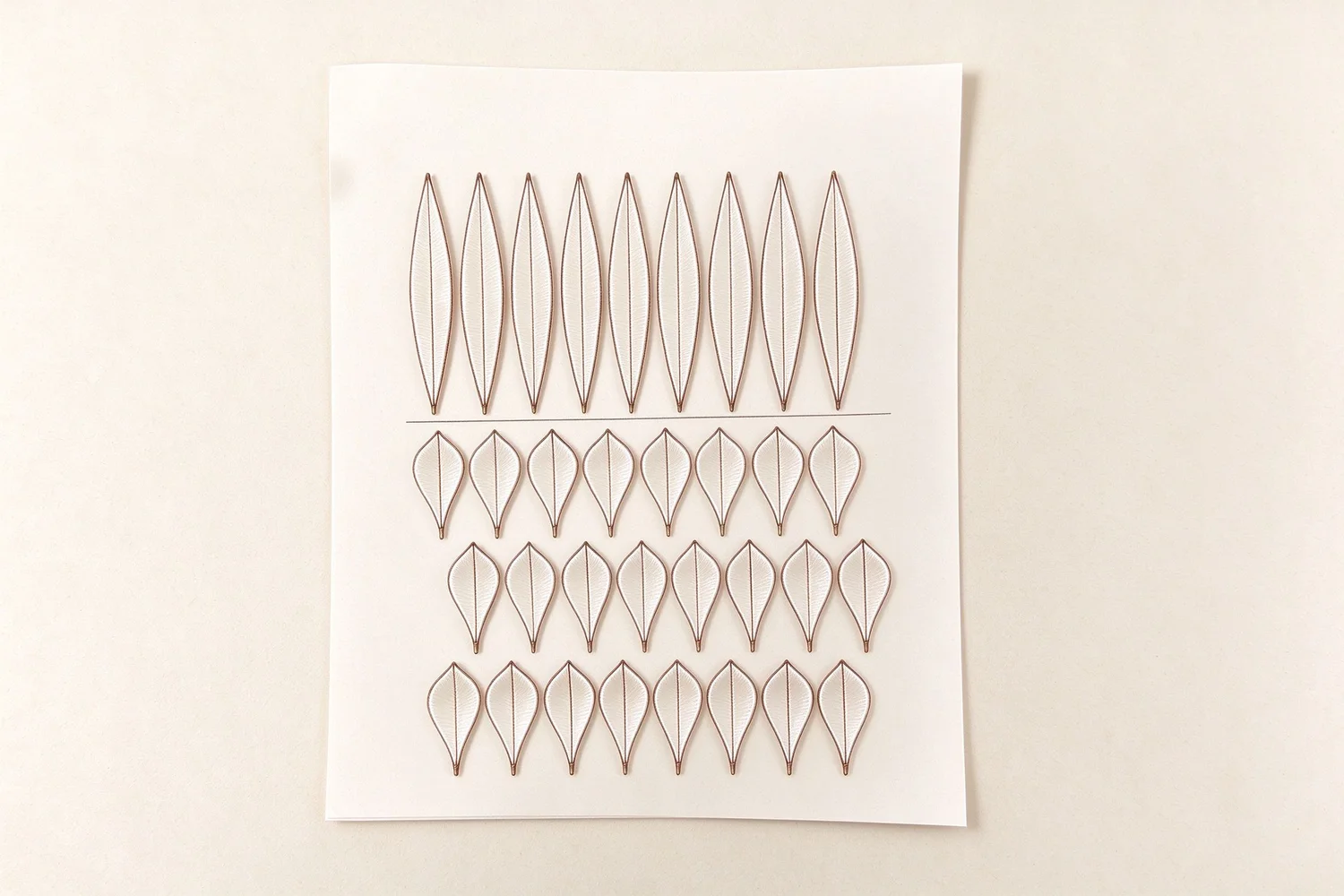
A kit arrives as a box of materials and prepared parts: shaped wire frames for every petal and leaf, dyed mulberry silk floss, beads, adhesive, templates, and a link to the step-by-step tutorial. To finish it you need three things of your own — scissors, a lighter and a cylindrical pen. The small brush in the box is for glue, and its handle is too thin for shaping.
A finished piece arrives as the object itself, in a gift box. Nothing to assemble, nothing to cure, and nothing to get slightly wrong.
How do you choose?
Work down this list and stop at the first line that applies.
| If this is true | Buy |
|---|---|
| You need it for a date within the next week | Finished piece |
| It is a gift and you are unsure whether they craft | Finished piece |
| They knit, sew, draw, do calligraphy or build models | Kit |
| You want a color that matches a specific outfit | Either — both are wound to order |
| You want to understand how the craft actually works | Kit |
| It is going to a person who will wear it, not make it | Finished piece |
The one outright mismatch is a kit for someone who does not make things. It is not a neutral gift — it is homework.
What if you buy the kit as a gift?
Give it early, and give it as a project rather than as a finished object. A kit is a gift of hours, and the making is part of the present — so it does not need to be finished by the morning it is opened.
If the recipient is a beginner, pair it with the three tools they will need. Handing over a box and then saying "you also need a lighter and a pen" turns a good gift into an errand.
Which kits suit a first attempt?
| Kit | Why it works as a first |
|---|---|
| Hydrangea Hairpin Kit | Built from many small identical florets, so an uneven one disappears into the cluster |
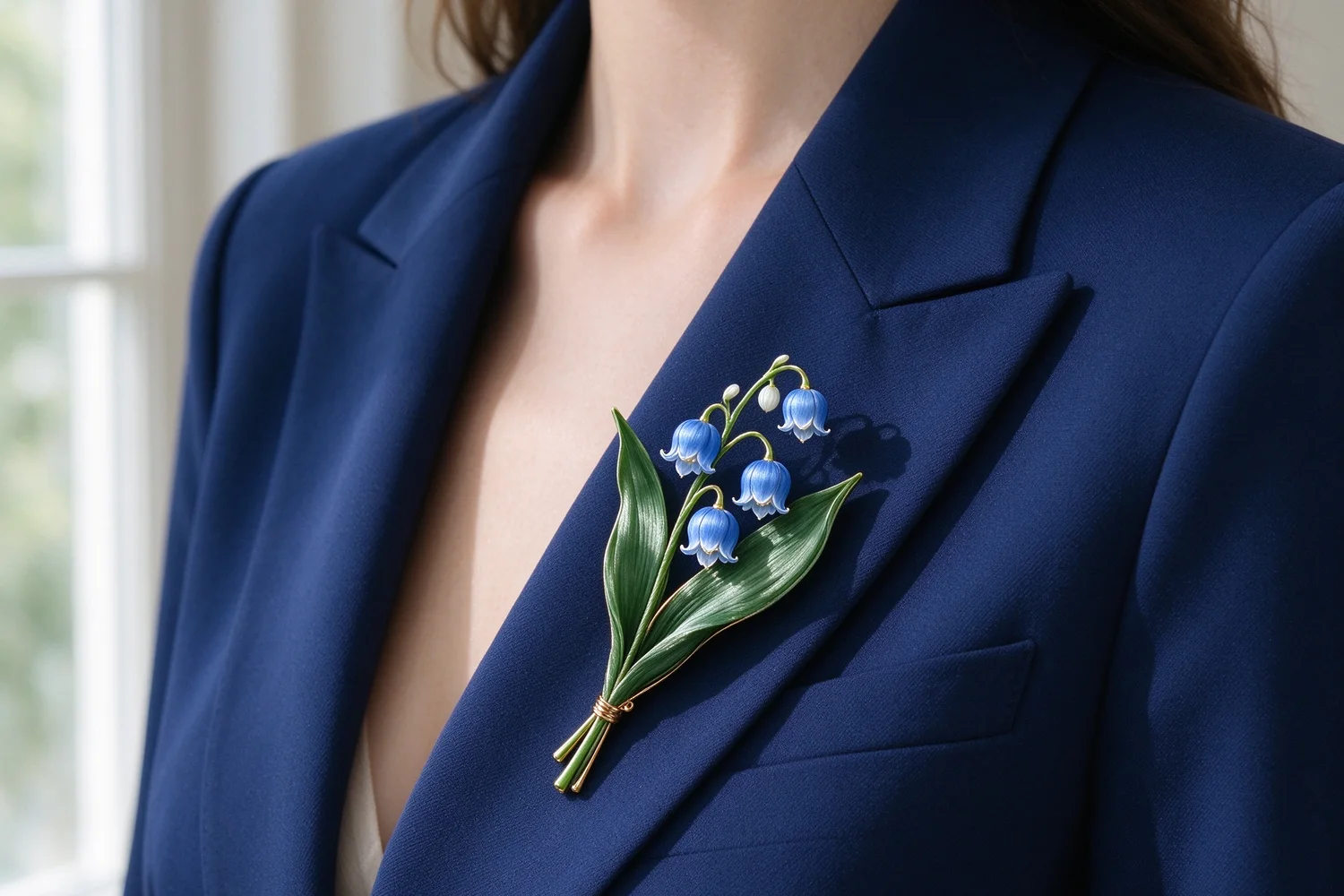
| Lily of the Valley Brooch Kit | Tapered shapes, but a simple assembly that produces a brooch rather than a hairpiece |
| Blue Phoenix Brooch Kit | The most sculptural piece in the range, and the least forgiving — better as a second project |
If you are buying finished instead, start with something small and light rather than the most dramatic piece in the catalogue. The practical questions of length, weight and attachment are covered in how to choose your first Chinese hairpin.
How long before you can wear it?
| Route | Time to first wear |
|---|---|
| Finished piece | Immediately |
| Kit, small hairpin | Two evenings plus a day of curing |
| Kit, brooch | Four to six hours plus curing |
| Kit, complex design | Weeks of evenings |
If the answer you need is "this weekend", the kit is the wrong purchase — and that is worth knowing before the box arrives rather than after.
A note on color
Both routes can be matched to a color, and this is one of the quiet advantages of a hand-wound flower over a printed or molded one. Because the silk is dyed before it is wound, a piece can be built to a swatch. If you are matching a wedding palette and the timing is tight, buy finished, and send the swatch at the point of ordering.
For what the different flowers mean — which usually decides the choice once the practical questions are settled — the symbolism guide covers the vocabulary, and the Chinese intangible heritage guide explains where the craft comes from.
Frequently asked questions
Is a DIY kit cheaper than a finished piece?
Not by much, and sometimes not at all. A kit contains the same materials and the same hand-prepared frames as a finished piece — what you are saving is the maker's hours, which is why the difference is smaller than people expect.
Which is a better gift?
A kit if the person genuinely enjoys making things; a finished piece if you are not sure. A kit given to someone who does not craft tends to sit unopened, and the hours behind it are wasted.
How much time does a kit actually take?
Four to six hours of hands-on work for a small hairpin, split comfortably across two evenings, plus a day for the glue to cure. Longer designs take longer still.
What tools do I need for a kit?
Three: scissors, a lighter and a cylindrical pen. The kit supplies the materials and a small brush for glue, but that brush handle is too thin for shaping petals.
Can I buy a finished piece in a specific colour?
Yes. Because the colour is chosen at the thread stage rather than after the flower is made, a piece can be wound to match an outfit or a wedding palette.