What Hair Accessory Goes With a Qipao?
What hair accessory goes with a qipao?
One silk flower, set low. A qipao already has a collar, a closure and a print doing the talking at the neckline, so the hair needs a single deliberate object rather than a set. Put it at the back of a low bun, or just above one ear, and stop there.
That answer holds for a wedding, a dinner and a photograph. What changes is the size of the flower and the height of the hairstyle, not the principle.
Why is the hair the right place to add something?
Because the dress has already claimed the neck. The high mandarin collar of a qipao closes at the throat, which is exactly where a necklace would sit, and the fabric is usually patterned or richly colored, which is where a brooch would sit. The head is the one area the dress leaves empty.
This is why a qipao looks unfinished with loose hair and complete with it up: the collar is designed to be seen against skin and against a clear silhouette. Once the hair is up, the hair itself becomes the frame, and one flower in that frame reads as intention.
How does collar height change the choice?
It changes how much space you have between the jaw and the shoulder, and that space decides how big the flower can be.
| Collar | Hair | Flower | Why |
|---|---|---|---|
| High, closed at the throat | Low bun or chignon, hair close to the head | Small to medium, set at the back | The collar shortens the neck visually; a high or wide ornament adds to that |
| Low or open collar | Half-up, or a low twist with volume at the sides | Medium, set above one ear | There is room at the jawline, so the flower can sit higher without crowding |
| Collarless or modern cut | Anything from a pixie to a braid | Small, single, off-center | No collar means no reference point, so the flower has to be the only ornament |
The mistake in all three rows is the same: a flower that is wider than the space between the ear and the shoulder. It photographs as a hat.
Which flower shape suits a qipao?
Rounded, with a defined center. A peony, a hydrangea cluster, a small lotus - anything with a circular silhouette matches the dress's lines, which are curves rather than angles.
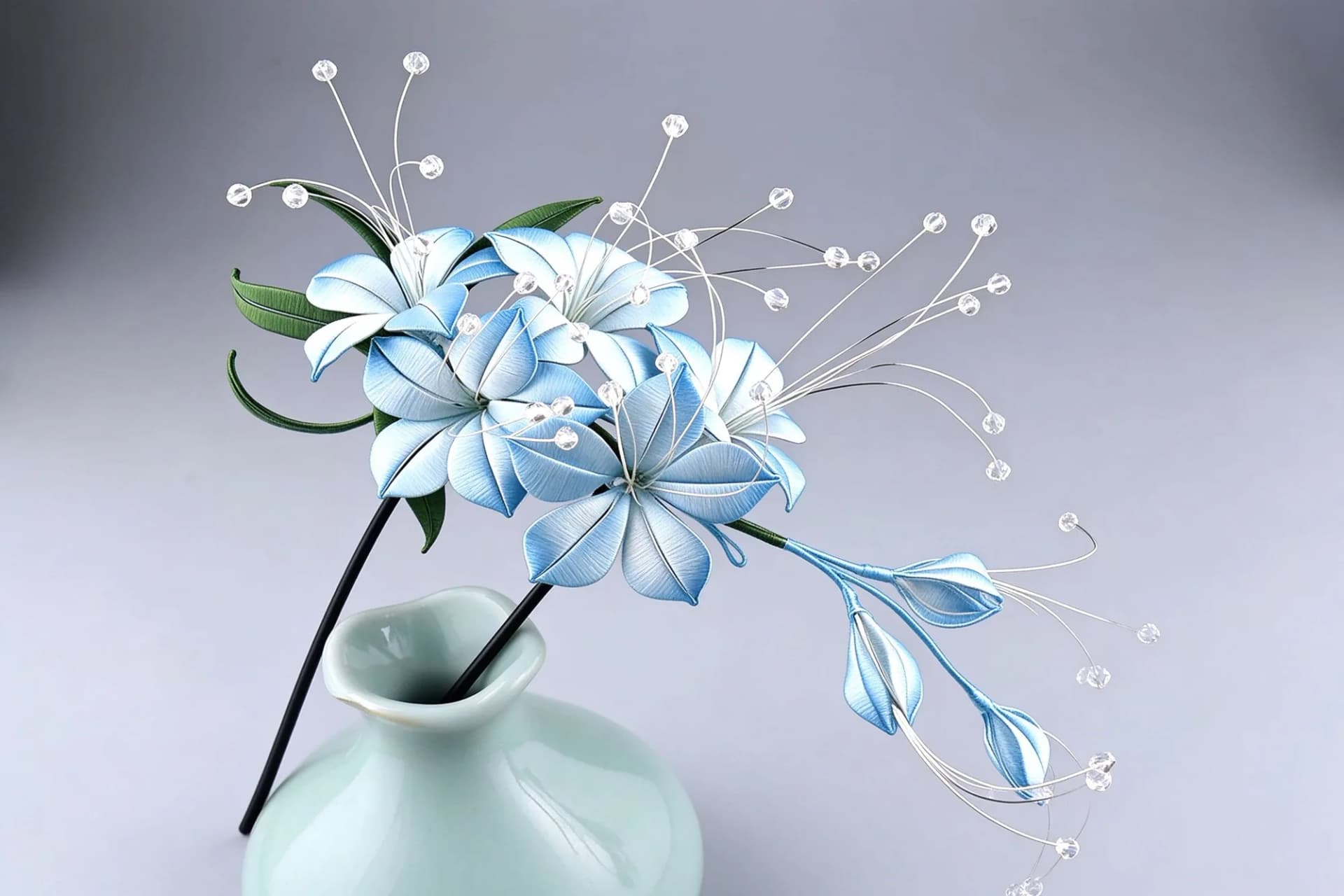
Sharp, spiky shapes fight the garment. A long spray of thin stems reads beautifully in loose hair and reads as noise against a high collar, because both the collar and the stems are vertical.
Color is the other half. A flower that repeats a color already in the fabric looks intentional; a flower in a color that appears nowhere else looks added. If the qipao is plain, the flower can be the only color in the outfit, and that is the easier version to get right.
What should you avoid?
Avoid wearing earrings and a hair flower at the same visual weight. Both sit near the face, and two objects of equal size compete; make one small. In practice, a flower and small studs beat a flower and a chandelier earring.
Avoid hair combs with dangling beads under a high collar. They move when you turn your head, they catch on the collar, and they add a second focal point at the same height as the flower.
Avoid a flower that is too dark against dark hair. Deep red and near-black read as a shadow at any distance; if the hair is black, choose a color with some light in it, or place the flower where the window or the room light hits it.
Does the hairstyle matter more than the flower?
Yes, and this surprises people. The same flower looks formal in a low chignon and casual in a loose braid, because the hairstyle sets the register before anyone looks at the ornament. Decide the register first - wedding, dinner, everyday - and the flower follows.
For a wedding, the hair is usually set low and close, which means the flower can be a little larger than you would wear to dinner. For an everyday qipao, a half-up style with one small flower is enough, and it is the version that gets worn more than once.
How do you keep the flower in place?
A hairpin with a metal fork holds better than a clip in smooth, set hair, because the fork goes through the mass rather than gripping the surface. Push it in at a slight angle rather than straight down, so the weight of the flower rests against the head instead of pulling the pin out.
If the hair is very fine or very smooth, cross two pins rather than using one. That is the same advice that applies to silk flowers in any hairstyle, and it is covered in more detail in silk flower hairpins for short or fine hair.
Which pieces work best with a qipao?
A cluster with a soft outline, such as the hydrangea hairpin, sits well against a high collar because its width is in the middle rather than at the edges. A piece with a trailing line, such as the trailing jasmine hairpin, suits a lower collar and a looser hairstyle.
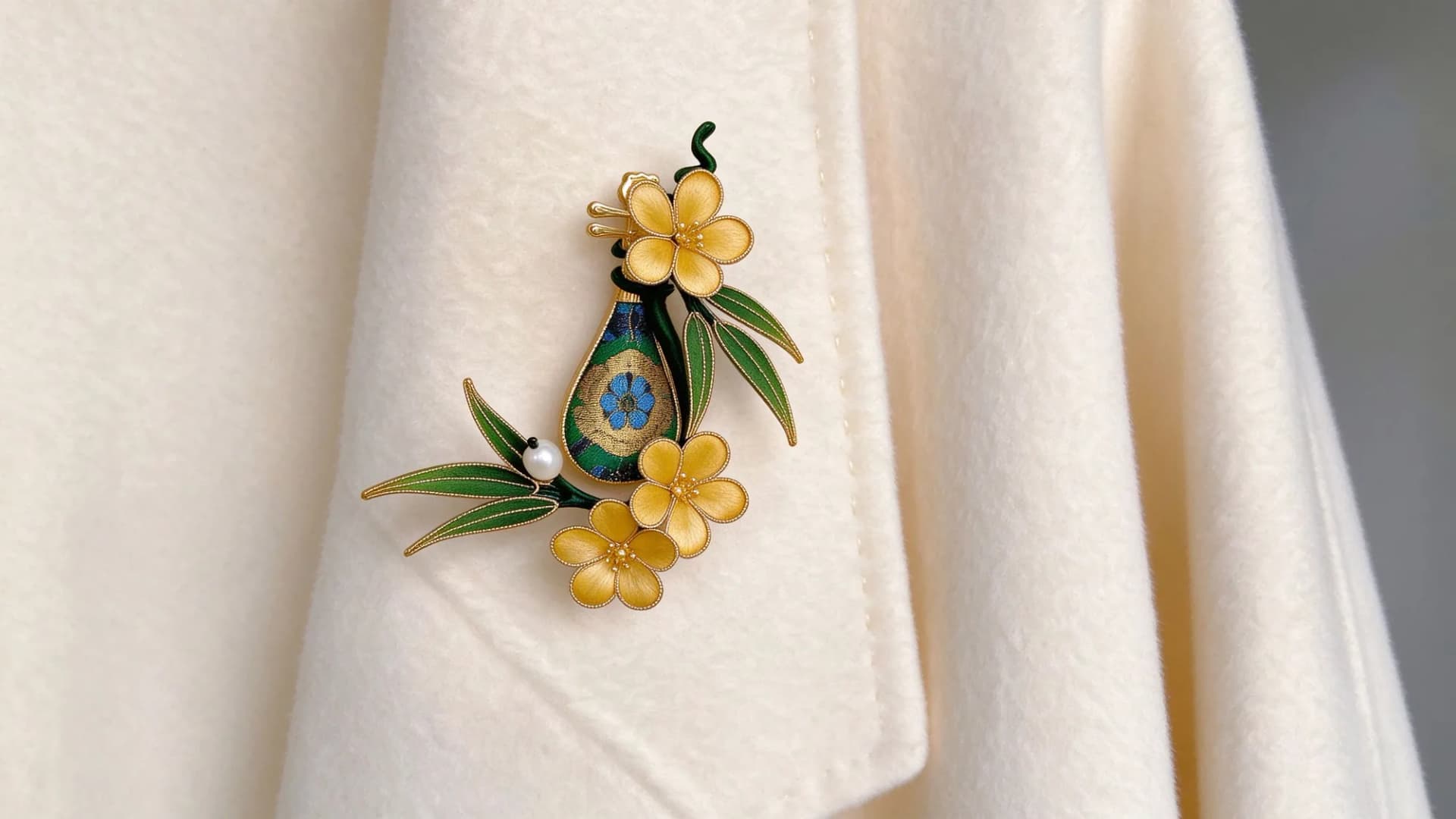
If the qipao is plain and you want one object rather than two, a phoenix brooch pinned at the shoulder does the same job as a hair flower without competing with the collar. That is the version to choose when the hair is already doing something - a braid, a twist, a veil.
For the wider question of how Chinese hair ornaments are worn with modern clothes rather than costume, there is a longer guide here: how to wear hanfu hair accessories in modern life.
What is the one rule to remember?
One object, placed where the dress left space. A qipao is a complete garment; the ornament is there to finish the head, not to decorate the dress a second time. Everything above is a way of applying that sentence to a particular collar, a particular hairstyle and a particular flower.
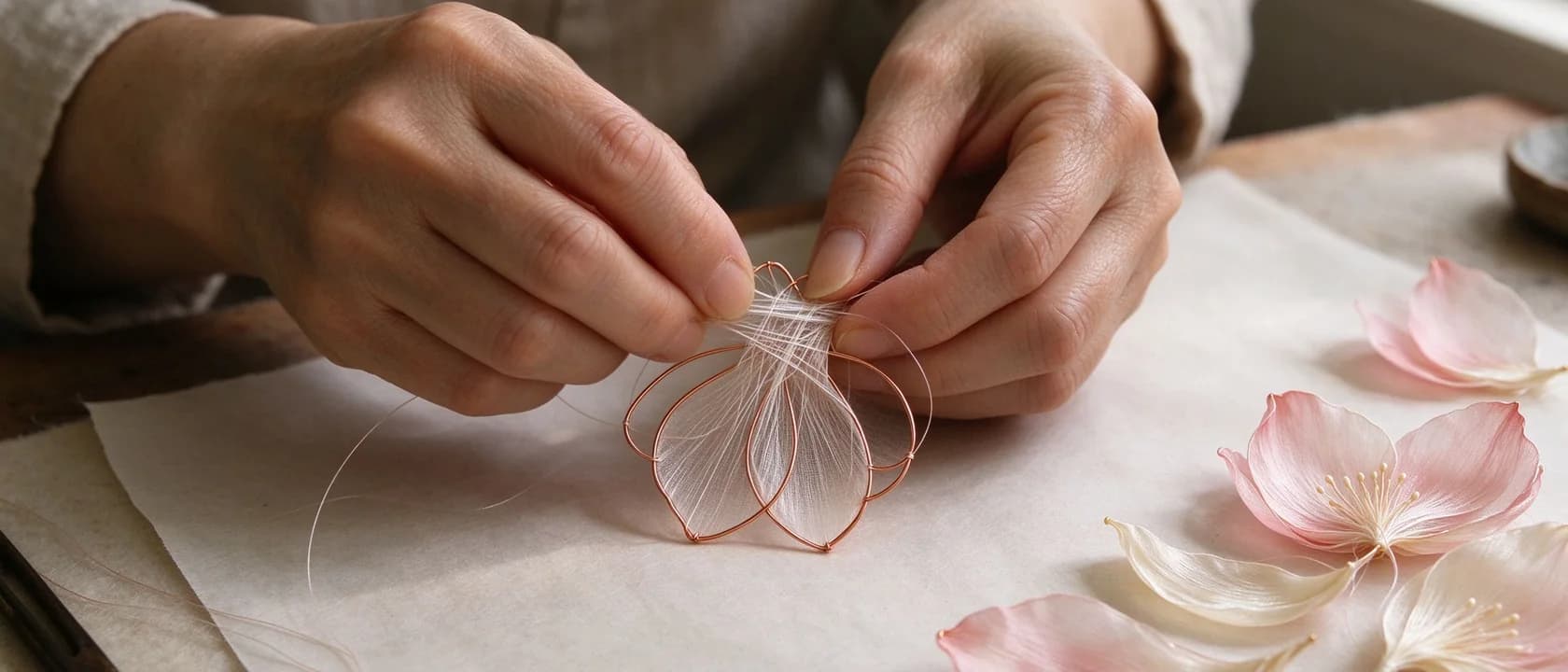
The craft behind the flower matters here too, because a qipao is usually worn at an occasion where people stand close. Hand-wound silk shows its thread lines at that distance, and the chanhua craft page explains what those lines are and why they are the sign of a piece made petal by petal.
Frequently asked questions
Can you wear a hairpin with a qipao to a wedding?
Yes. A single silk flower set low at the back or above one ear is the usual choice for a guest, and a small cluster is common for a bride. What changes between the two is size, not type: a guest's flower should not be wider than the palm of her hand.
Should you wear a necklace with a qipao?
Usually not, if the collar is high. A mandarin collar that closes at the throat already occupies the space a necklace would sit in, and a chain over it looks like it was added afterwards. If the collar is low or open, a short necklace can work - choose one or the other, not both.
What hairstyle suits a qipao best?
One that shows the collar. A low bun, a chignon or a half-up style keeps the neckline clear, which is the part of the dress doing the most work. Long hair worn loose over the shoulders covers the collar and makes the dress look narrower than it is.
Can you wear a silk flower hairpin with short hair?
Yes, and it is often easier. A small flower above one ear or at the side of a pixie cut needs no anchoring, because the pin grips the hair directly. Very large pieces are the ones that need length to sit against.
Is a qipao the same as a cheongsam?
In English the two words are used for the same garment. The qipao developed in Shanghai in the 1920s, and the name cheongsam comes from the Cantonese pronunciation of changshan, a long robe. The dress most people picture - high collar, fitted waist, side slits - is the Shanghai version.