How to Photograph a Silk Flower With a Phone
How do you photograph a silk flower with a phone?
Put it by a window, turn the flash off, and shoot from the side. A hand-wound silk flower is made of flat surfaces that catch light in lines, and the only light that shows those lines is light coming from one direction. Everything else in this guide is a refinement of that one sentence.
The reason it matters is that silk photographs badly under the two conditions phones default to: overhead room light and flash. Overhead light flattens the petals into a single bright shape, and flash turns the thread into a white scratch. Neither is a problem with the flower. Both are problems with the light.
Why does a silk flower look better in person than in photos?
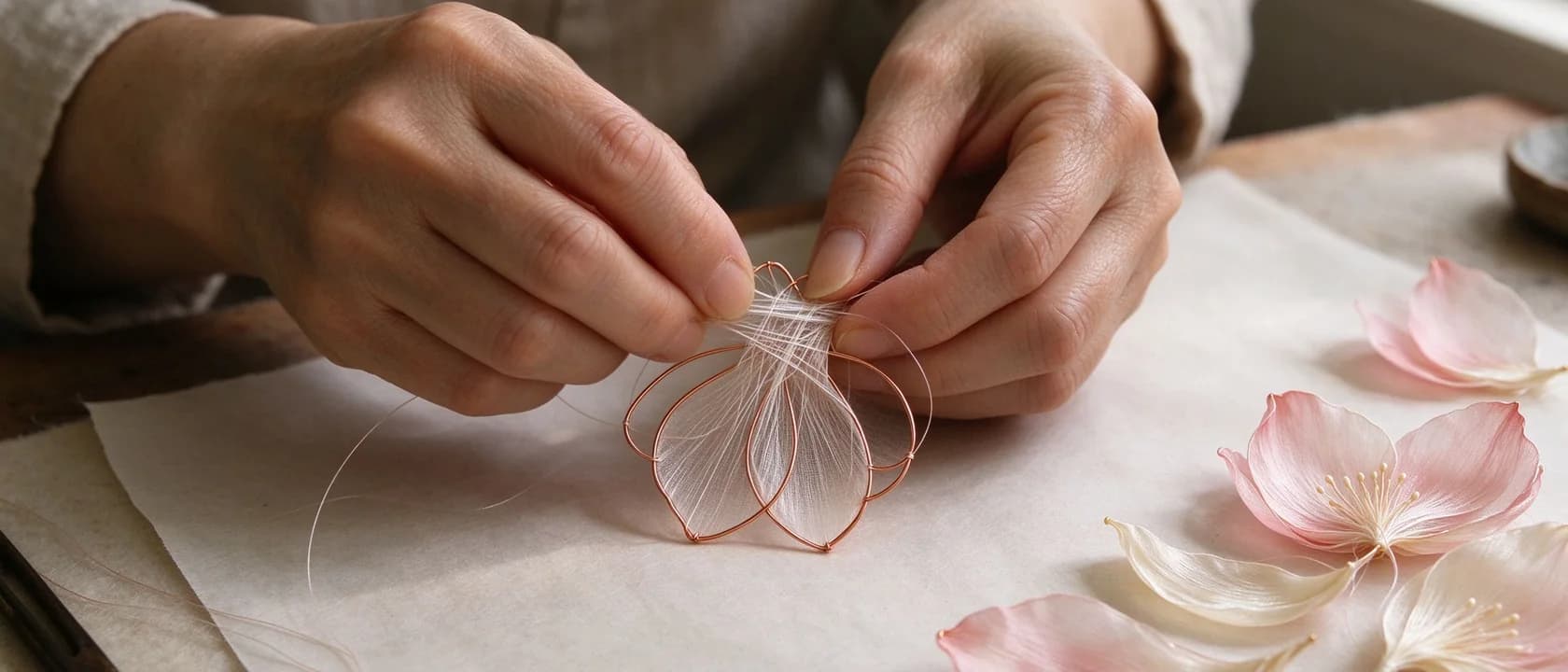
Because the eye sees the sheen move. A wrapped petal has hundreds of tiny facets where the floss crosses the wire, and each one catches the light at a slightly different angle as the flower or the viewer shifts. A photograph freezes one of those angles, so the piece can look flat even though it is not.
The fix is not a better camera. It is a light source with direction and a lens close enough to resolve the wrap. If you can see individual thread lines in the photo, the sheen takes care of itself.
What is the ten-minute setup?
Four things, and none of them cost money.
| Item | What it does | What to use |
|---|---|---|
| A window | Gives light from one side, so petals have a lit edge and a shadowed edge | A north-facing window, or any window without direct sun on the table |
| A white card | Bounces light back into the shadow side so it does not go black | A sheet of A4 paper, a white placemat, the inside of a cereal box |
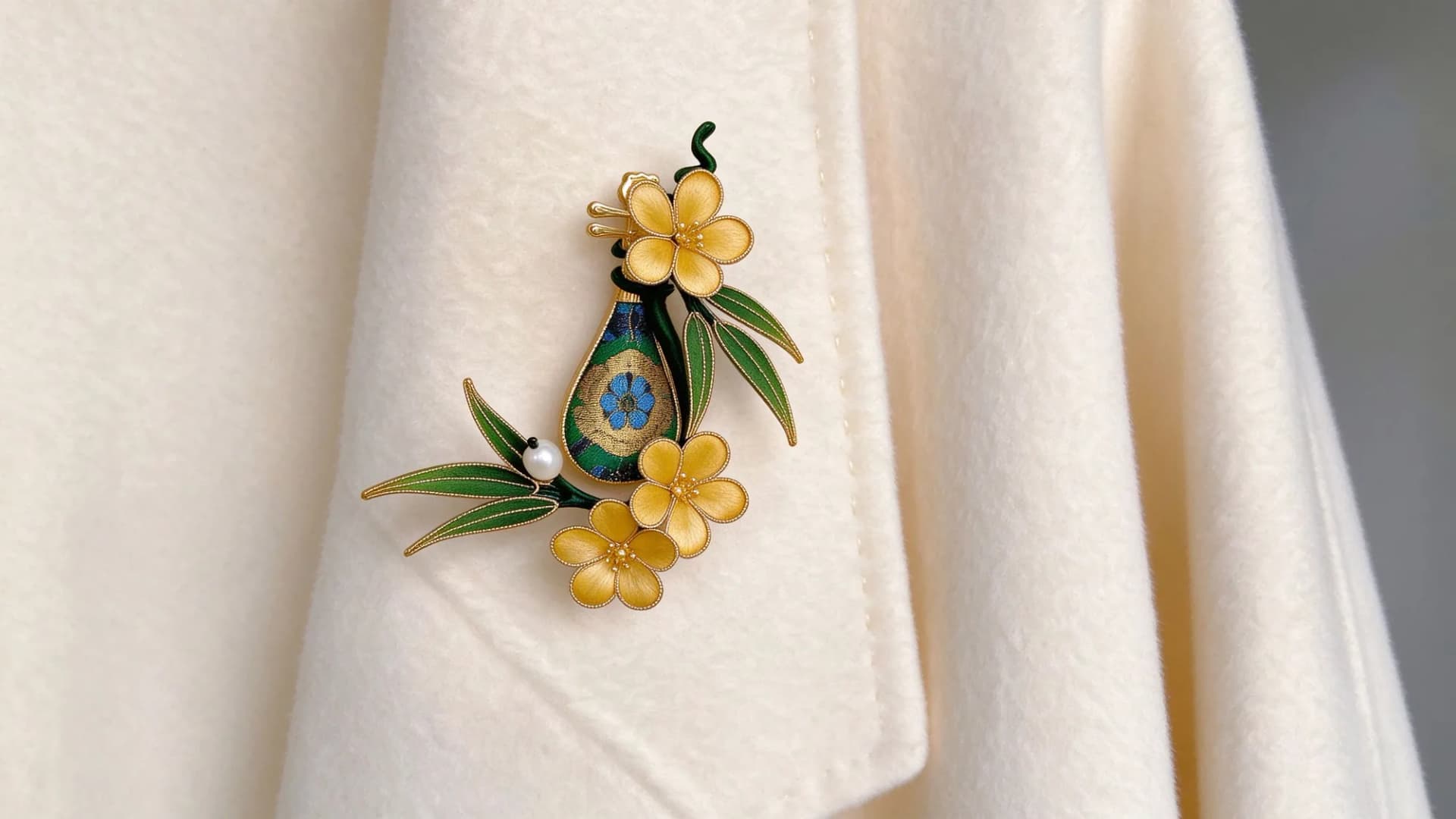
| A matte backdrop | Stops the background competing with the silk | Linen, raw wood, grey card, a wool coat |
| Something to raise the flower | Puts the flower at the height of the camera so you are not shooting down at it | A stack of books under the backdrop |
Set the flower down, put the white card on the side away from the window, and stand so the window is at your left or right shoulder rather than behind you. That is the whole setup.
Which lens should you use?
The main lens for the full piece, the 2x or 3x for details, and the ultra-wide never. Ultra-wide bends straight lines at the edges of the frame, which makes a five-petal flower look like it is leaning backwards, and it forces you so close that the phone's own shadow falls on the subject.
Avoid digital zoom entirely. If the flower is small in the frame, move closer instead; digital zoom enlarges the pixels without adding any detail, and the wrap of the silk is exactly the detail you are trying to show.
How do you get the color right?
Put something white in the frame while you set up, tap the screen on the white, and lock the exposure. Then reframe onto the flower without unlocking. The phone has now measured the scene against a known neutral, and a deep red stays red instead of drifting orange.
Then pull the exposure down slightly, by about a third of a stop. Silk is bright at the highlights, and a phone left on auto will expose for the average and let the brightest fold clip to white, which is where the detail lives.
What are the six photographs worth taking?
- Front, straight on. The whole piece, filling about seventy per cent of the frame, on a plain matte background. This is the one that gets used as a thumbnail.
- The back. Buyers who know the craft look here first, because the back shows whether the petals are bound to a frame or glued to a backing.
- In a hand. Scale is the single most common question about a handmade flower, and a hand answers it without a ruler.
- Worn. On a lapel, in hair, on a coat. This is the photograph that makes someone imagine owning it.
- A macro of the thread. Two or three petals filling the frame, with the window light raking across them so the individual wraps are visible.
- The packaging. It answers the gift question, and it is the frame most shops forget.
What should you not do?
Do not use the phone's portrait mode on a flower. It blurs the background by guessing at edges, and a flower has more edges than anything the algorithm was trained on, so petals come back with soft halos or a sharp center and a blurred tip.
Do not photograph on a glossy table. The reflection doubles the object and makes the frame busy, and it bounces light back up into the flower from below, which cancels the shadow you set up.
Do not over-edit. Silk reds and greens are the first colors to go plastic when saturation is pushed, and a buyer who receives a duller piece than the photo will return it. Adjust exposure and white balance; leave saturation alone.
How does this help a listing or a Christmas photograph?
A listing lives or dies on the second and fourth frames, because those are the ones that answer "how big" and "what would I wear it with". If you are photographing a piece for a tree rather than a wardrobe, the same six frames apply, with the tree shot replacing the worn shot - the advice in silk flowers on a Christmas tree covers where to place it so the photograph has a focal point.
The macro frame is also the one that separates a handmade piece from a factory one in a buyer's mind. If you want the checklist a buyer uses when a photo is all they have, it is here: how to tell handmade silk flowers from machine-made.
Which pieces photograph best?
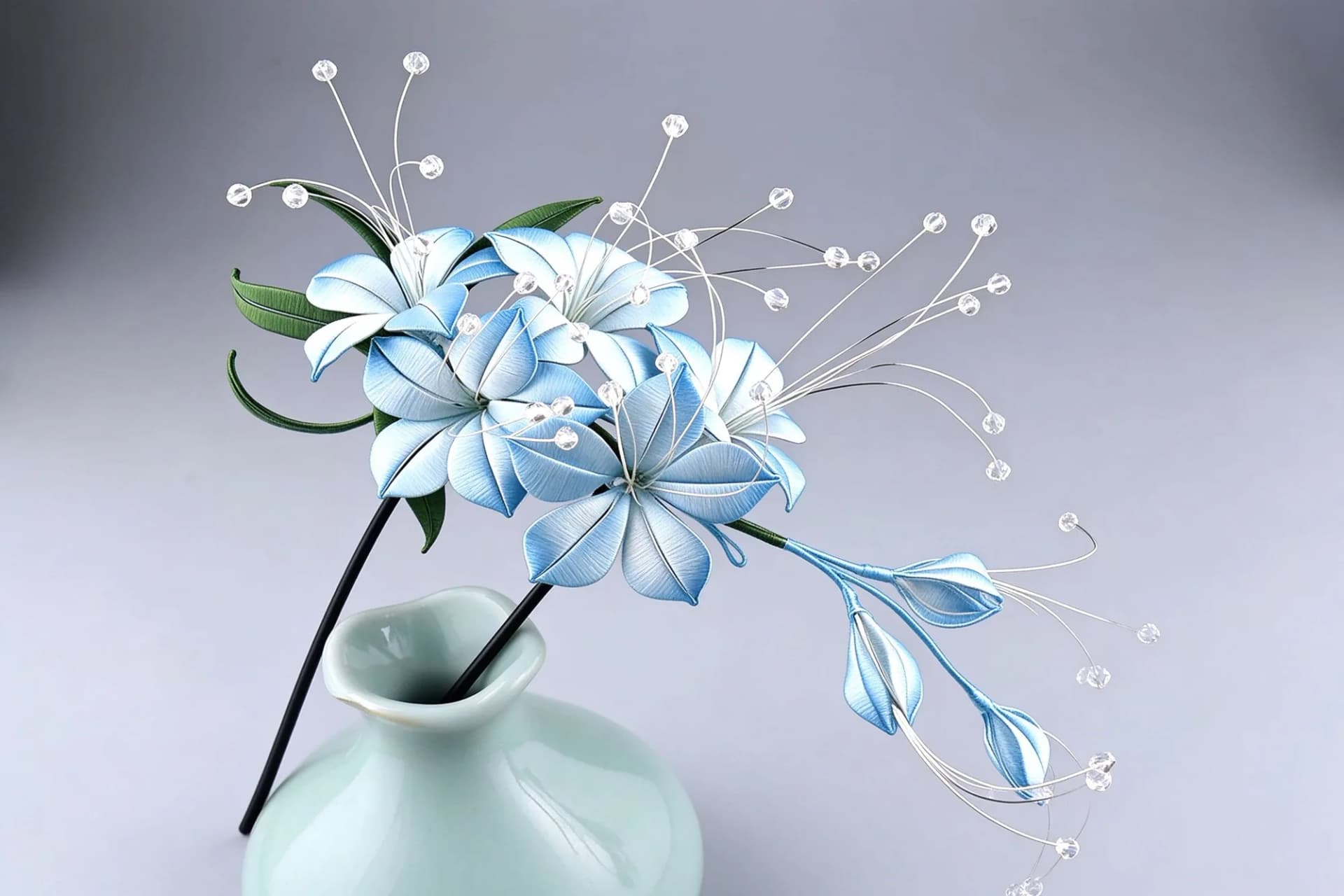
Pieces with a strong silhouette and one dominant color, which is most of what we make. The phoenix brooch has a shape that reads at thumbnail size, the hydrangea hairpin photographs well because a cluster of small petals fills a frame evenly, and the trailing jasmine hairpin needs a plain background because its stems are thin and disappear against pattern.
If you want to understand what you are photographing before you set the camera up, the chanhua craft page explains how the floss is wound and why the surface behaves the way it does in light.
Frequently asked questions
Do I need a macro lens to photograph a silk flower?
No. On most phones the 2x or 3x lens focuses close enough to show the thread lines, and it distorts less than holding the main lens against the flower. A clip-on macro lens helps, but it is not the difference between a usable photo and an unusable one - light is.
Why does red silk look orange in my photos?
Because the phone's auto white balance is trying to make the whole frame neutral, and a large red object pulls it warm. Fix it by putting something white in the frame, tapping to focus on that white, locking exposure, then moving back to the flower.
Should I use flash for jewellery photos?
Almost never. Direct flash flattens the wrap of the silk and turns the wire into a hard white line, and it removes the shadow that shows the petal has depth. If the room is too dark for a steady shot, use a second lamp with a sheet of white paper in front of it instead.
What background makes a handmade flower look expensive?
Something matte and slightly textured - linen, raw wood, uncoated paper, a wool coat. Glossy surfaces compete with the silk for the viewer's attention, and pure white makes the flower look like a stock photo rather than an object.
How many photos should I take of one piece?
Six, if the photos are for a listing: front, back, scale in a hand, worn, a close detail of the thread, and the packaging. Six good frames cover every question a buyer asks before spending money on something they cannot touch.