Chanhua vs Ronghua: Which Silk Flower Craft Should You Learn First?
What is the difference between chanhua and ronghua?
Chanhua is fine silk thread wrapped flat around a shaped wire frame. Ronghua is silk velvet tufted and trimmed on a twisted copper core. Both are Chinese heritage flower crafts worn in the hair, and in a small photograph they can look like the same thing — but the materials, the tools, the time and the failure modes are completely different.
The short version: chanhua is a wrapping craft, ronghua is a sculpting craft. If you want a wearable flower from your first evening, start with chanhua. If you want the denser, more formal blossom you see on bridal hanfu, ronghua is what you are looking at.
Side by side
| Chanhua | Ronghua | |
|---|---|---|
| Material | Mulberry silk thread over shaped wire | Boiled, dyed silk velvet over copper wire |
| Core motion | Wrapping thread flat around a frame | Tufting and twisting velvet into shape |
| Key skill | Even, gap-free wrapping | Trimming (打尖) the velvet into a petal profile |
| Start from | Pre-shaped petals are easy to buy | Almost always starts from a kit |
| Time for one hairpin | 4–6 hours for a beginner | Roughly a full day |
| Surface | Smooth, slightly glossy, thread-fine | Dense, matte, fuzzy |
| Durability | Holds shape for years if kept dry | Crushes more easily; re-fluffs with care |
| Reads as | Delicate, everyday-elegant | Formal, courtly, bridal |
| Where you see it | Hairpins, brooches, small ornaments | Headdresses, bridal sets, large statement pieces |
Both are recognised as intangible cultural heritage in China, with distinct regional traditions — chanhua across Hubei, Fujian and Taiwan, and ronghua most famously in Nanjing and Yangzhou. You can read more on the chanhua silk flower page and the ronghua velvet flower page.
Which one is harder to learn?
Chanhua is easier, for one structural reason: you can buy the frame.
In chanhua, the wire petal is a shape you receive or make once, and then the craft is a single repeated motion — wrapping thread beside thread without gaps. That motion is genuinely difficult for the first two petals and then becomes muscle memory.
Ronghua has no equivalent shortcut. The velvet has to be made and shaped before it can become a petal, and the trimming step is where most of the skill lives. Cutting a petal one millimetre too deep ruins it, and unlike a chanhua petal you cannot simply unwrap and start again.
Which one costs more?
Ronghua, by a wide margin, and the gap is labour rather than materials.
A finished chanhua hairpin represents four to six hours of work from a beginner. A comparable ronghua ornament represents a full day, plus the preparation of the raw silk. That is why ronghua pieces sit at a higher price point even when the flower is smaller.
If you are buying rather than making, chanhua is also the safer first purchase. It travels well, it does not crush in a bag, and it works with more outfits.
Which should you learn first?
Learn chanhua first if:
- You want something wearable from your first attempt
- You would rather buy a kit than source raw materials
- You plan to wear the piece with normal clothes, not only hanfu
- You want a craft you can finish in two evenings
Start with ronghua if:
- You already know you love the denser, matte look
- Your goal is a bridal or formal headdress
- You are comfortable spending a full day on one ornament
- You have a kit with the velvet already prepared and a good tutorial
The honest recommendation: do one chanhua project first even if ronghua is your eventual goal. Wrapping teaches thread control and even tension, both of which carry straight over, and you will have a finished, wearable piece at the end of week one instead of a half-built headdress.
How do you tell them apart in a photograph?
Three quick tells:
- Edges. A chanhua petal has a visible, crisp wire edge. A ronghua petal has a soft, fuzzy, cut edge.
- Light. Chanhua catches light in fine lines along the thread. Ronghua absorbs light and looks matte.
- Detail. If you can see individual thread lines, it is chanhua. If the surface looks like felt, it is ronghua.
Where does luodian fit?
Luodian is a third, unrelated craft: mother-of-pearl cut into shapes and inlaid into lacquer or set into metal. It is not a flower craft, so it does not compete with chanhua or ronghua — but it pairs with both, and it is what gives many heritage jewellery pieces their iridescent blue-green sheen. There is a separate introduction on the luodian mother-of-pearl page.
If you want to start this week
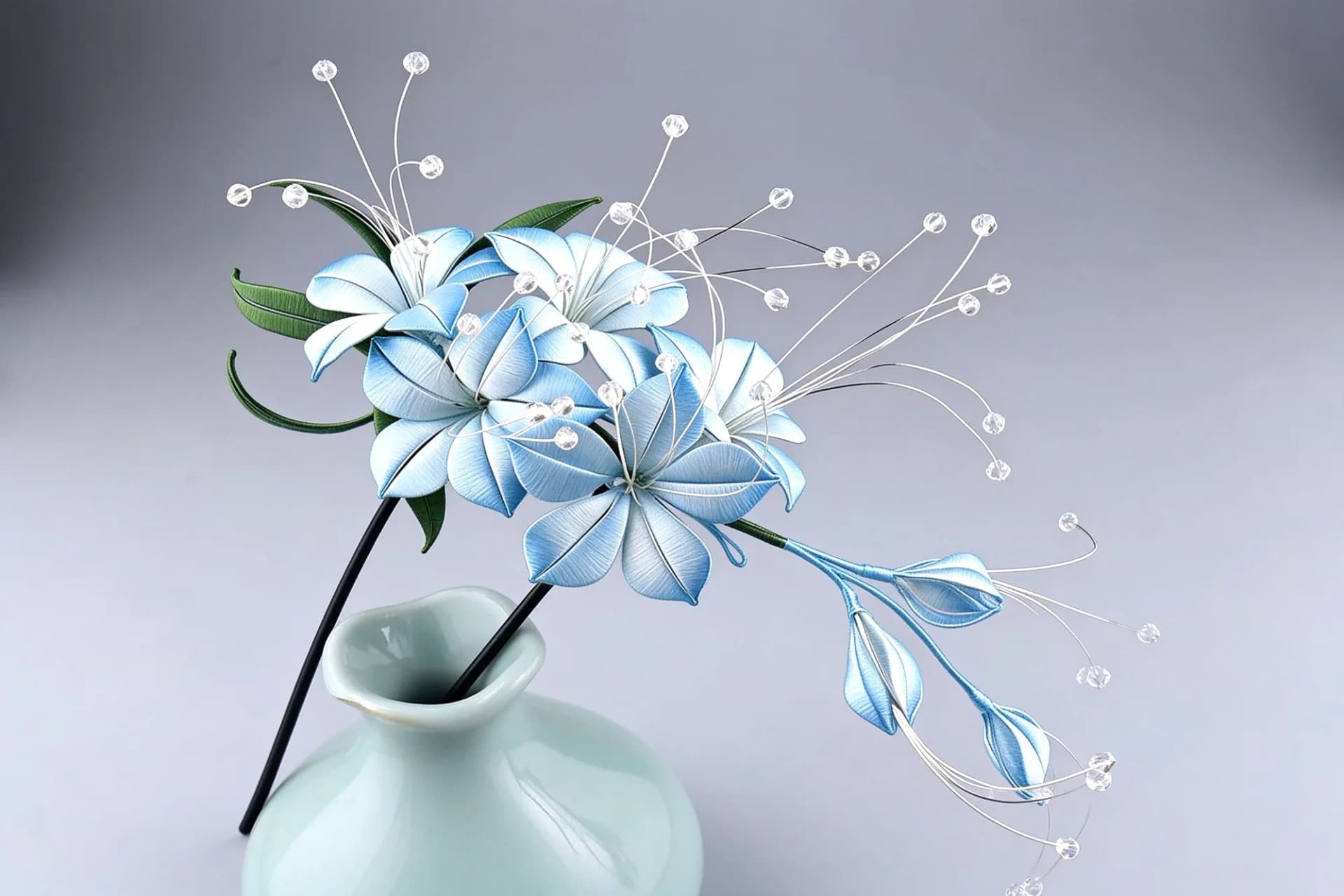
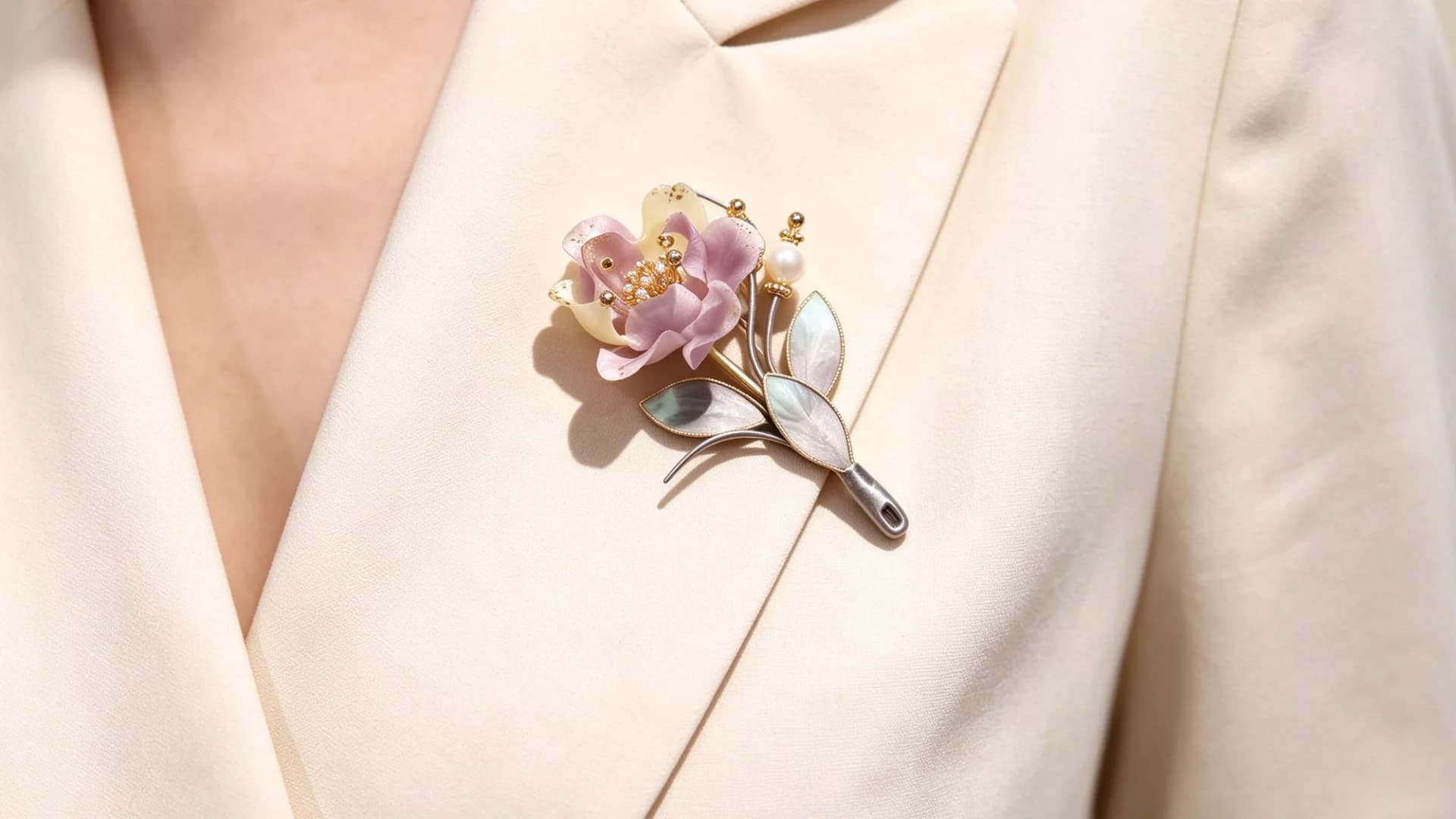
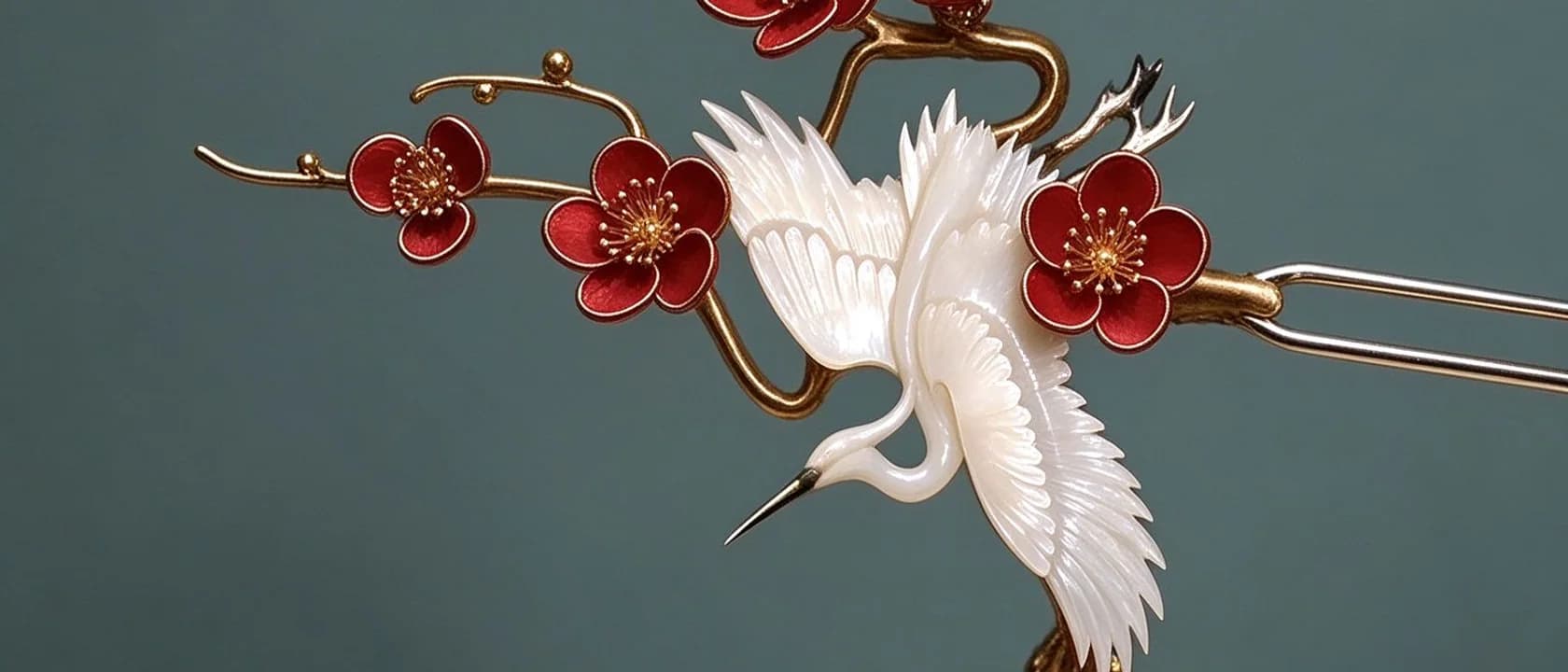
The quickest route is a kit with pre-shaped petals and English instructions. The Hydrangea Hairpin Kit is the smallest first project, the Blue Phoenix Brooch is the most striking, and the Lily of the Valley Brooch sits in between. To understand the craft before spending anything, start with what Chinese silk flower art is. Once you have picked, how to make a chanhua peony hairpin walks through the whole project step by step.
Frequently asked questions
Is chanhua the same as ronghua?
No. Chanhua is silk thread wrapped flat around a shaped wire frame, which gives a smooth, slightly glossy petal. Ronghua is made from tufted silk velvet built up on a twisted copper core, which gives a soft, dense, matte petal. They are different crafts with different tools, different learning curves and different failure modes.
Which one is easier for a complete beginner?
Chanhua. You can buy pre-shaped wire petals and learn only the wrapping motion, and your first flower is wearable. Ronghua requires you to make the velvet core yourself before the flower even starts, which is why most ronghua beginners begin with a kit rather than raw materials.
Why does ronghua cost more than chanhua?
Ronghua takes longer per flower and starts from raw silk that must be boiled, dyed and split before shaping. A single ronghua ornament can take a full day of work, and the wire core and velvet cannot be reused if a petal is cut wrong.
Which one suits hanfu better?
Both are historically correct. Ronghua was worn at court and reads as more formal, so it suits full hanfu and bridal looks. Chanhua is lighter and reads more delicate, which makes it easier to wear with everyday clothing as well.
Can I mix chanhua and ronghua in one piece?
Yes, and makers often do, using chanhua for structured leaves and ronghua for soft petals. Mixing the two in one ornament is a recognised technique, not a shortcut.