Chinese Wedding Fan: Why Brides Carry a Tuanshan
What is a Chinese wedding fan?
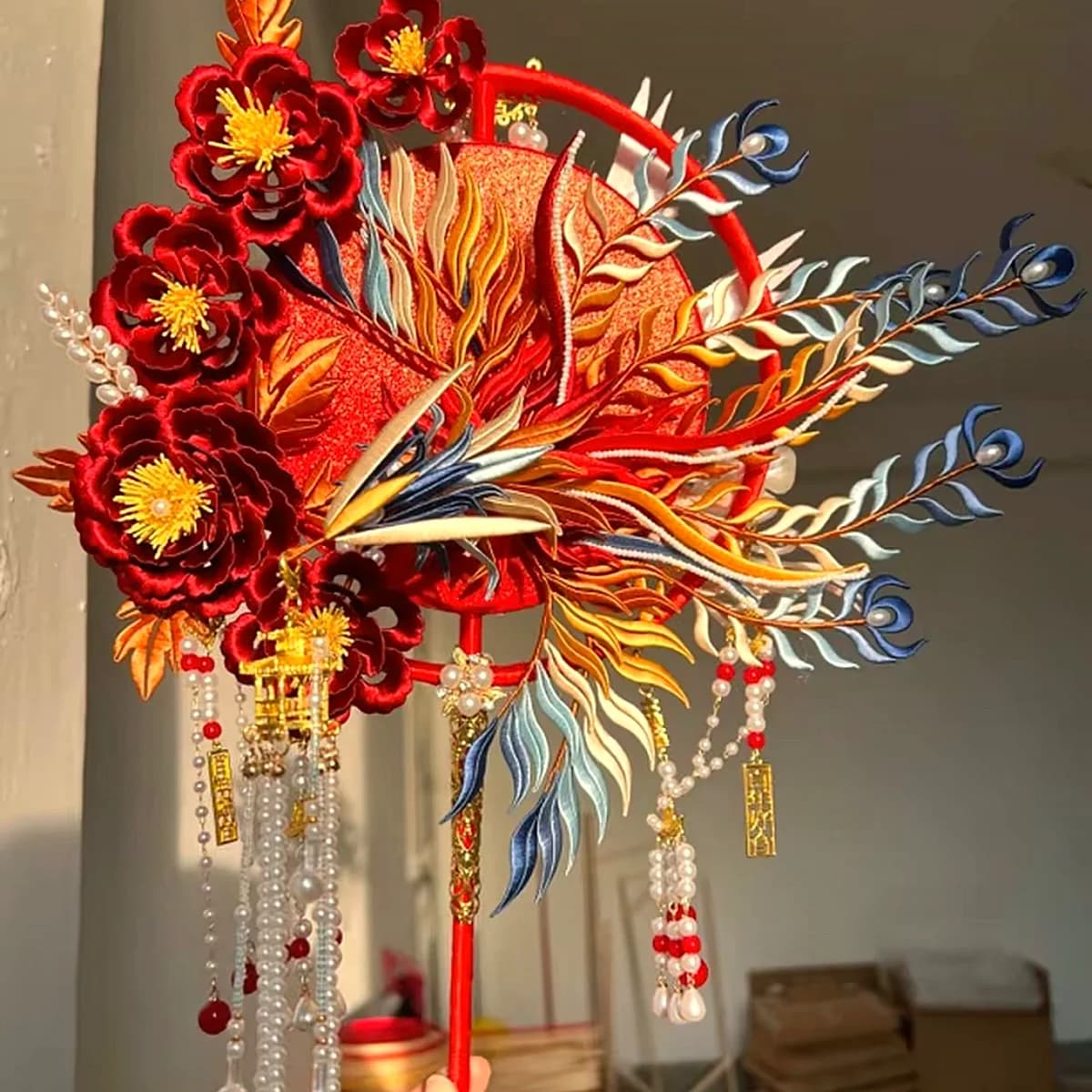
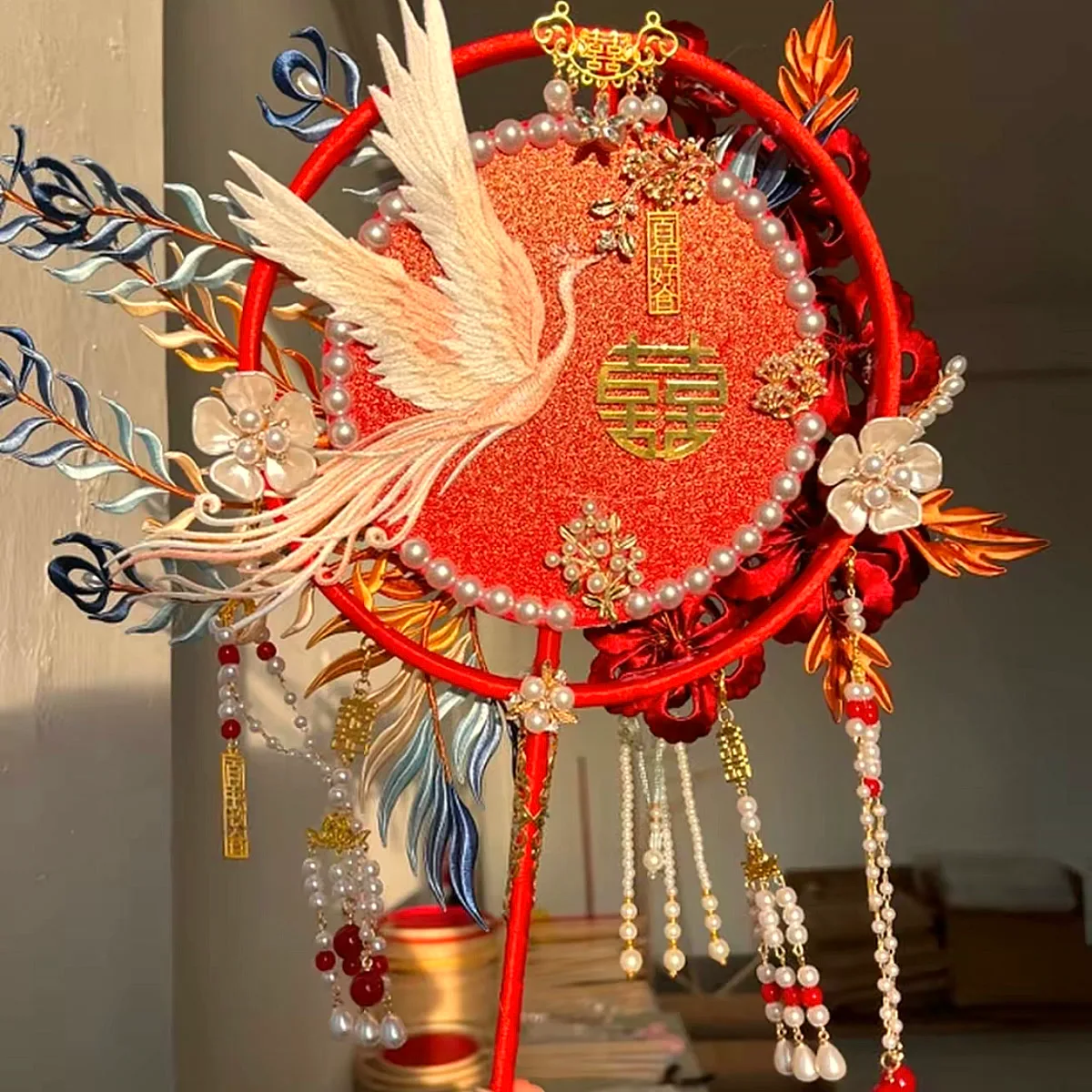
A Chinese wedding fan is a tuanshan: a round fan with a rigid handle, silk stretched over a shaped frame rather than a folding fan. In a traditional ceremony the bride holds it in front of her face, and the groom recites a poem to have it lowered — a custom called què shàn (却扇), recorded in China from the Tang dynasty onwards.
So it is not a prop in the Western sense of something carried for photographs. It is the object the ceremony turns on for a minute or two, and everything about how it is made follows from that.
What does the custom actually involve?
The short version: the bride hides, and the groom has to earn the reveal.
| Step | What happens |
|---|---|
| The bride arrives | The fan is held up, covering the face |
| The groom recites | Traditionally a poem — 却扇诗, a fan-removing poem |
| The fan is lowered | The couple see each other, and the ceremony continues |
The poem is the part that matters. In the Tang records the exchange is playful rather than solemn: the groom is expected to be clever, and the bride is entitled to keep the fan up until he manages it. That is why the custom survived when many more formal wedding rules did not — it gives the ceremony a moment with a bit of tension in it, instead of a rule to be observed.
How is a fan like this made?
Two layers, and the second one is where the craft sits.
| Part | Usually made of |
|---|---|
| Handle | Bamboo, wood or lacquered wood |
| Frame | Bamboo or wire, shaped into the round |
| Face | Silk or paper, stretched tight and fixed to the frame |
| Decoration | Painting, embroidery, or hand-wound silk flowers |
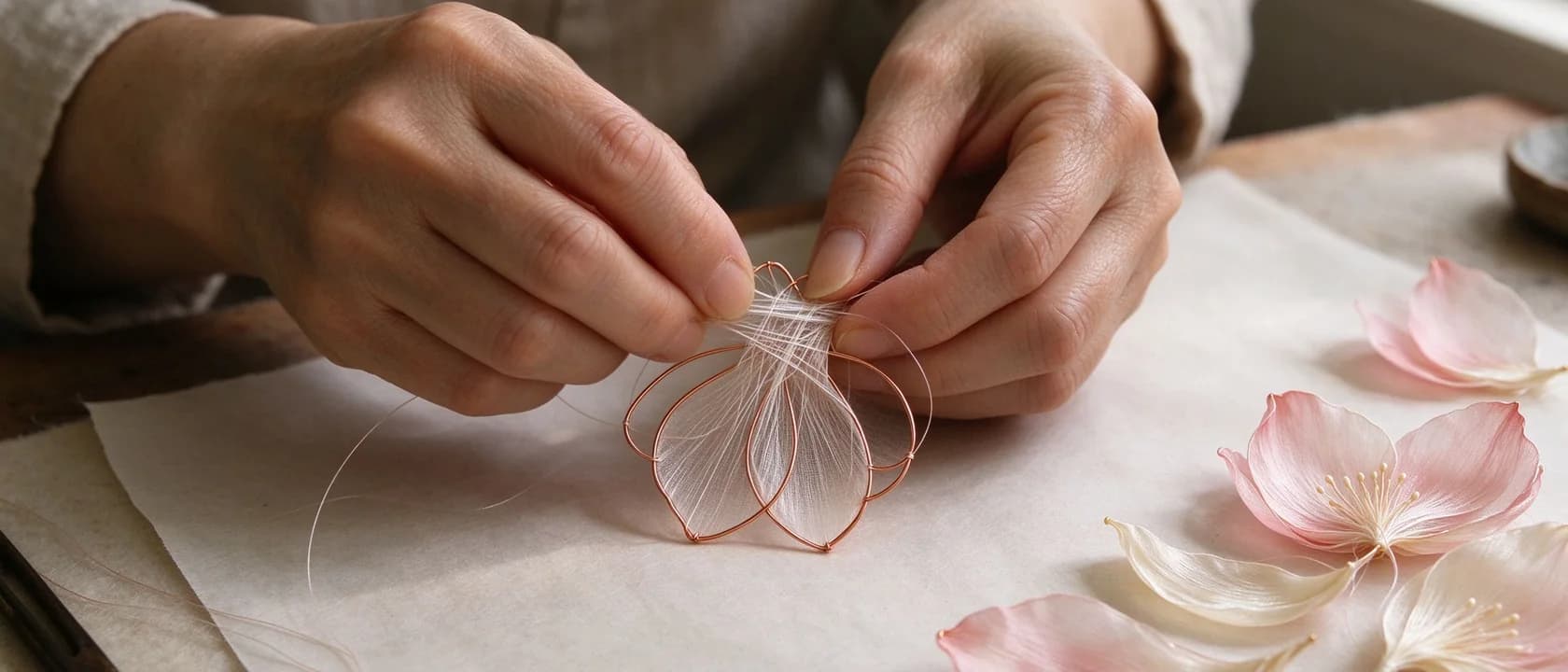
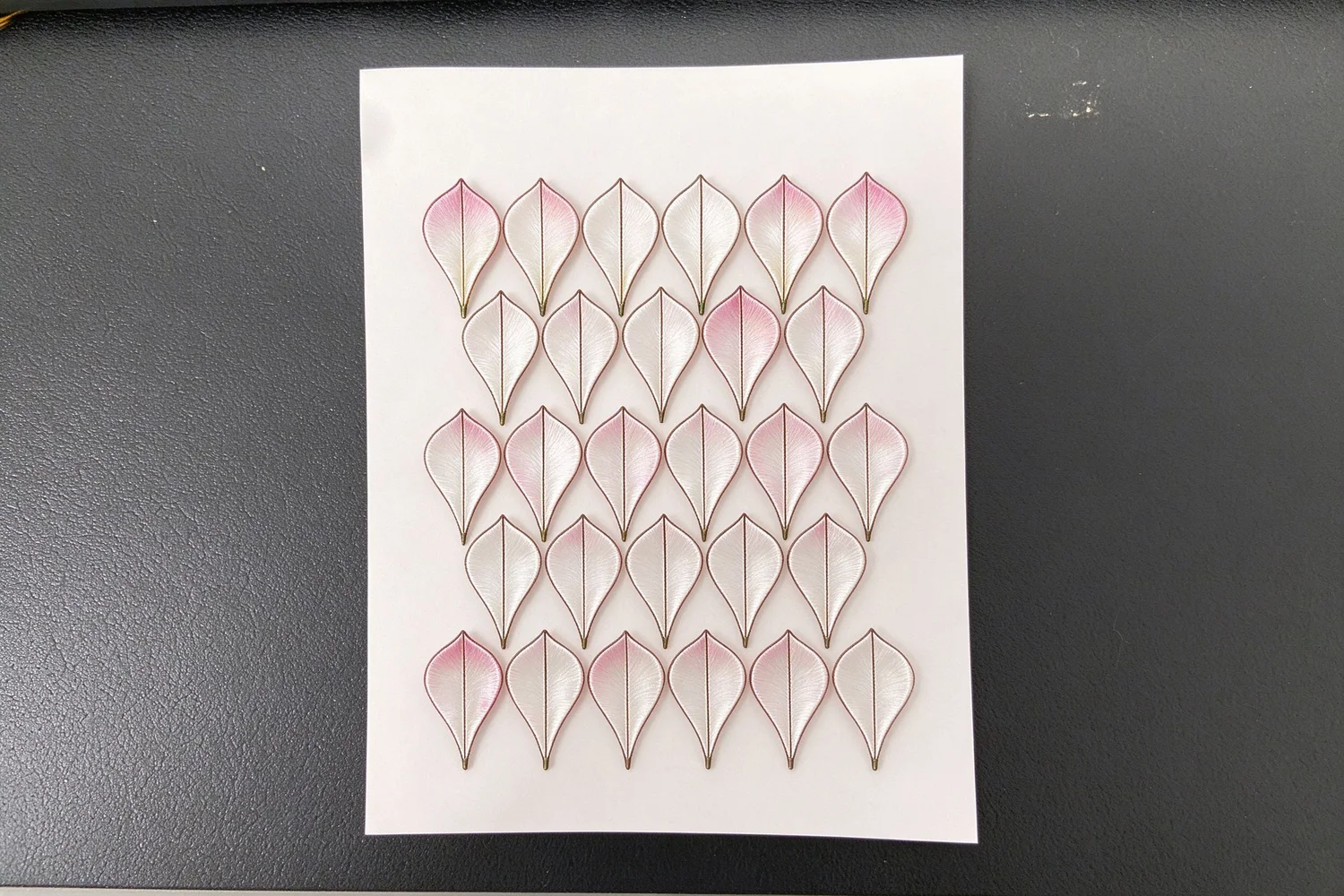
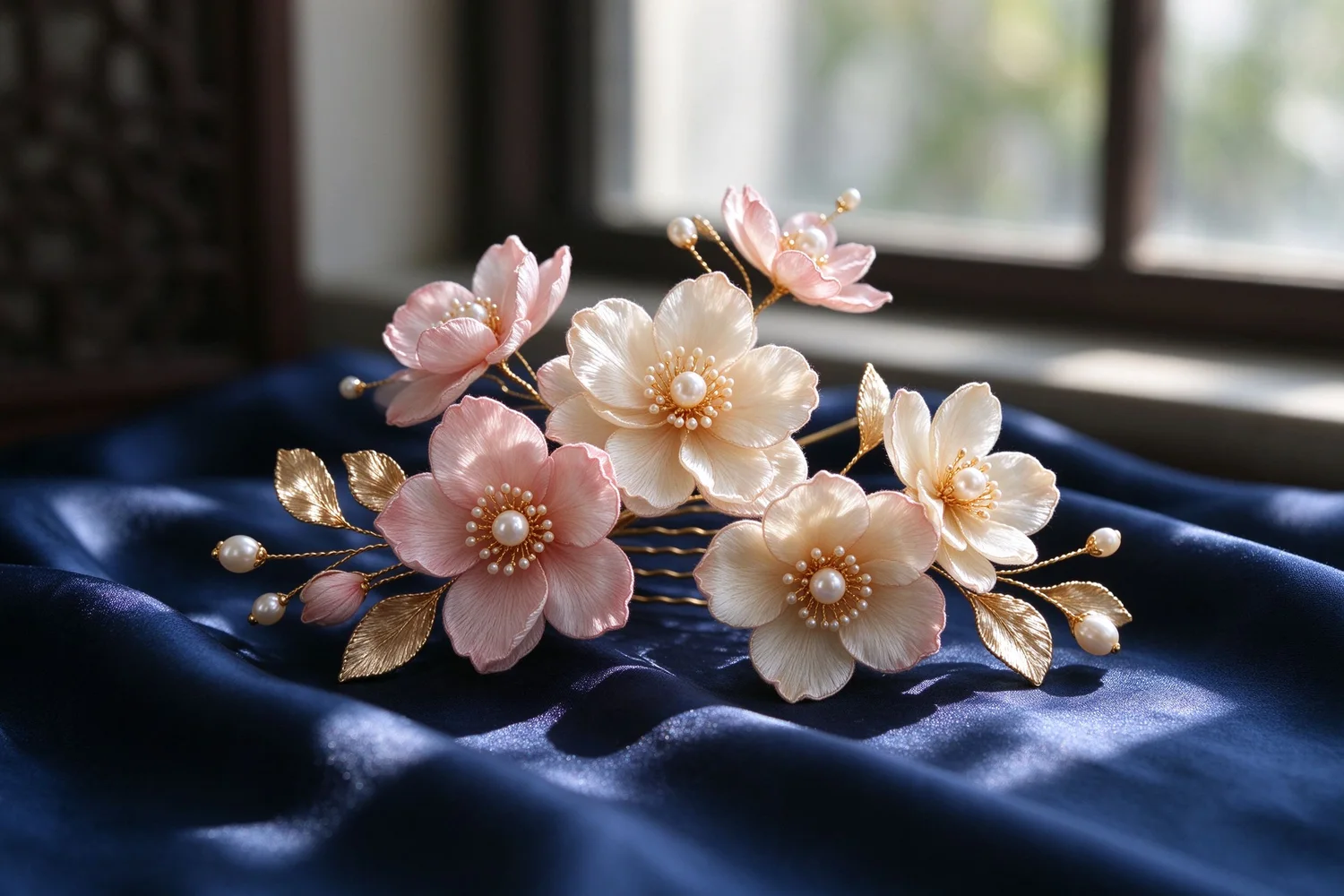
The decoration is what changes the character of the fan. A painted fan reads as elegant and flat; an embroidered one reads as fine; a fan decorated with chanhua — dyed silk floss wound strand by strand around shaped copper wire — reads as three-dimensional, because the flowers stand off the surface and catch light.
That is also why a chanhua fan photographs differently. From the front it has depth; from an angle the flowers cast small shadows on the silk behind them.
Why do brides carry one now?
Three reasons, in the order people usually give them:
- It gives her hands something to do. Walking down an aisle, standing through a tea ceremony, waiting for photographs — a bouquet is one answer, and a fan is the other. It is the more useful of the two in a warm room.
- It completes the silhouette. A bridal hair ornament frames the head; the fan carries the same color down to the hands, so the outfit reads as one thing rather than two.
- It is the one moment in the ceremony that is hers. The fan is not about the dress or the venue. It is the part where she decides when to be seen.
How does it pair with hair ornaments?
Share a color family rather than matching exactly.
| Hair | Fan | Reads as |
|---|---|---|
| Deep red flowers, gold pin | Red and gold fan | Traditional, formal, photographic |
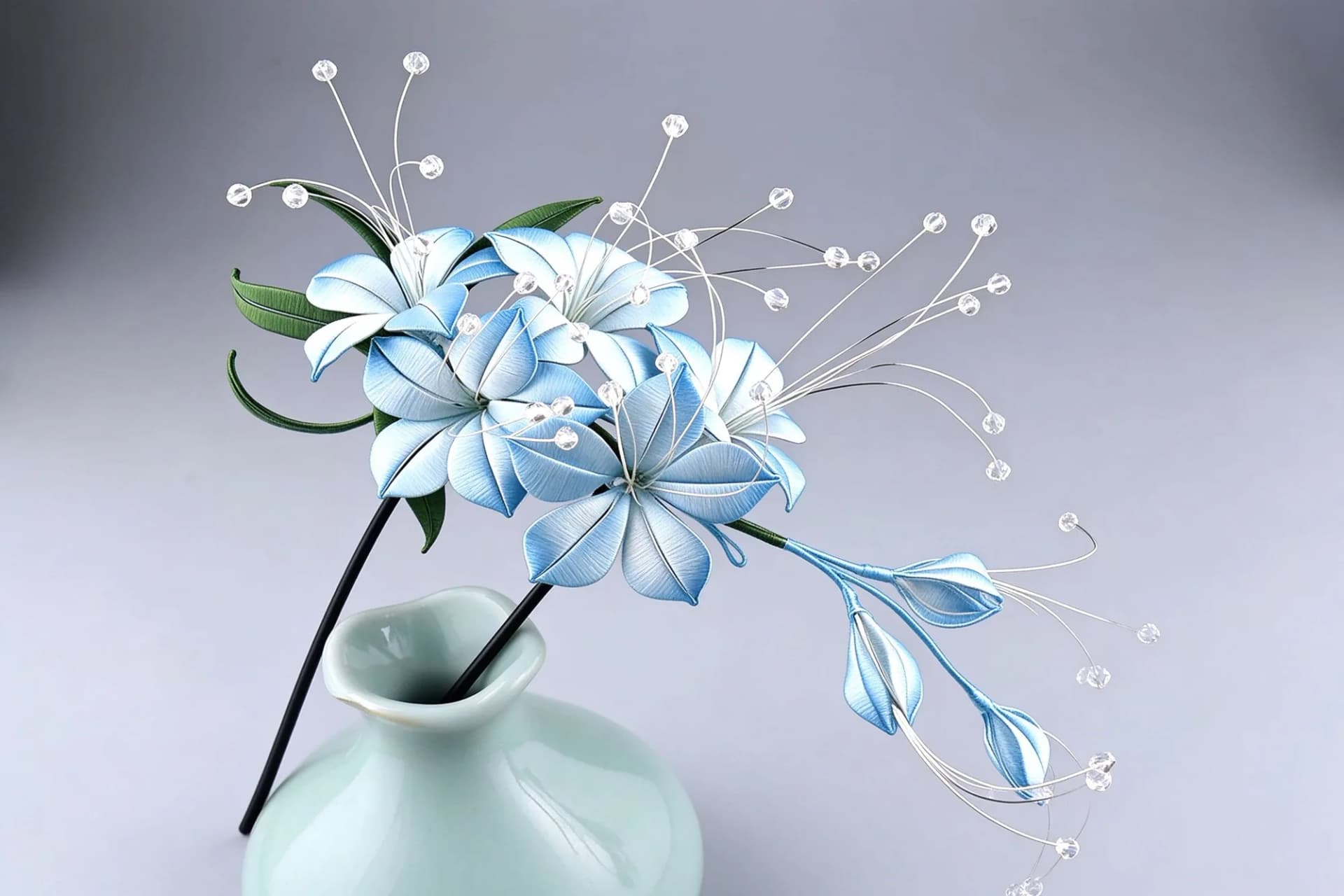
| Blue silk flowers, pearl | Blue and pearl fan | Cool and modern; suits courtyard weddings |
| Ronghua velvet headpiece | Ronghua-decorated fan | Dense and courtly — the most formal combination |
| One small pin | Embroidered fan | Quiet; the fan becomes the main piece |
The mistake is obvious duplication: two pieces of identical red, at the same size, cancel each other out in a photograph. Vary the size or the tone.
The Chinese wedding hair accessory guide covers the hair side of the same look, and what ronghua is explains the velvet craft if you are considering a denser, more formal set.
What should you check before buying one?
- Is the face actually taut? A slack silk face looks tired from the first photograph. This is the single biggest quality difference between fans.
- Is the handle rigid? A fan that flexes in the hand cannot be held up for a ceremony.
- Will the decoration survive handling? Wound silk flowers are firm, but they should be fixed at the base, not at the petal edge.
- Does it match at arm's length? Hold the fan next to the hairpiece at the distance a photograph is taken from, not up close.
What happens to it afterwards?
Keep it flat and dry, away from direct sun, ideally in the box it arrived in. A tuanshan is a display object as much as a wedding one — it hangs on a wall, or stands on a shelf, long after the dress has been packed away.
Silk dislikes water and hairspray, so if the fan is going to be held through a long day, put the fan down before touching up hair. The silk flower care guide covers the same rules for the ornaments.
Where does a wedding fan fit in a set?
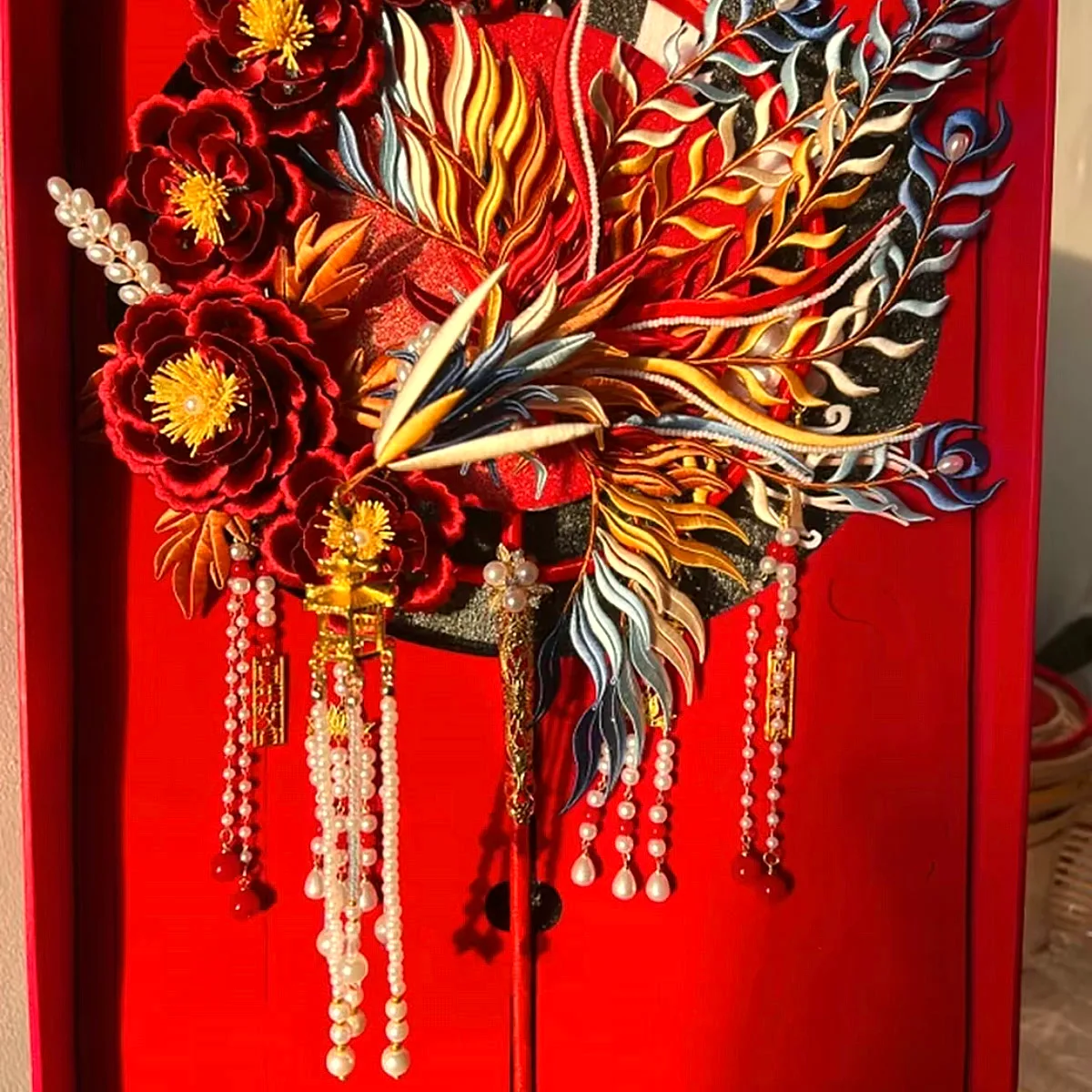
Our own wedding work is made the same way as everything else in the studio — dyed silk wound by hand over copper wire in Guang'an, Sichuan. Wedding fans and the matching boutonniere-and-corsage pair are made to order rather than listed as standard products; to see the flowers and colors we currently make, browse the shop, and if you have a date, ask us through the contact page.
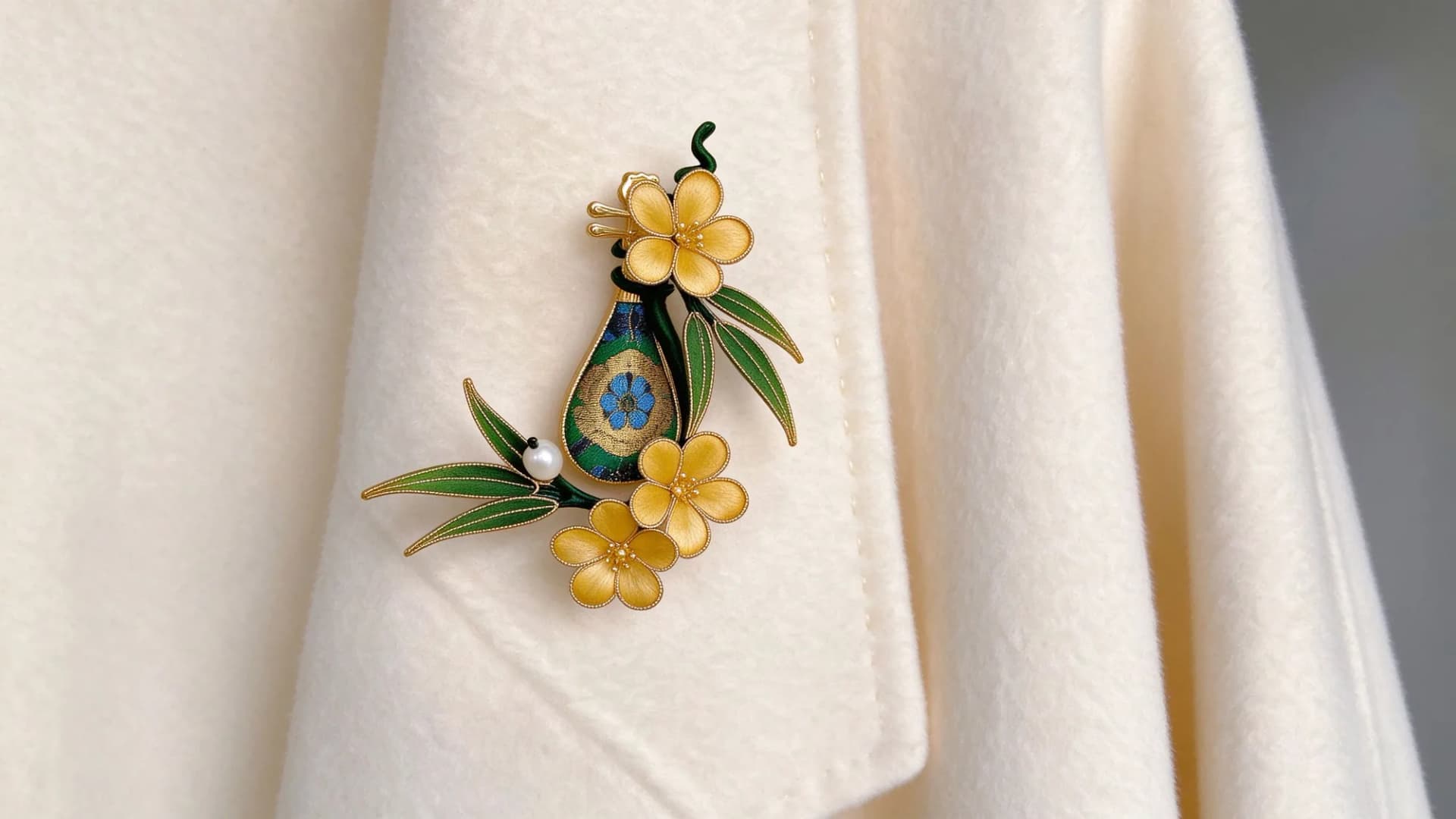
For the ornaments that go with it, the Blue Phoenix Brooch carries the Fenghuang — the traditional blessing motif, and the natural partner to a dragon on a groom's outfit — and the Lily of the Valley Brooch is the smallest finished piece, useful for a bridesmaid or a mother of the bride. The Chinese intangible heritage guide explains how the pieces were worn as a set.
Frequently asked questions
What is a tuanshan?
It is a round Chinese fan with a rigid handle - silk stretched over a shaped frame rather than a folding fan. It is also called a palace fan, and it appears in Chinese painting and poetry from the Han dynasty onwards.
Why does a bride carry a fan at a Chinese wedding?
The custom is què shàn: the bride holds the fan in front of her face, and the groom recites a poem to have it lowered. Records of it survive from the Tang dynasty, and it survives today because it gives the ceremony a moment rather than a rule.
Is the fan used in the ceremony or just for photographs?
Both, and increasingly the first. Couples who want a traditional ceremony use the fan for the face-covering moment; couples with a modern ceremony usually carry it for the tea ceremony and the portrait session.
What is a chanhua wedding fan?
It is a tuanshan decorated with hand-wound silk flowers - dyed floss wrapped around shaped copper wire, then mounted on the fan face. The flowers are three-dimensional, so the fan reads differently from an embroidered one.
Does the fan have to match the hair ornaments?
It should share a colour family rather than match exactly. One red and one gold, or blue and pearl, looks considered; two pieces of identical red can look flat in photographs.