What Is Ronghua? The Velvet Flower Craft Behind Hanfu Headdresses
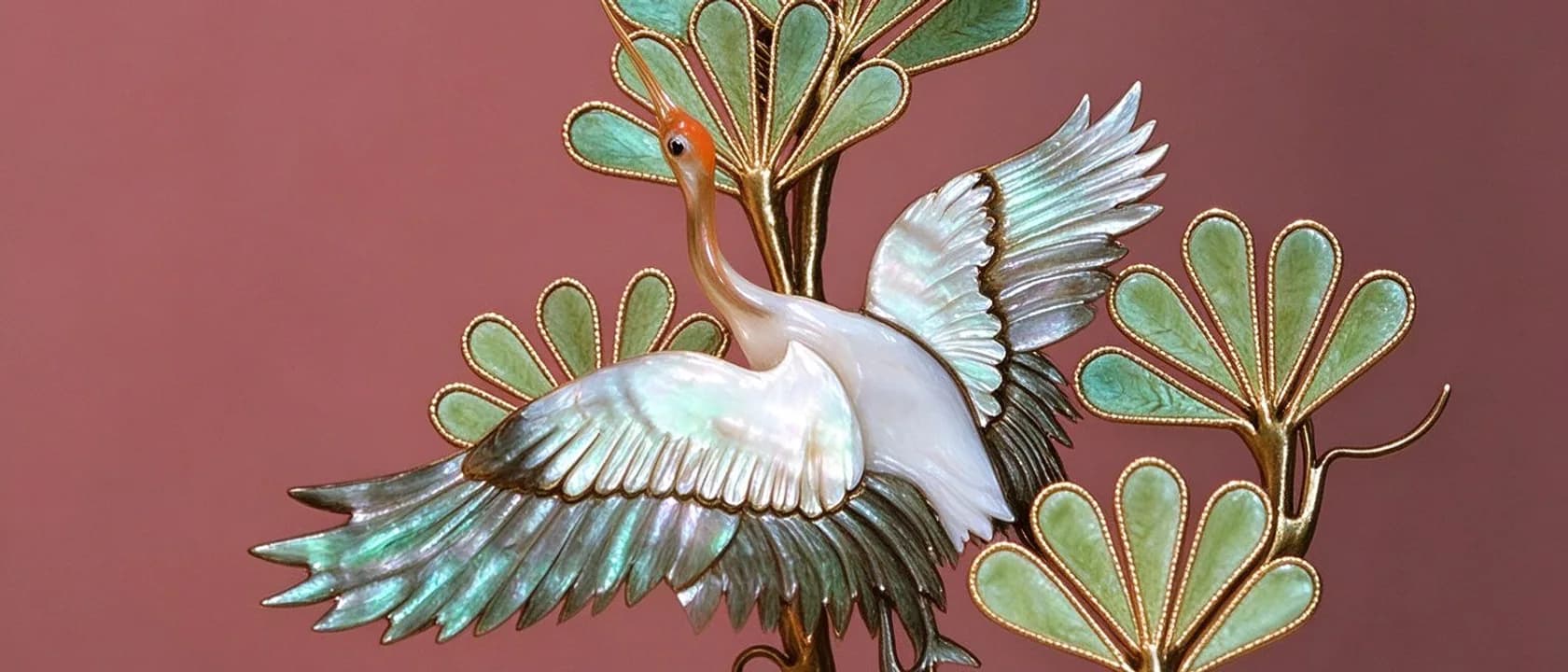
What is ronghua?
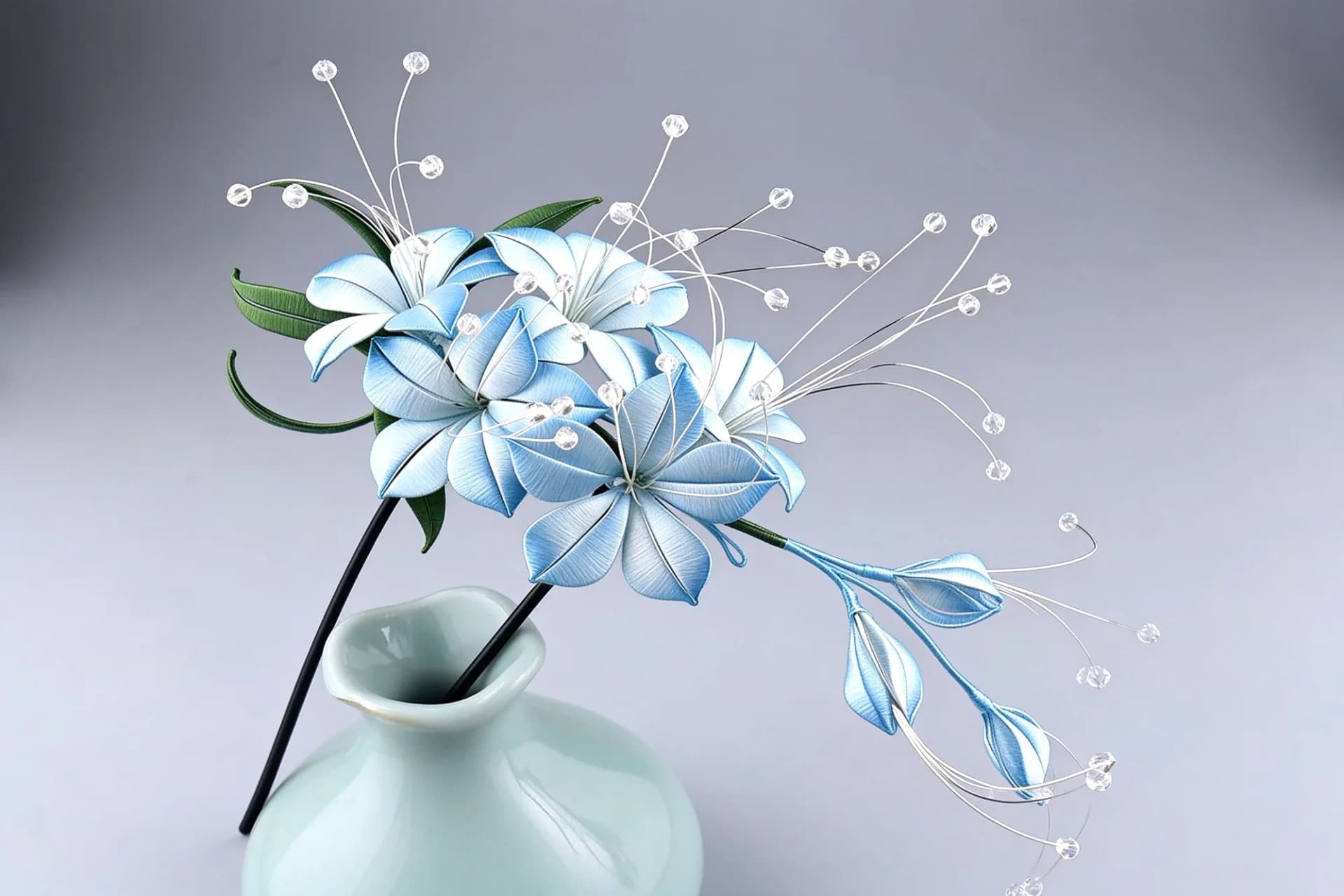
Ronghua (绒花) is a Chinese flower craft made from silk velvet built up on a twisted copper wire core. The silk is boiled to soften it, dyed, split into fine tufts, twisted onto the wire, and finally trimmed into shape with small scissors. The result is a petal that looks and feels like dense velvet — soft, matte, and completely unlike the smooth thread surface of chanhua.
The name is also a pun. Velvet flower sounds like the Chinese words for glory and prosperity, so wearing one was a wish as much as an ornament, which is a large part of why the craft survived into the present.
How is ronghua made?
There are four stages, and only the last one is what most people picture when they think of flower making.
1. Preparing the silk. Raw silk is boiled to remove the sericin and soften the fibre, then dyed. The colour has to be set before anything else happens, because a finished velvet petal cannot be re-dyed evenly.
2. Splitting and tufting. The prepared silk is combed out and twisted onto copper wire so that short fibres stand out perpendicular to the core. This is the step that creates the fuzzy surface; get the density wrong here and no amount of trimming will fix the petal.
3. Shaping. The tufted wire is bent and coiled into the outline of a petal, a leaf, or a small animal. The wire holds the shape, the velvet supplies the volume.
4. Trimming. Small sharp scissors are used to cut the velvet into its final profile — thinner at the base, fuller at the edge, or rounded for a peony and pointed for a plum blossom. In Chinese this step is called 打尖, and it is where most of the maker's skill lives. A cut that goes one millimetre too deep cannot be undone.
Where does it come from?
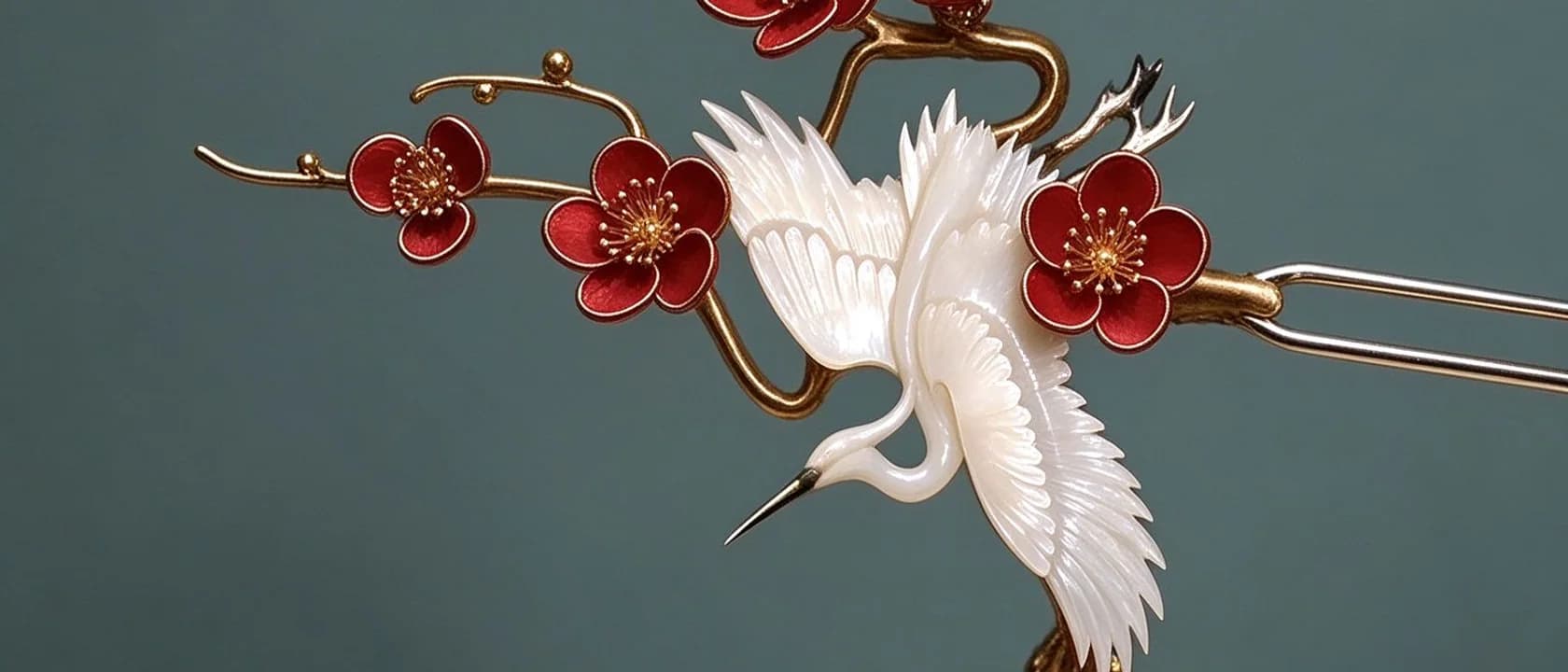
Ronghua is usually traced to the Tang dynasty and reached its peak as a court fashion during the Qing, when it was worn in the hair and also made into decorative birds and animals. Nanjing and Yangzhou became the best-known centres of production, and Nanjing ronghua is now listed as intangible cultural heritage in Jiangsu Province.
It is worth separating two things that are often mixed together: the craft is old, the industry is small. Ronghua never disappeared entirely, but demand collapsed in the twentieth century when traditional dress stopped being everyday clothing, and the work is labour-intensive enough that only a handful of workshops could survive on it alone.
Why did it come back?
The hanfu revival did it. As more people began wearing historical Chinese dress — at weddings, festivals, graduations and photography shoots — they needed head ornaments that matched, and modern reproduction pieces did not look right next to real silk garments.
That demand pulled ronghua back into production. A small number of studios now train new makers again, and ronghua has become one of the few Chinese crafts where the market grew faster than the supply of skilled hands.
What does ronghua mean symbolically?
Because the name sounds like prosperity, ronghua carries a wish rather than only a decoration. Beyond the pun, the flowers themselves carry meanings that Chinese jewellery has used for centuries:
| Flower | Meaning |
|---|---|
| Peony | Wealth, honour, a prosperous household |
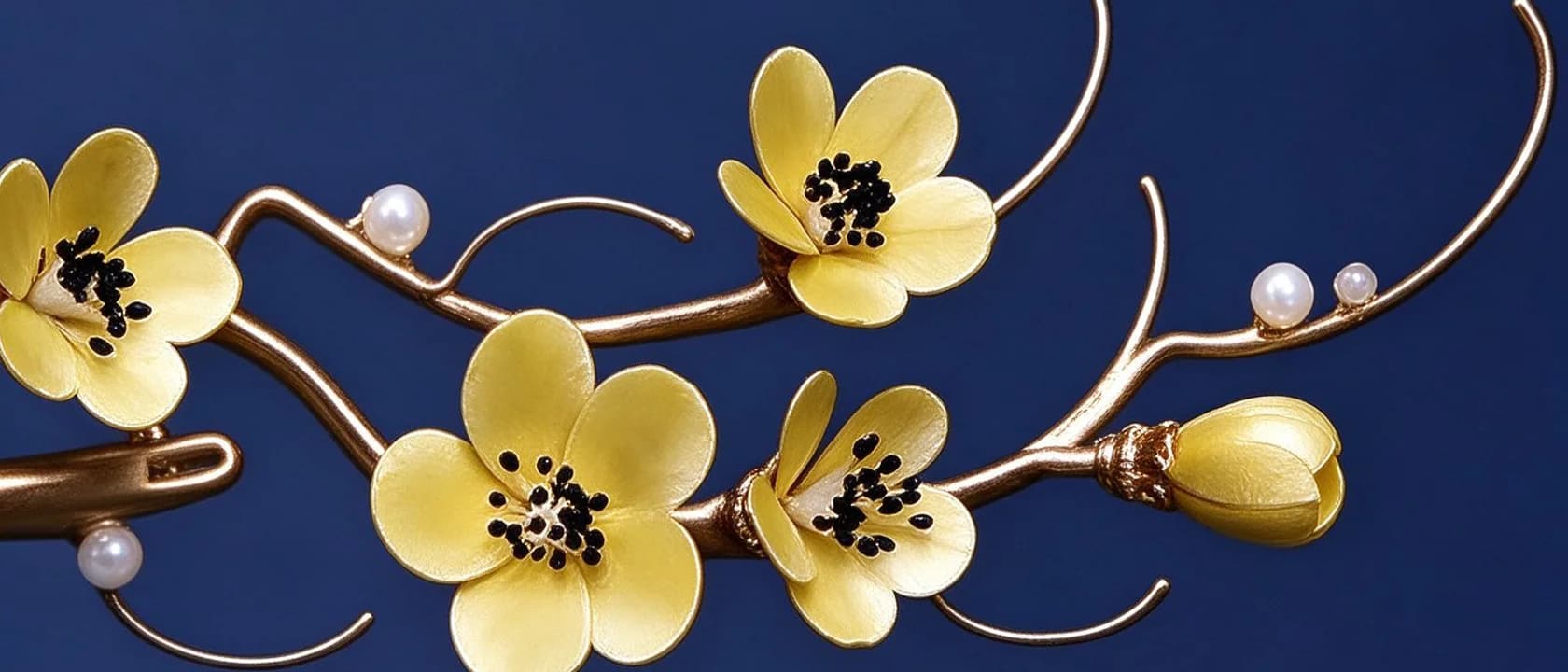
| Plum blossom | Perseverance; it blooms in the coldest weeks |
| Lotus | Purity; rising clean from muddy water |
| Osmanthus | Nobility, and a pun on a noble future |
| Pomegranate | Many children |
You will sometimes see ronghua and chanhua used together in one headdress on purpose — the velvet supplies soft mass, the wrapped thread supplies crisp structure and a little shine.
How is ronghua different from chanhua and luodian?
| Ronghua | Chanhua | Luodian | |
|---|---|---|---|
| Material | Silk velvet on copper wire | Silk thread on shaped wire | Mother-of-pearl inlay |
| Surface | Matte, dense, soft | Smooth, glossy, fine | Iridescent, hard, flat |
| Reads as | Formal, courtly, bridal | Delicate, wearable, everyday | Graphic, jewellery-like |
| Time per piece | About a full day | Four to six hours | Depends entirely on the inlay |
There is a fuller comparison of the two flower crafts in chanhua vs ronghua, and an introduction to the shell craft on the luodian mother-of-pearl page.
How do you care for ronghua?
Velvet is more fragile than wrapped thread, but it is more repairable than people expect. There is a full routine for both crafts in how to care for chanhua and ronghua silk flowers.
- Store it in a box, not a bag. Velvet crushes under any weight, and a crushed petal left for months can take a permanent crease.
- Do not wet it. Silk velvet mats when it dries unevenly.
- Re-fluff, do not brush hard. A soft brush and a little steam from a distance will lift most flattened fibres.
- Keep it away from perfume. Alcohol dulls dyed silk quickly.
Where to go next
If you want to see how both crafts are described in context, start with the ronghua velvet flower page and the broader Chinese intangible heritage guide. If you would rather make something yourself, chanhua is the more accessible entry point — the Hydrangea Hairpin Kit takes about four hours and needs no velvet preparation at all, and the Blue Phoenix Brooch Kit adds a little silk sheen alongside the velvet look.
Frequently asked questions
What is ronghua made of?
Ronghua is made from silk that has been boiled to soften it, dyed, then split and tufted onto a twisted copper wire core. The finished petals are trimmed with small scissors to shape them, which is why the surface looks like dense velvet rather than thread.
Why is it called ronghua?
The name is a pun. In Chinese, velvet flower (绒花) sounds like the words for glory and prosperity (荣华), so wearing one was a wish as much as an ornament. That wordplay is a large part of why the craft survived as a festive tradition.
Where does ronghua come from?
The craft is usually traced to the Tang dynasty and reached its peak as a court fashion in the Qing. Nanjing and Yangzhou became the best-known centres, and Nanjing ronghua is now listed as an intangible cultural heritage of Jiangsu Province.
Is ronghua the same as chanhua?
No. Ronghua is built from tufted silk velvet and trimmed into shape; chanhua is fine silk thread wrapped flat around a wire frame. Ronghua is denser, softer and slower to make, and the two crafts require different tools and different skills.
Why did ronghua almost disappear?
Demand collapsed in the twentieth century when traditional dress went out of everyday use, and the craft is labour-intensive enough that few workshops could survive on it alone. The recent hanfu revival created a new market, and a small number of studios now train new makers again.