How to Care for Chanhua and Ronghua Silk Flowers
How do you take care of chanhua and ronghua silk flowers?
Silk flowers are not fragile, but they are vulnerable to three specific things: pressure, moisture and alcohol. Store them in a rigid box with the flowers facing up, brush the surface with a soft dry brush once a month, and put the pin on after your hairspray has dried. A piece treated that way holds its shape for years.
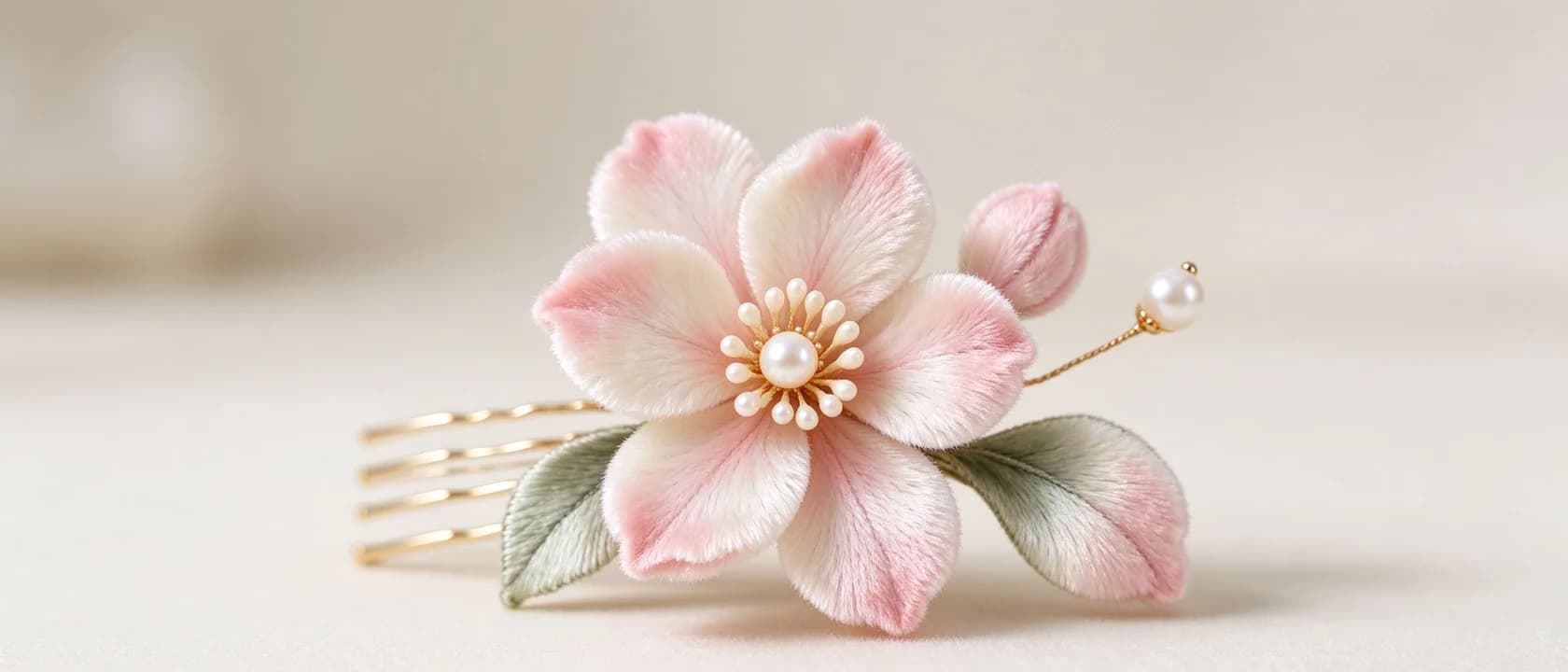
The two crafts need slightly different handling, which is worth knowing before you buy. Chanhua vs ronghua explains why one is smooth wrapped thread and the other is velvet, and that difference is exactly what decides how you clean them — the ronghua velvet flower page goes deeper into how the velvet is made in the first place.
What are the three things that actually damage silk flowers?
| Cause | What it does | How to avoid it |
|---|---|---|
| Pressure | Flattens velvet; leaves a permanent crease in wrapped petals | Store in a rigid box, flowers facing up, nothing on top |
| Moisture | Loosens the thread wrap; mats velvet; rusts the wire core | Never wash or soak; keep away from rain and wet hair |
| Alcohol | Dulls dyed silk and removes its sheen permanently | Apply perfume and hairspray first, then put the piece on |
Notice that none of these is age. A silk flower does not wear out on its own — it is damaged by something, and the damage is nearly always preventable.
What is the ten-minute monthly routine?
Once a month, or after any occasion where the piece was worn for a long day:
- Brush. A soft, dry makeup brush, light strokes in one direction. This lifts settled dust and re-fluffs velvet.
- Check the wrap. Look along each petal edge against a window. If you can see the wire through the thread, the petal has shifted and the piece should be handled gently until it is re-secured.
- Check the centre. Pearls and stamens are glued, not soldered. A centre that moves under a fingertip needs one drop of clear-drying flexible glue, then a full day to cure.
- Reshape. Any petal that has flattened gets pressed back into curve with your fingertips. Wrapped thread holds whatever curve you give it.
- Rest. Put it back in the box. Silk benefits from not being worn for a while.
How do you deal with a crushed petal?
Velvet and wrapped thread fail differently, so the fix is different too.
- Ronghua (velvet): hold the piece a hand's width from steam for about two seconds, then lift the fibres with a soft brush while they are still warm. Do not touch the velvet with the iron or the steam nozzle.
- Chanhua (wrapped thread): never steam it. Press the petal gently around your fingertip, working from base to edge, and reshape the curve by hand.
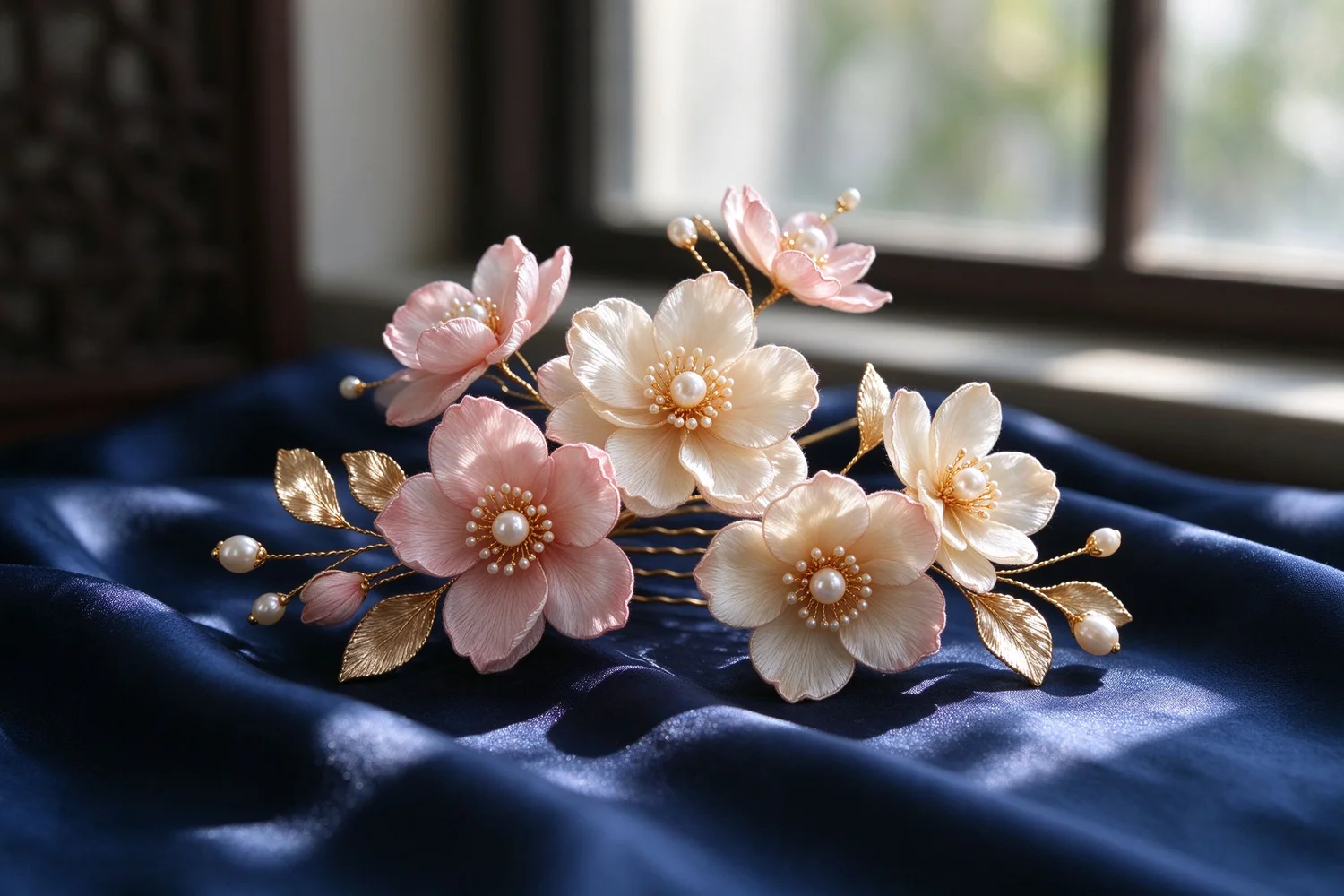
How should you store and travel with them?
Storage is where most damage happens, and the rule is short: rigid box, flowers up, nothing on top.
| Situation | Do | Don't |
|---|---|---|
| At home | A closed box or a fabric pouch inside a drawer | A soft bag in a crowded jewellery box |
| Travelling | A hard case, flower facing up, soft padding around it | Packed between folded clothes |
| Between wears | Away from direct sun | On a windowsill or a sunny dressing table |
| Long term | Airtight box, out of damp rooms | A bathroom, where steam reaches it daily |
If a piece is going in hand luggage, wrap it in tissue first and then put it in the hard case, so the tissue — not the case — takes the first contact.
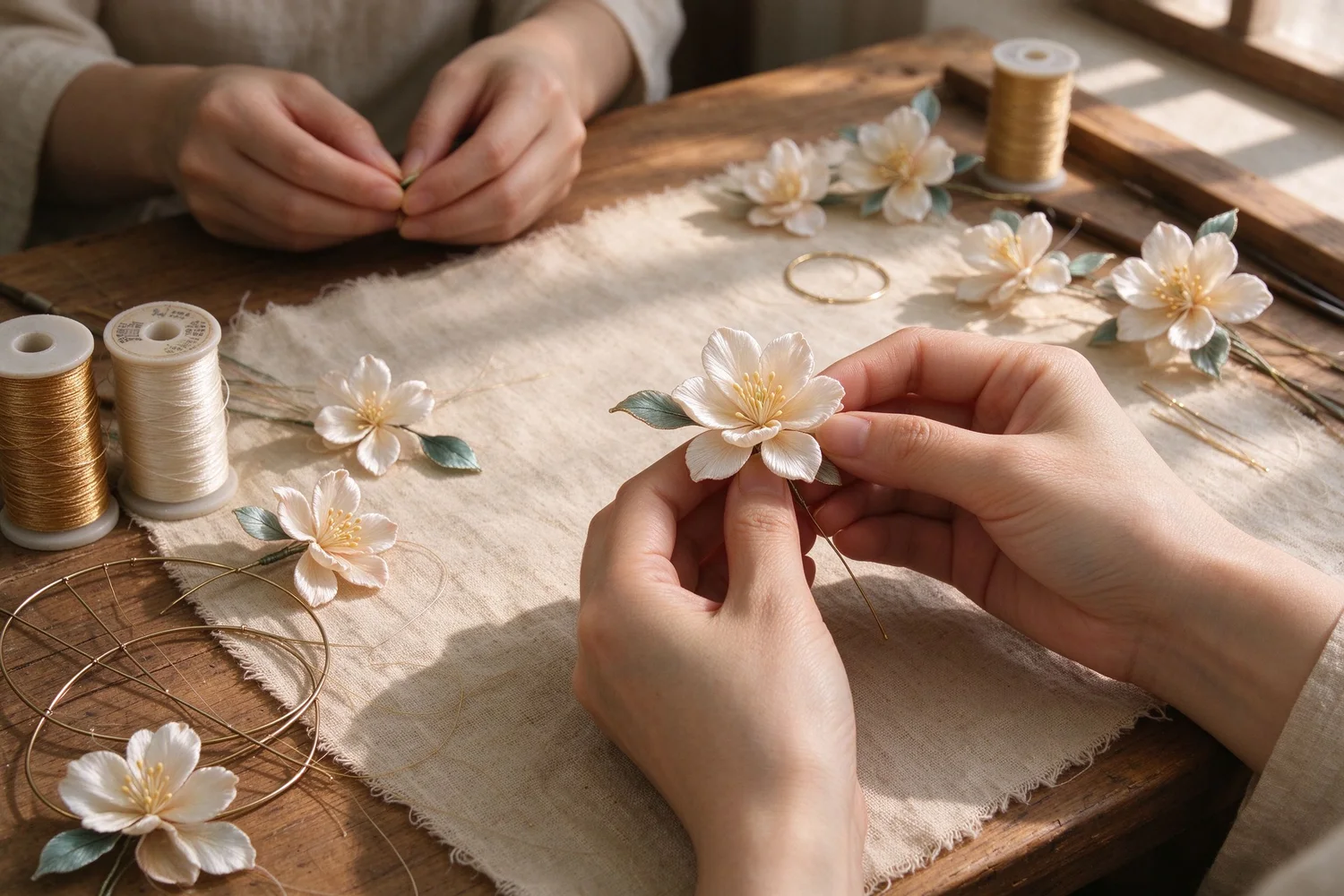
What can you actually repair yourself?
| Problem | Can you fix it? | How |
|---|---|---|
| Flattened petals | Yes | Reshape by hand, or steam lightly for velvet only |
| Dull sheen | No | Alcohol damage to dyed silk is permanent |
| Loose pearl or stamen | Yes | One drop of flexible glue, cure for a day |
| Loose thread end | Sometimes | Tuck it under the wrap with fine tweezers; do not cut it |
| Rusted wire core | No | Replace the piece; rust means moisture reached the frame |
The one repair worth doing before it becomes necessary is the loose thread end. Once a thread lifts, the petal it belongs to will keep unwrapping, and a few seconds with tweezers prevents it.
Which pieces need the most care?
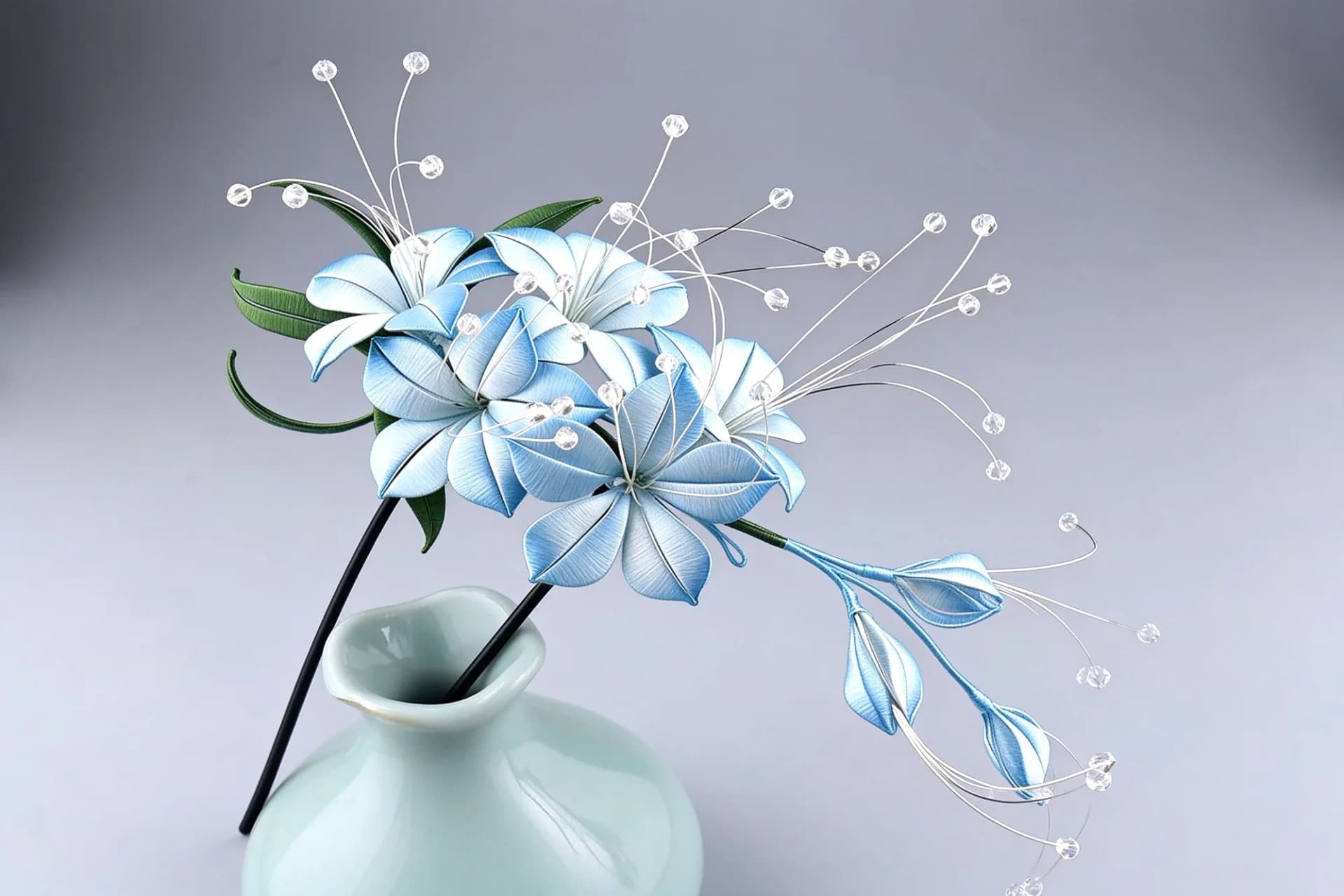
Small, everyday pieces survive the most handling, simply because they are worn, taken off and put away more often. That makes a light pin such as the Blue Trailing Jasmine Hairpin the piece most likely to pick up a small dent — and the easiest to reshape when it does.
Pieces you make yourself need the same routine as anything you buy, and a little more attention at the centre, where the glue is doing the work. If you have just finished your first one, what's inside a chanhua DIY kit covers the finishing steps that make the difference, and the Lily of the Valley Brooch Kit is a good second project precisely because its petals are broad and easy to reshape.
Frequently asked questions
Can you wash a silk flower hairpin?
No. Water loosens the wrapped thread and mats velvet, and the wire underneath can rust. Clean the surface with a soft dry brush instead, and never soak a piece to remove hairspray.
How do I fix a crushed ronghua petal?
Hold the piece a hand's width away from steam for about two seconds, then lift the fibres with a soft brush while they are still warm. Velvet springs back more than people expect, but it will take a permanent crease if it is left flattened under weight for months.
Why did my silk flower lose its shine?
Almost always perfume, hairspray or sunscreen. Alcohol dulls dyed silk faster than anything else, and it is the one form of damage that cannot be reversed. Put the pin on after styling, not before.
How should I store silk flower pieces?
In a rigid box or a fabric pouch, flowers facing up, with nothing resting on top. A box matters more than a pouch: the damage nearly always comes from something pressing the petals, not from the air.
Can I travel with a silk flower hairpin?
Yes, if it travels in a hard case with the flower facing up and something soft around it. Never pack a silk flower in a suitcase where clothes can press against it, and keep it in hand luggage if the piece cannot be replaced.