How to Make a Chanhua Phoenix Brooch (Step-by-Step)
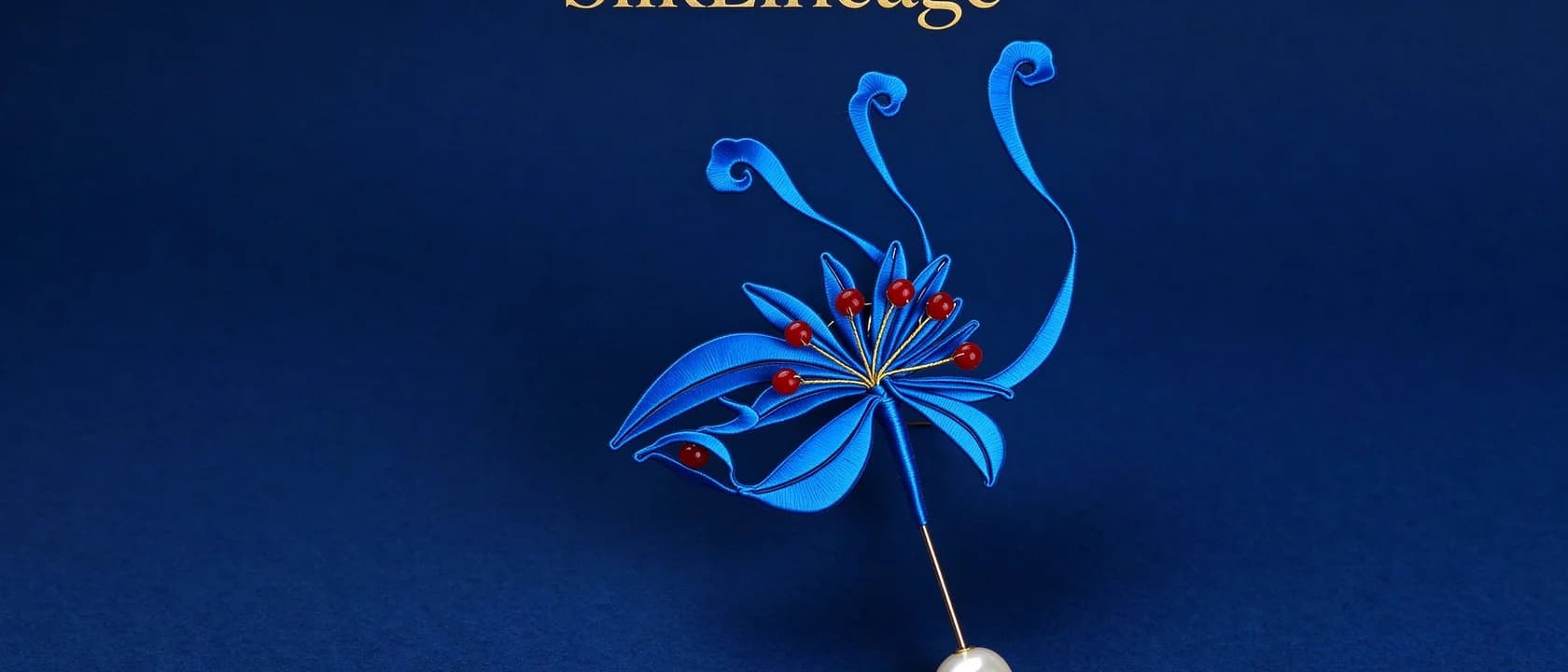
How do you make a chanhua phoenix brooch?
A chanhua phoenix brooch is built from long tapered feathers instead of round petals, then assembled so the tail sweeps out behind a small body and head. It is the same wrapping technique as any chanhua flower, but every shape is narrower — which means the work is far less forgiving. Finished, it is about 8 cm across.
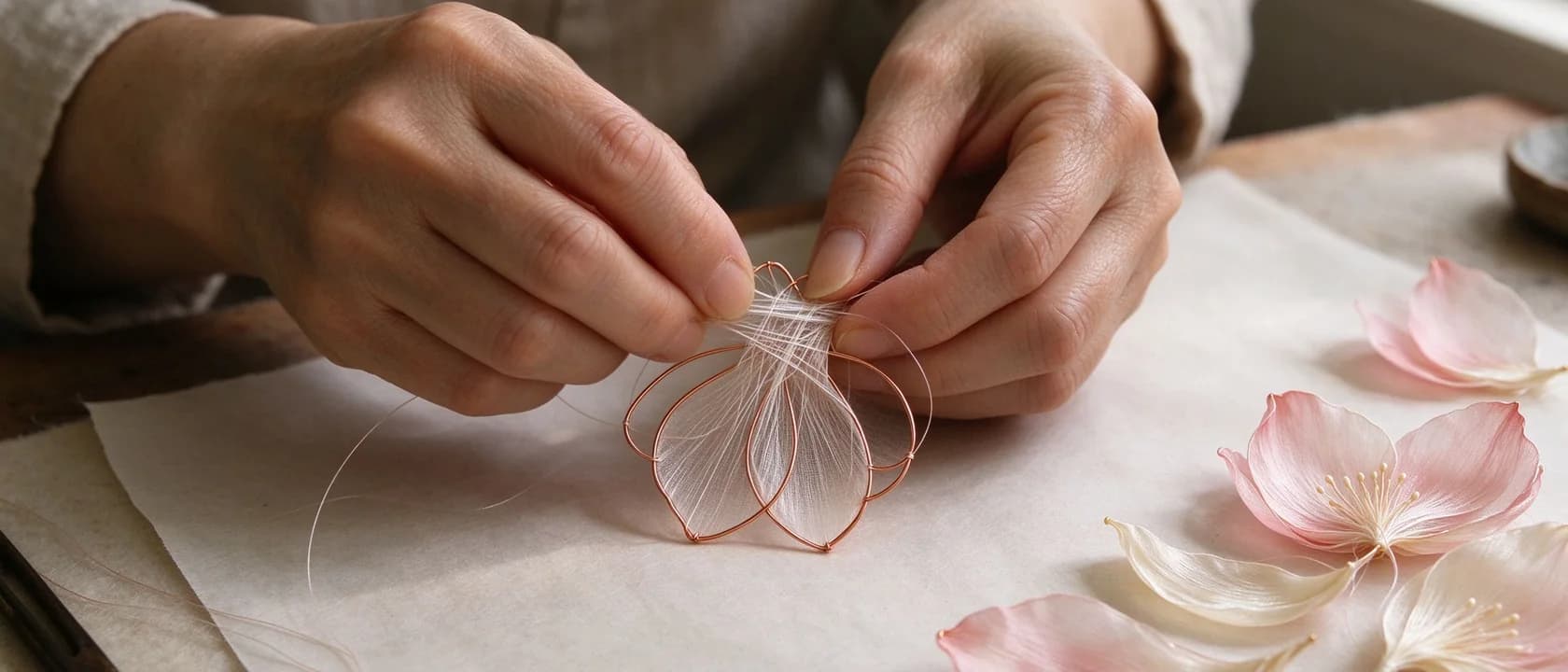
The wrapping motion itself does not change, so if you have not wound silk before, how to wrap silk thread around a wire frame is the five-minute primer. Everything after that is about shape.
Why is a phoenix harder than a flower?
Because narrow shapes show everything.
| Round bloom (peony, hydrangea) | Phoenix | |
|---|---|---|
| Shape of each unit | Broad, rounded | Long, tapered |
| Tension mistakes | Absorbed by the curve | Visible along the whole feather |
| Repetition | 6–18 similar units | Fewer units, each much longer |
| Where it is worn | Hairpin, off the face | Brooch, across a lapel |
| Best for | A first project | A second or third project |
A slightly loose band on a peony petal disappears into the bloom. The same band on a 6 cm feather reads as a visible ridge, and because the feathers sit side by side the eye compares them immediately.
What do you need?
| Item | Note |
|---|---|
| Tapered feather wire frames | Supplied in the kit; longer and narrower than petal frames |
| Dyed mulberry silk floss | One or two colors; a graded tail looks better than a flat one |
| Body and head frames | Smaller than the feathers and wound more tightly |
| Brooch pin back | Around 6 cm, mounted across the widest point |
| Glue, scissors, tweezers, a lighter, a cylindrical pen | The pen is for curling feathers, not for glue |
The kit's small brush is for adhesive. It is too thin to shape a feather around — that is what the pen barrel is for.
Step 1: Wind the tail first
The tail is the longest run of repetitive work, and it should come first for two reasons. It warms up your hands, and it sets the tension that the rest of the bird has to match. Makers who build the head first usually end up with a tight head and a visibly looser tail.
Wind each feather from base to tip, then back down, exactly as you would a petal. The difference is length: a feather takes three or four times as long, so a small inconsistency in your rhythm has much further to travel.
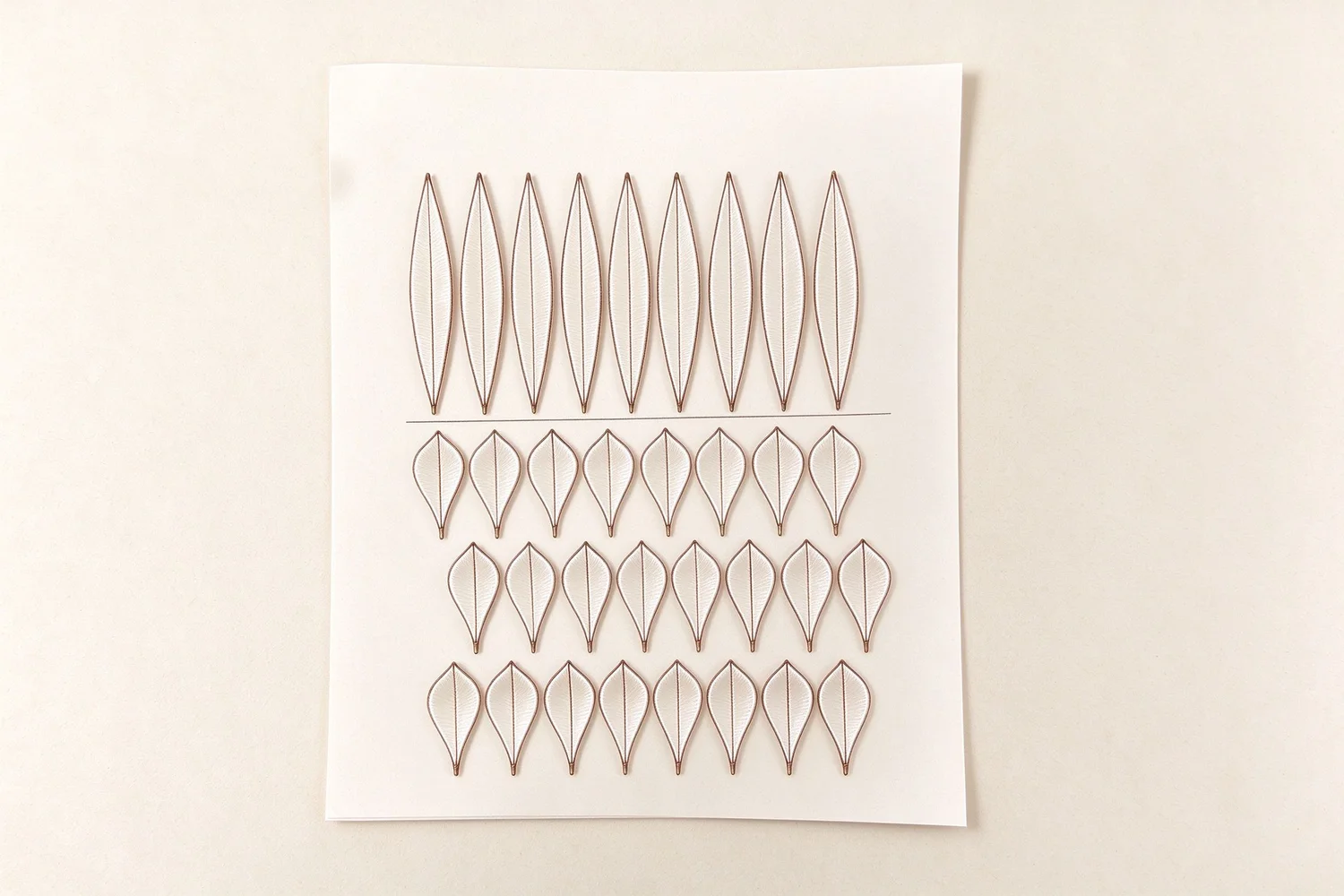
Step 2: Check every feather against the first one
Hold each finished feather beside the first. This matters more here than on any flower, because the tail is read as a set. Two feathers with different tension side by side look like two different birds.
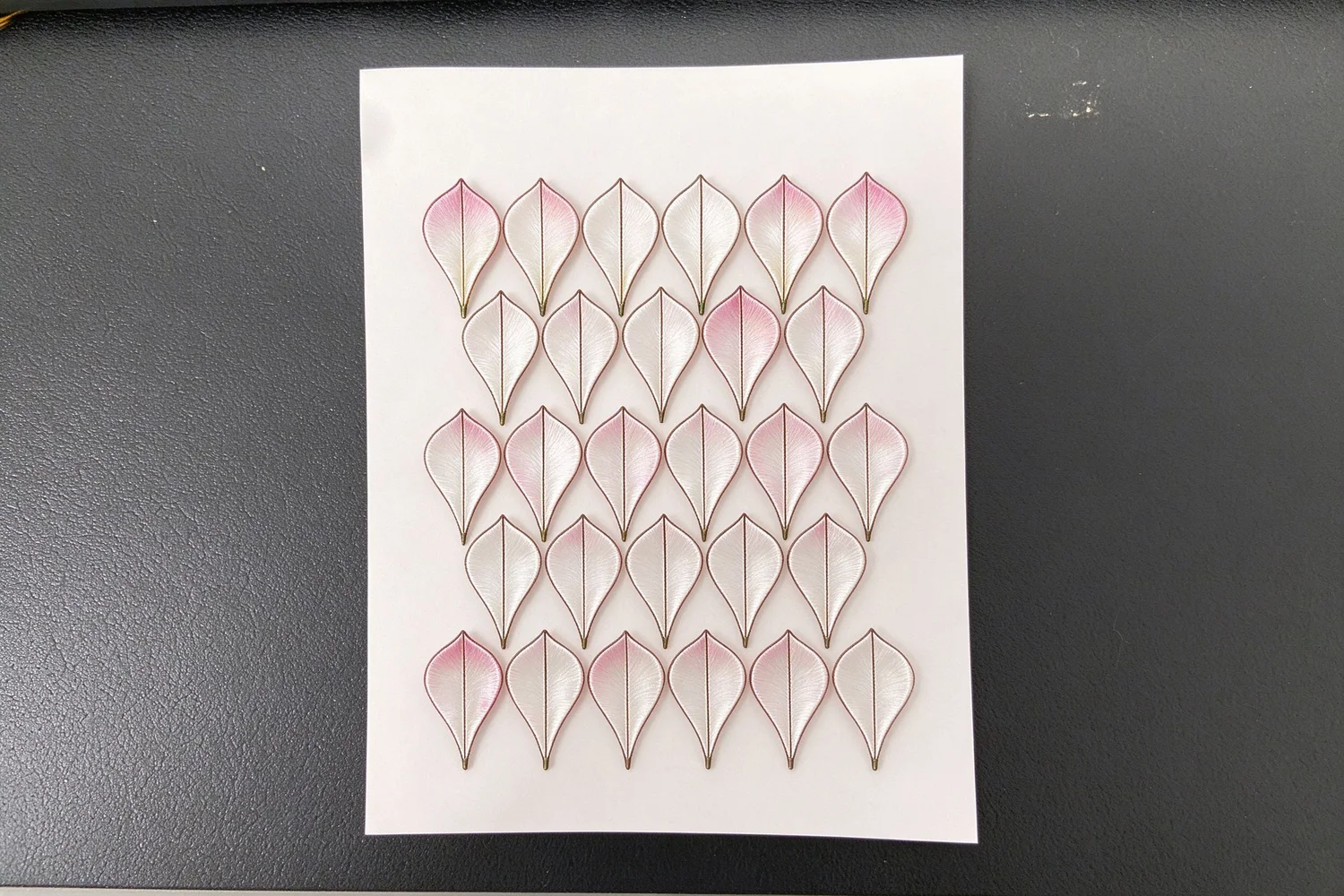
Step 3: Curl the feathers around a pen
Flat feathers look stiff. Lay each one across a smooth round pen barrel and draw it gently to give it a sweep — the same movement as curling a ribbon. Work from the base outward, and curl slightly more at the tip than at the root, which is what makes the tail read as movement rather than as a fan.
This is the step that separates a phoenix that looks alive from one that looks like a diagram.
Step 4: Build the body and head tightly
The body is small and densely wound; the head smaller still. Both should feel firmer under the thumb than the feathers, because they are what the eye reads as the solid part of the bird.
The beak is the one place where a pointed shape is correct. Keep it short — an over-long beak is the most common way a phoenix starts to look like a different bird entirely.
Step 5: Assemble from the tail forward
- Bind the tail feathers in a fan, overlapping each by about a third.
- Attach the body over the base of the fan, hiding the joins.
- Set the head above and slightly forward of the body.
- Add the eye last — one small bead, glued, and placed after everything else is fixed.
- Bind the whole piece to the brooch pin at its widest point, then cover the binding with matching silk.
Let the glue cure for a full day. A brooch takes more handling than a hairpin, because the pin back carries the whole weight every time you put it on.
How long does it take?
Longer than a flower of the same size. The wrapping is the same motion, but the total length of wire is greater and there are more shapes to match. Our studio prices a simple chanhua piece at four to six hours of work; a phoenix sits above that, and the most complex designs we make have taken about a month.
What are the three mistakes that show?
| Mistake | Why it is worse here |
|---|---|
| Inconsistent tension between feathers | The tail is read as a set, so differences are compared directly |
| Flat, uncurled feathers | The bird looks like a diagram instead of a moving thing |
| An over-long beak | The silhouette stops reading as a phoenix |
Where should you start?
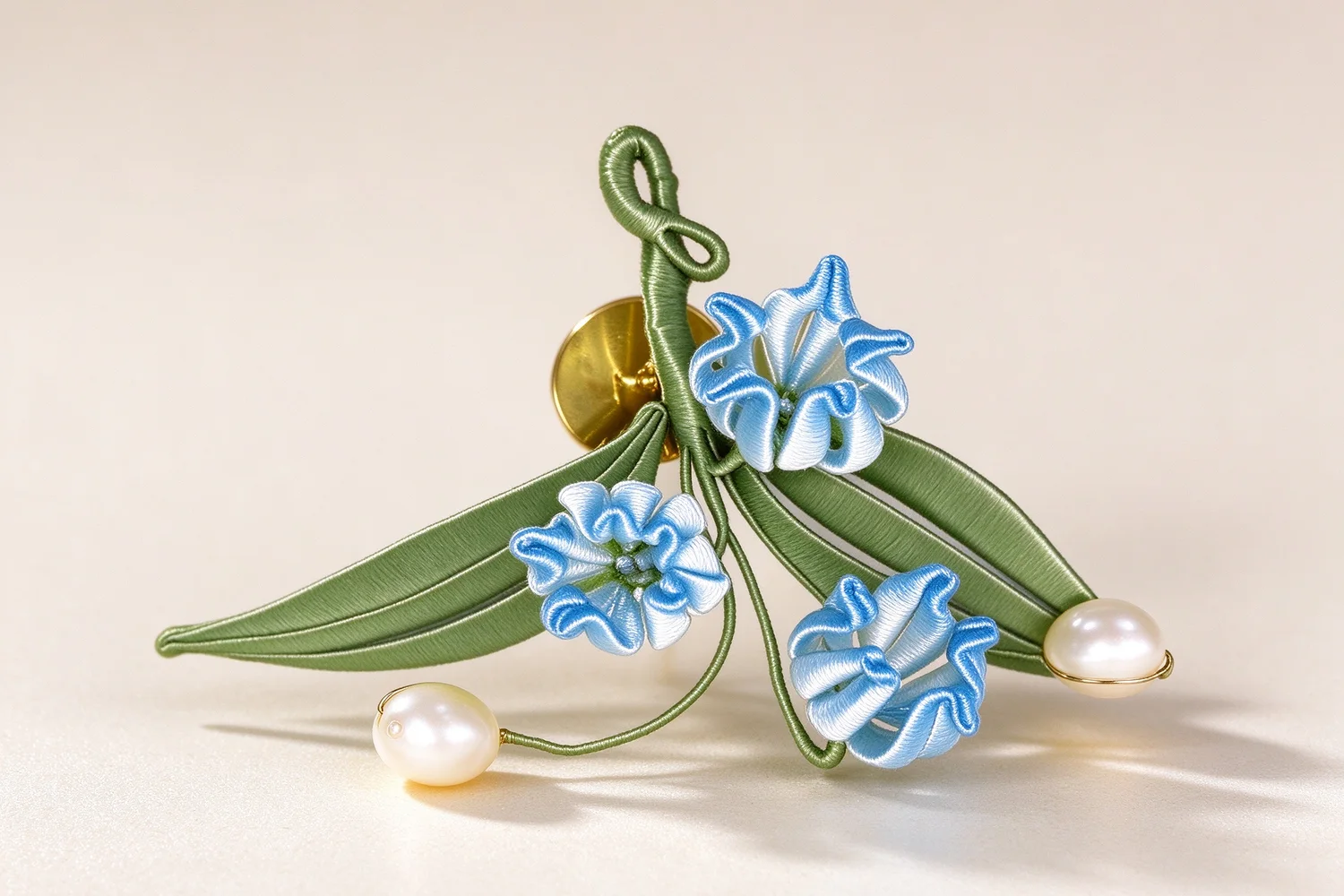
The Blue Phoenix Brooch Kit contains the tapered frames, the body and head, the pin back and the pearl for the eye. If this would be your first chanhua project, build a rounded design first — the Hydrangea Hairpin Kit teaches the tension control you will need, and the Lily of the Valley Brooch Kit is a middle step with tapered shapes but a much simpler assembly.
For why the bird itself is such a common motif, the Chinese intangible heritage guide covers the symbolism, and Chinese flower symbolism in jewelry explains what the flowers around it mean.
Frequently asked questions
Is a phoenix brooch harder than a flower?
Yes, and the reason is shape. Long tapered feathers have nowhere to hide an uneven wrap: a round petal forgives a slightly loose band, a narrow feather shows it along its whole length.
How big is the finished phoenix brooch?
About 8 cm long. The phoenix is wider than it is tall, which is why it sits across a lapel rather than standing upright like a flower.
Which part should I build first?
The tail. It is the longest run of repetitive wrapping, so it warms up your hands and establishes the tension the rest of the bird will match. Leaving it until last makes the head and body look tighter than the tail.
What is the phoenix a symbol of in China?
The fenghuang is traditionally paired with the dragon and stands for renewal, good fortune and feminine grace. It is a common motif on bridal pieces and on anything given to mark a new start.
Do I need the same tools as for a flower?
Yes — scissors, a lighter and a cylindrical pen. The pen matters more here than on a round bloom, because the tapered feathers are curled around the barrel to give them their sweep.