Your First Ronghua Kit: Six Problems and How to Fix Them
What goes wrong on a first ronghua kit?
Six things, and almost all of them are the material's behavior rather than a mistake in technique: the cord catches and frays, the wire is the wrong thickness, the petals will not hold, the trim is too cautious, the flower comes out flat, and the stiffener is used at the wrong moment.
Knowing the six in advance saves the first flower. They are also why a first attempt takes longer than the four to six hours a finished piece needs.
Why does the silk cord fray?
Friction, sharp edges, and skin. Silk cord is twisted, and every cut end of wire is a tiny saw. Pull the cord across it and the surface lifts into a fuzz that will not lie back down.
There is a second cause beginners rarely expect: hands. Dry, rough fingertips catch the fibers as you work. A small amount of hand cream, rubbed in completely so the skin is smooth but not wet, stops the catching.
Three fixes, in order of usefulness:
- Smooth the wire end before you bind, with a fine file or by pinching it flat.
- Twist with the cord, not against it. The cord was twisted in one direction; going the other way unwinds it.
- Keep your hands dry and smooth. Dry, but not rough.
If the cord has already frayed, trim the fuzzy end square and continue with a fresh section. Do not try to smooth it back with your fingers.
Why will the petals not hold their shape?
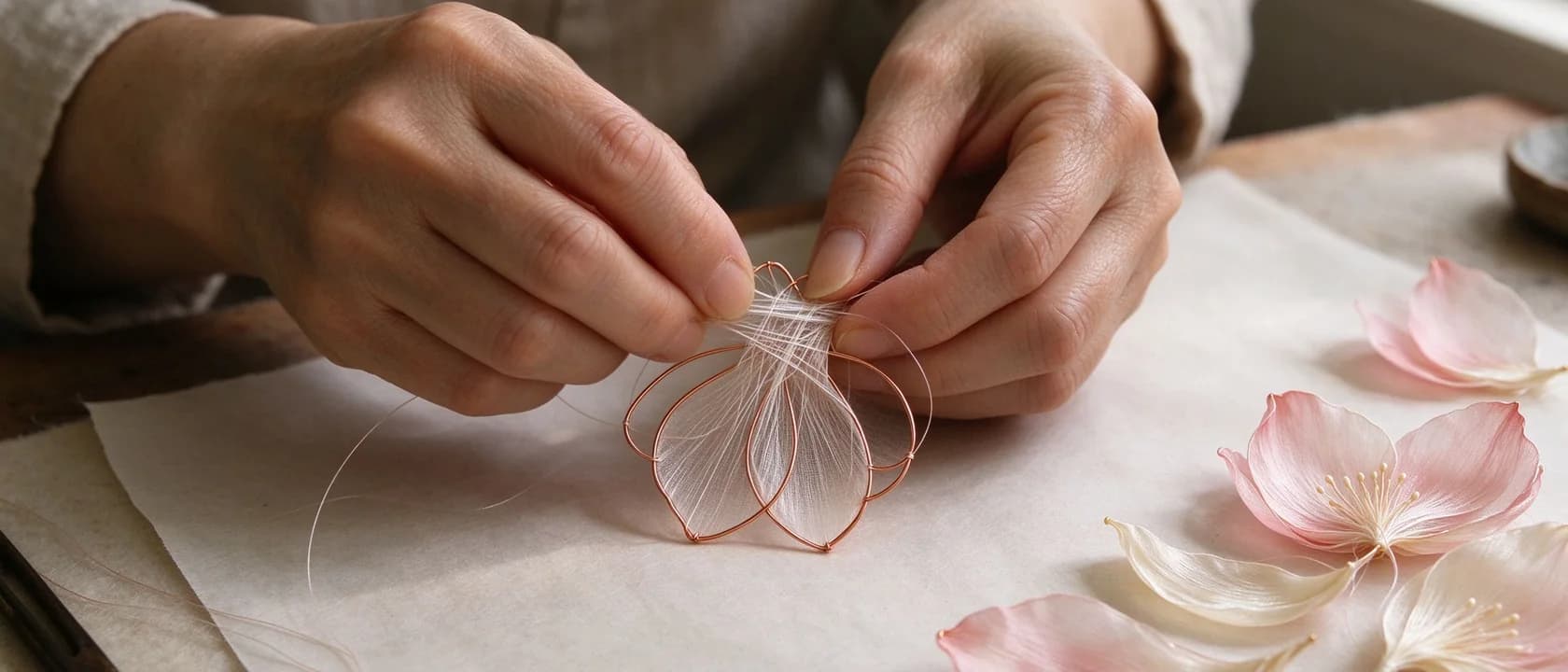
Usually the wire, sometimes the binding. Ronghua petals are shaped after they are bound, and the wire has to be stiff enough to keep the curve you give it — but thinner than most beginners choose.
| Symptom | Likely cause | Fix |
|---|---|---|
| Petal droops immediately | Wire too soft for the size | Use a heavier wire for large petals |
| Petal springs back | Wire too stiff | Shape in smaller bends, or use a thinner wire |
| Petal feels hollow | Cord bound too loosely | Rebind with firmer tension |
| Wire visible through the silk | Wire too thick | Move down a size |
That last row matters more than beginners expect. A thick wire holds a shape easily, but it also shows through the silk as a hard line. A thinner wire, shaped in more, smaller bends, disappears inside the petal.
The test is simple: bend the wire once and let go. If it holds, it can be shaped. If it springs back, it is too stiff for the petal size.
Why does trimming go wrong?
Because beginners trim too little. A cautious trim leaves the petal too fat, and a fat petal reads as a ball rather than a flower.
Trim in three passes, checking the silhouette against the other petals each time. Take off less than you think you should in each pass — the error is cumulative, and you cannot put material back.
The other error is trimming in the wrong place. The shape of a petal is set at the base, where it narrows into the wire, not at the tip.
What order should the piece be assembled in?
Body first, then petals, then details. The most common beginner mistake is to bind every petal perfectly and then try to attach them to a body built afterwards, which means fighting the piece for an hour.
Build the frame or body, shape the petals away from it, then attach from the outside in. Details — eyes, small leaves, the final trim — come last, because they are the first things to be damaged while you work.
Why does the flower look flat?
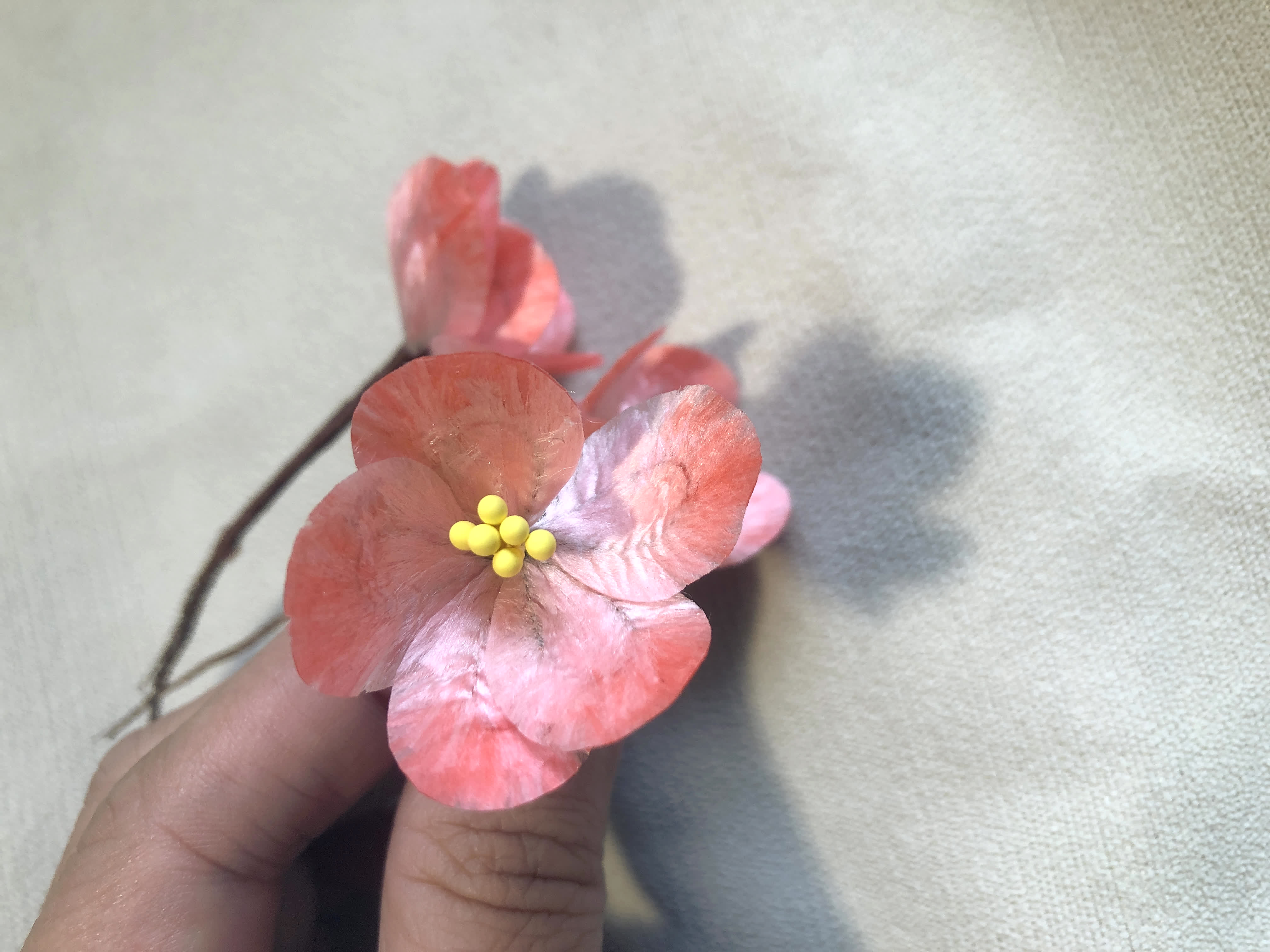
Because everything was shaped on the table. A ronghua piece has volume: each petal should be curved away from the center, and the whole flower should be handled in the air rather than pressed flat to a surface.
Hold the piece at eye level and turn it. If the silhouette does not change as it turns, it is flat. If the petals catch the light differently from different angles, it has volume.
When should the stiffener be used?
This is the step most written guides skip, and it decides whether the shape survives.
Dip the petal or leaf into the stiffener, then draw off the excess with tweezers. Do not shape it yet. Let it dry until it is half dry — that is the moment the material still moves but has begun to set. Shape it then, into exactly the curve you want, and leave it to dry fully. Once it is dry, the shape stays.
Shaping too early means the stiffener runs and the petal dries flat. Shaping too late means the material has already set and will crease instead of curving.
From the bench
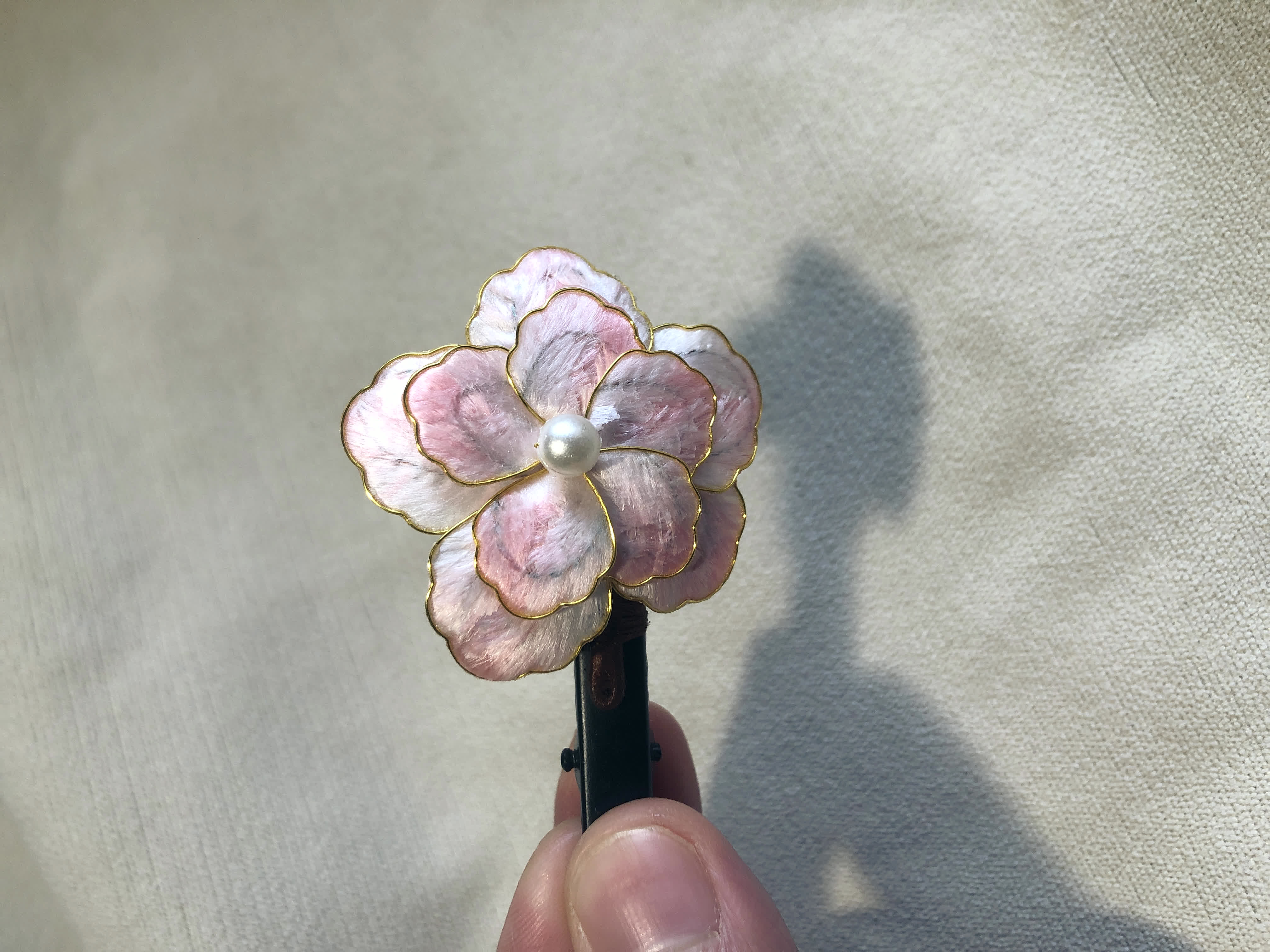
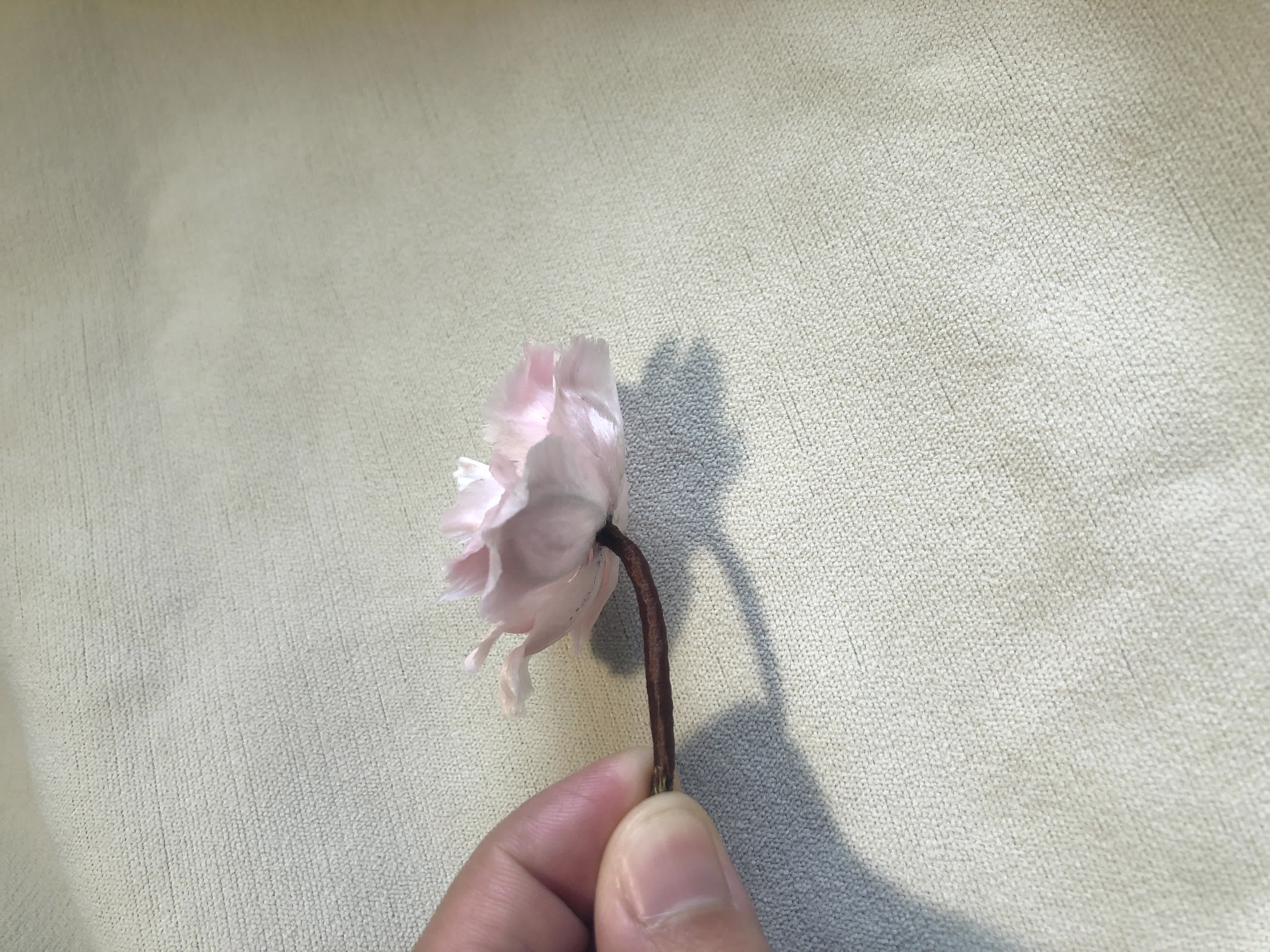
My first flower was made at nine at night, after two children were asleep, and I nearly stopped halfway. It was uneven and flat, and I kept it anyway. It is still in the studio, and I show it to beginners before they open a kit — because the first one is not supposed to be good.
Which of these problems matter most?
The first three: fraying, wire choice and trimming. They decide whether the flower looks like a flower, and they are all material decisions rather than talent.
If you are starting, work slowly on one petal until it holds its shape, then repeat it. The second petal teaches more than the first ten minutes of reading about petals — and the ronghua craft page explains the structure behind what your hands are learning. If the vocabulary is new, what ronghua actually is covers the material and the tools first.
What if you would rather not make one?
Then buy the finished piece. There is no virtue in forcing a kit if what you want is the object.
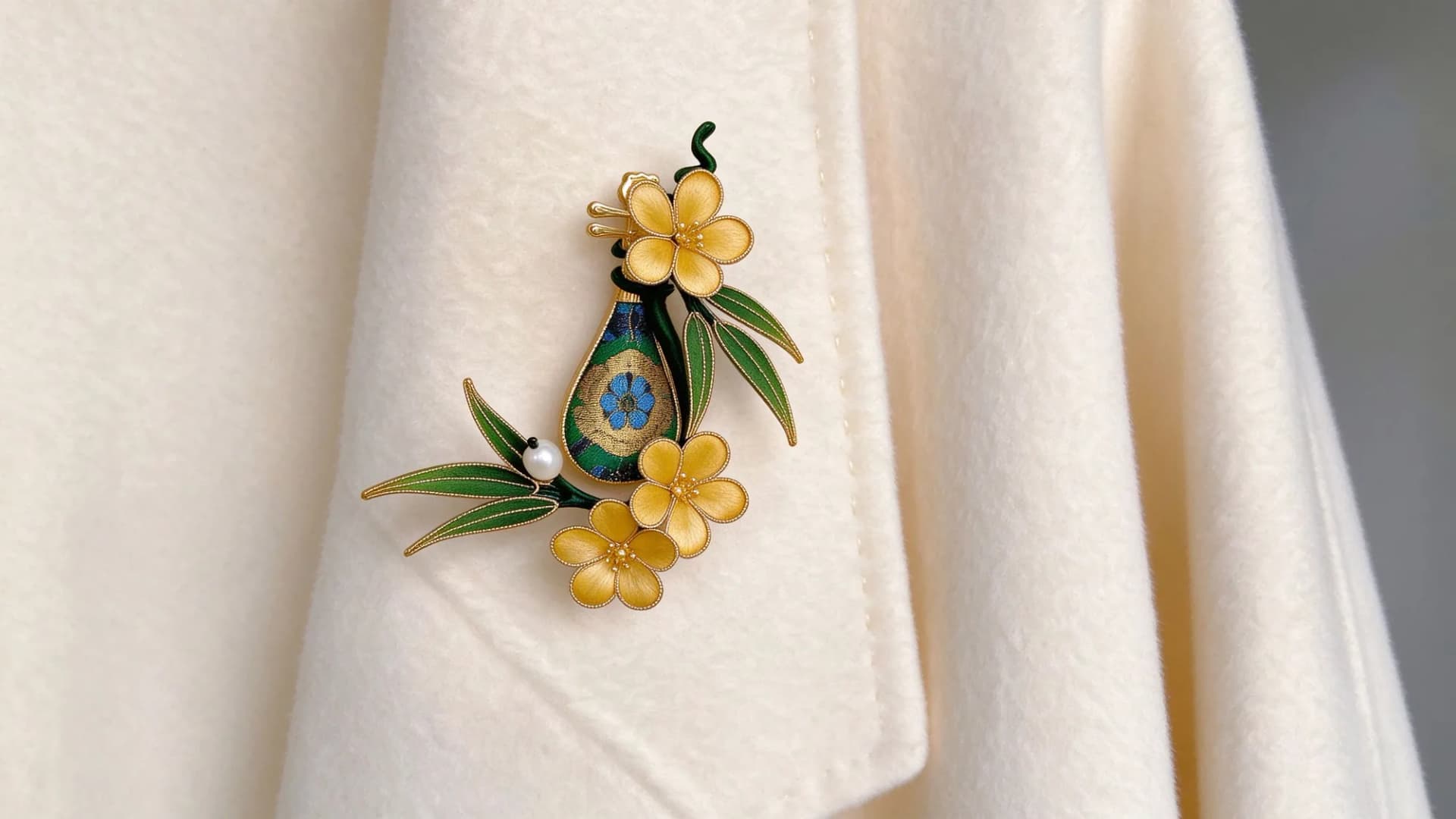
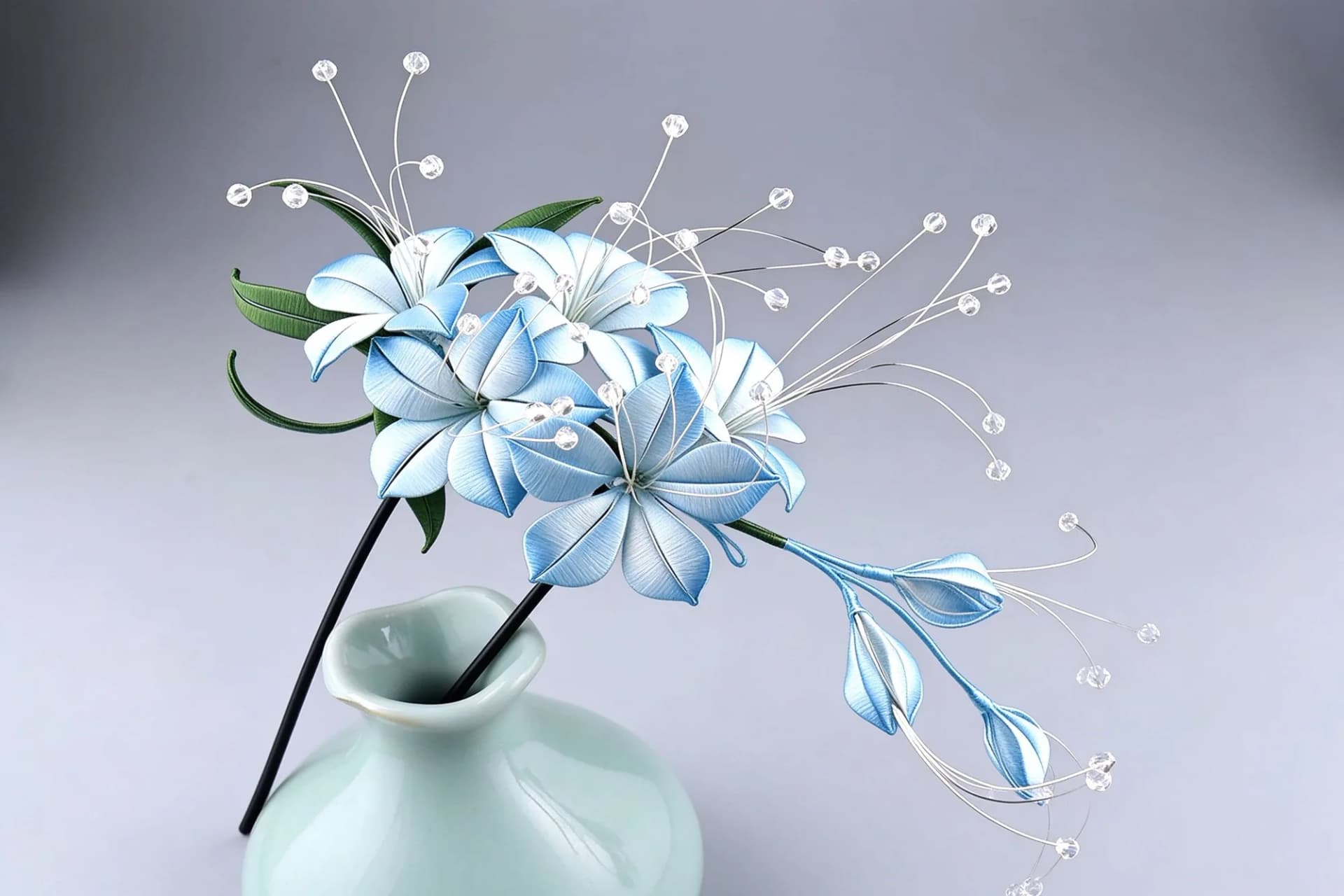
The phoenix brooch and the lily of the valley brooch are made with exactly the steps above, including the stiffener, without any of the troubleshooting on your side.
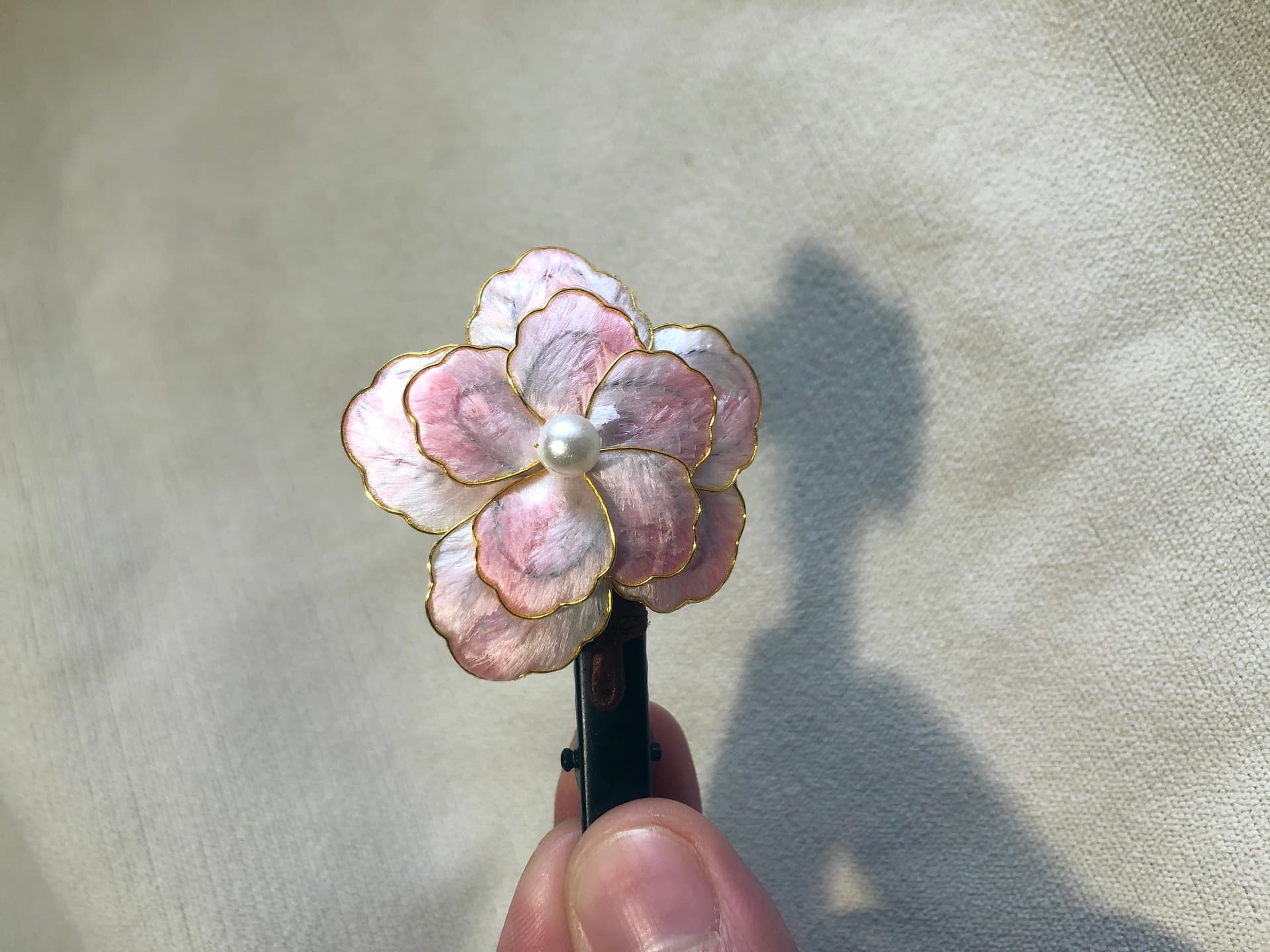
Read next: Six tries to fix fuzzy ronghua petals — why a petal surface goes chalky, and how one pink hairpin was fixed after six attempts.
Frequently asked questions
Why does my silk cord keep fraying?
Usually because it is being pulled across a sharp edge — the cut end of a wire, a tool, or rough skin. Smooth the wire end first, twist the cord in the direction it was already twisted, and keep your hands dry but smooth.
Should I use thick wire for ronghua petals?
Thinner than most beginners expect. A thick wire holds a large shape but shows through the silk. Most petals are better on a thinner wire, shaped in smaller bends.
What is the stiffener for?
The stiffener sets the shape. Dip the petal or leaf, squeeze off the excess with tweezers, and let it dry until it is half dry — that is when you shape it. Once it dries fully, the shape stays.
Why does my flower look flat?
Because it was shaped on the table. Each petal should be curved away from the body and the piece should be worked in the air. Turn it at eye level: if the silhouette never changes, it is flat.
What if I would rather not make one?
Then buy a finished piece. A finished brooch is the same work without the troubleshooting, and it is the honest choice if the object is what you want rather than the process.