Six Tries to Fix Fuzzy Petals on a Ronghua Hairpin
Why did the petals keep coming out fuzzy?
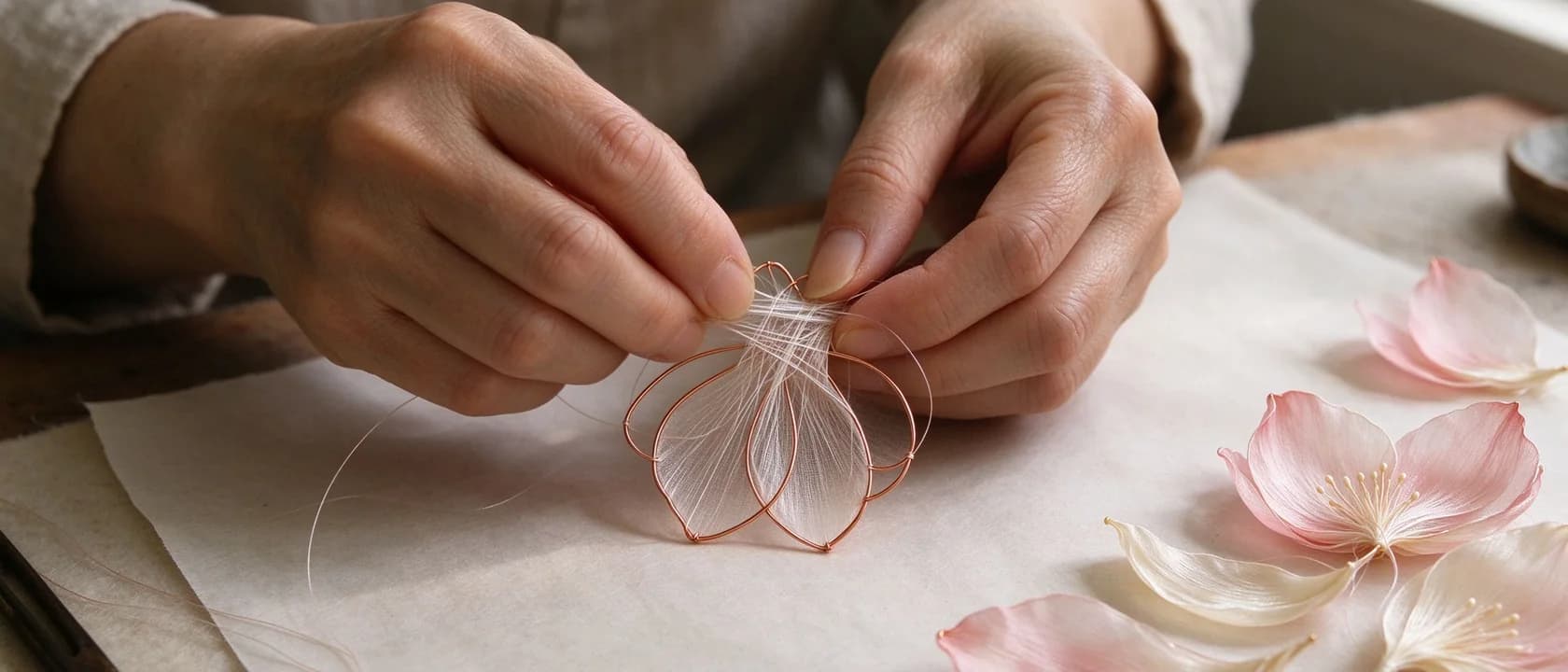
On November 18 I was making a pink ronghua hairpin in the studio in Guang'an, from natural mulberry silk. I was not aiming for a flower that reads well in a photograph. I wanted the surface to behave like a real petal when it is turned in the hand: a soft edge, a fine sheen that moves with the angle, no white bloom sitting on top.
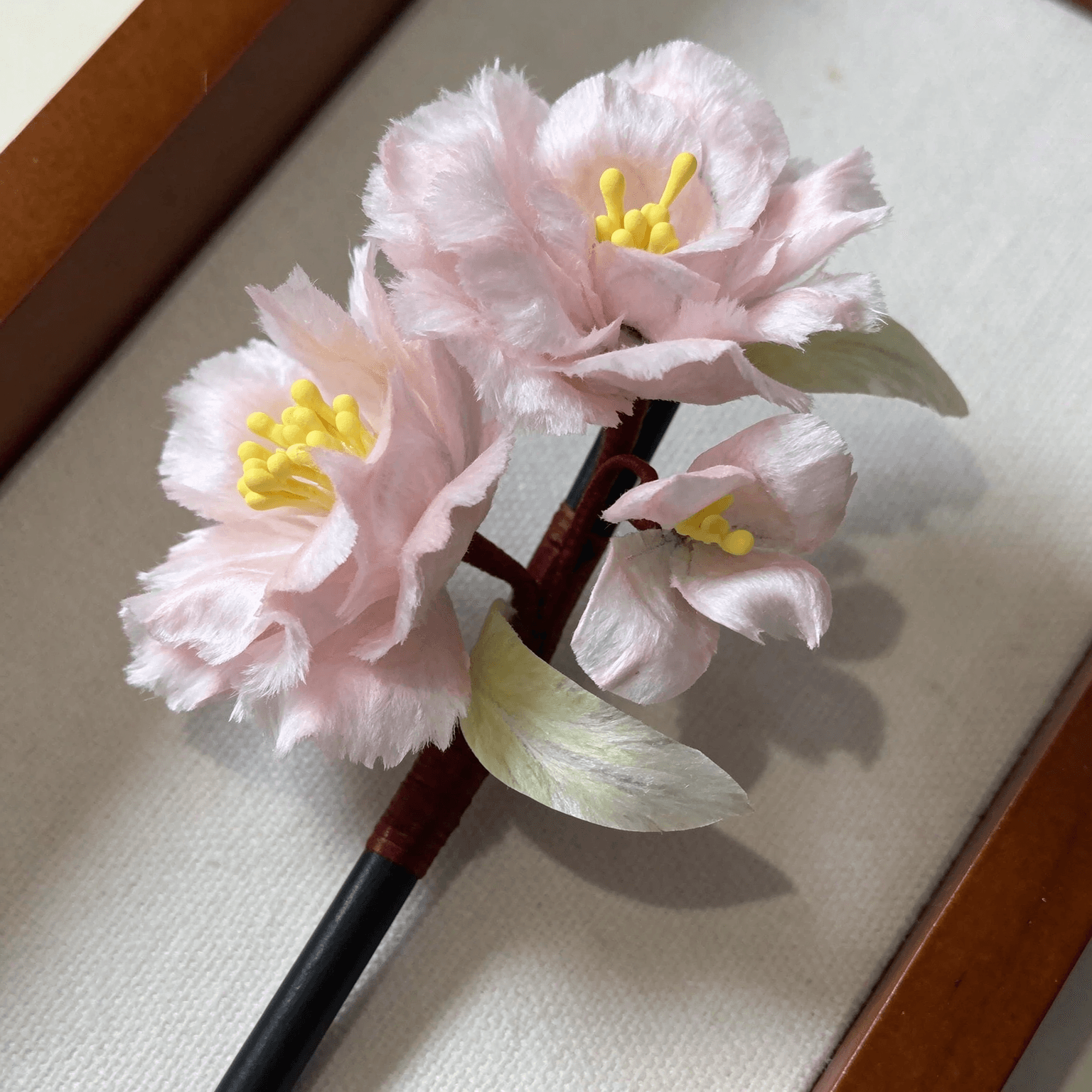
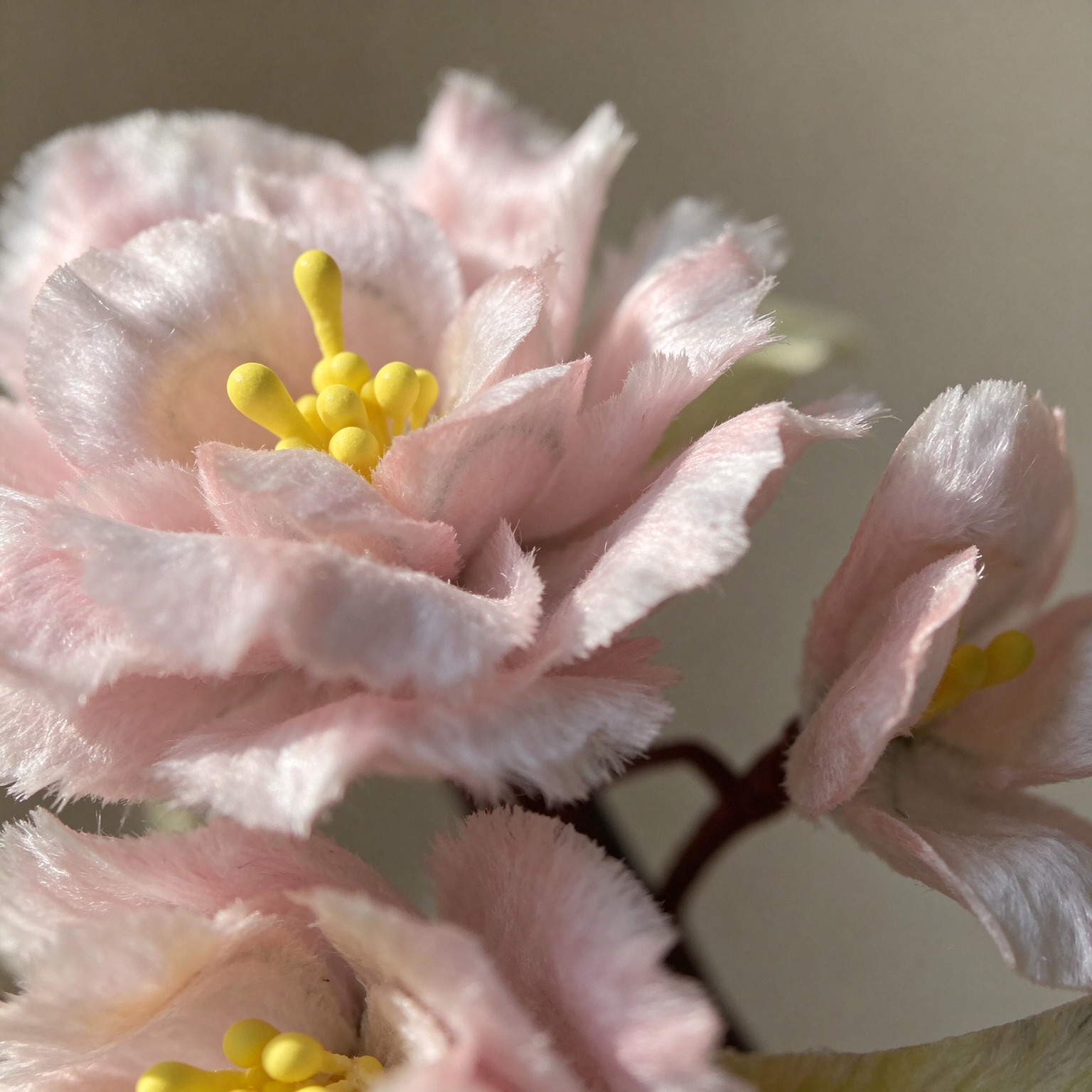
At the shaping stage the problem appeared. Every petal carried a layer of short fuzz. Not dust — the silk's own fibers, lifted. From the front it looked acceptable. Turned toward the window, the petal went chalky, the edges looked rough and the pink turned grey.
That is when I knew the hairpin was not going to work.
Why does a thin layer of fuzz ruin a flower?
Because a real petal does not have it.
A real petal has a tight surface. Light travels along the curve and leaves; on a fuzzy petal the light hits the standing fibers and scatters, which reads as old and cheap. Pink shows this worst of all: once pink goes grey it stops being a petal color and becomes the color of worn cloth.
The harder part is that it is not obvious. On a table, or through a phone screen, many people would not notice. Worn in the hair, half a meter away, backlit, the difference is immediate. The expensive part of ronghua was never the pattern. It is the surface at that distance.
Where does the fuzz come from?
When I finally stopped guessing, it turned out not to be one cause but several small ones stacking up.
| Source | What it looks like | How to check |
|---|---|---|
| Cord twisted against its direction | Overall fuzz that gets worse with handling | Pull a short section the other way and watch it lift |
| Sharp wire end or tool | One line or patch of fuzz | Fuzz is concentrated on one side of the petal |
| Dry skin catching the fiber | Irregular, patchy fuzz | Fuzz drops sharply when you change hands or cover the fingertip |
| A dull trim | Rough, pale edge | Edge fuzzes but the center is clean |
| Static in dry air | A floating layer that settles when touched | Strokes flat, then rises again |
That table came after the failure. For years my first reaction to fuzz was to twist tighter, which made it worse — because twisting against the cord's own direction is one of the causes.
What did I try?
I changed the method six times on this one hairpin.
The first attempts all failed. Some petals looked fine until they were half dry, and then the fuzz rose. Others looked pressed down until they were fully dry, and then it came back. There were moments when I wanted to stop, because time had already gone into it and each petal was worse than the one before.
The sixth did not feel like a sudden success. It was the same movement, and my fingertips found the surface smooth — not pressed smooth, but smooth because the fibers were no longer standing. When it dried and I turned it in the window light, the sheen was one continuous line. That is when I knew.
The slow part was not the making. It was the diagnosing. If you misread where the fuzz comes from, every attempt after that adds to the same mistake.
Why are new designs more likely to fail?
Because a new idea changes the process, not just the shape.
With a shape I know, every step has a precedent: how tight here, how much to trim there, how dry before moving it. The hands do not hesitate.
A new idea has no precedent. Thinner petals closer to a real flower mean finer silk, a looser twist, a trim closer to the edge — and each of those moves the risk of fuzz up one notch. So ruining several pieces on something new is normal. It is not a sign that the skill has gone backwards.
This is also why I do not use a sample as the standard. A sample is the one that survived dozens of failures. It looks effortless, and behind it is all the testing.

How long did it actually take?
Four hours to make, six hours to dry.
Those are separate numbers. Much of the four hours was not construction; it was testing, looking and undoing. The six hours cannot be shortened, because moving a half-dry petal undoes every shape you gave it.
If you counted only the final successful version, it might be an hour. The real cost of the piece is the six attempts added together.
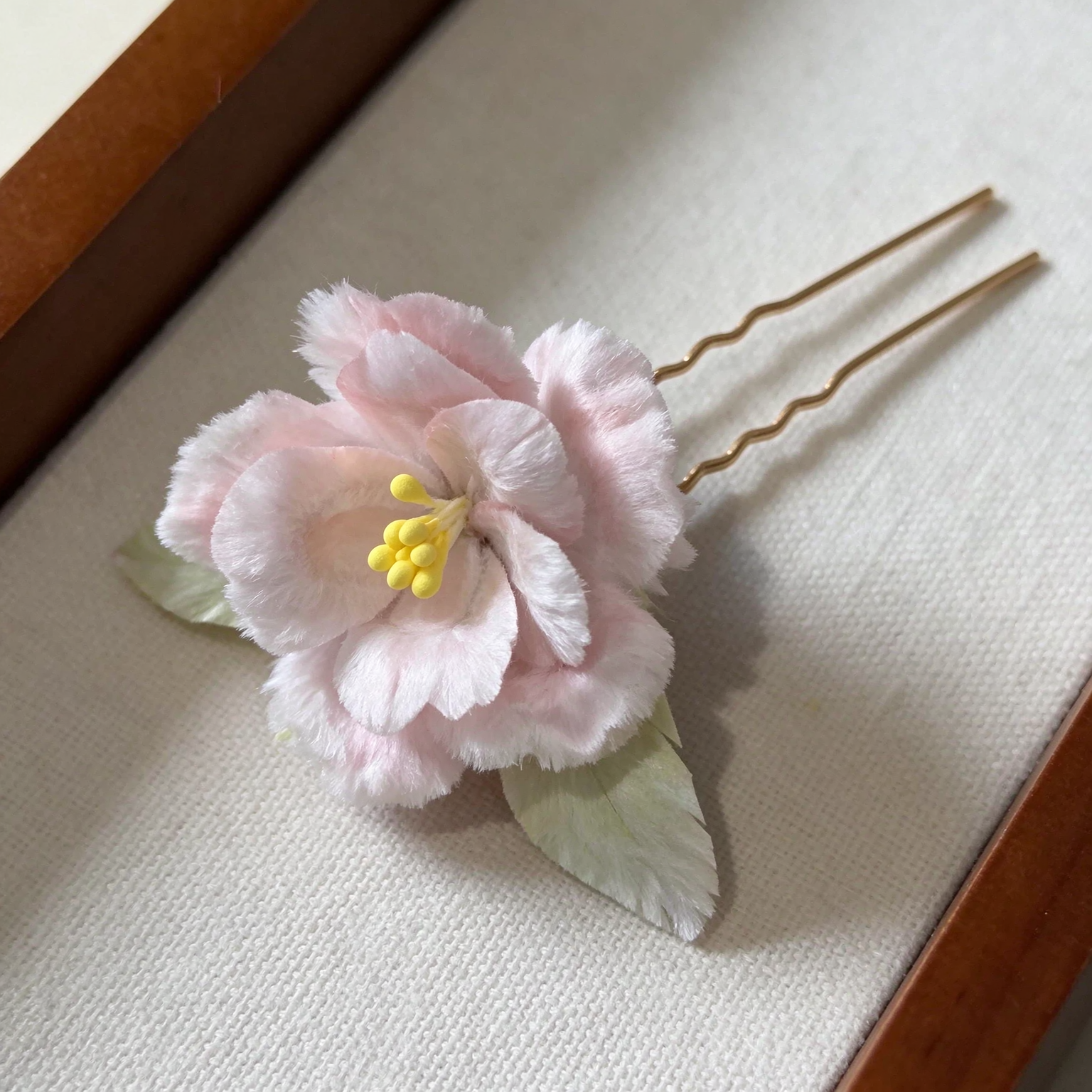
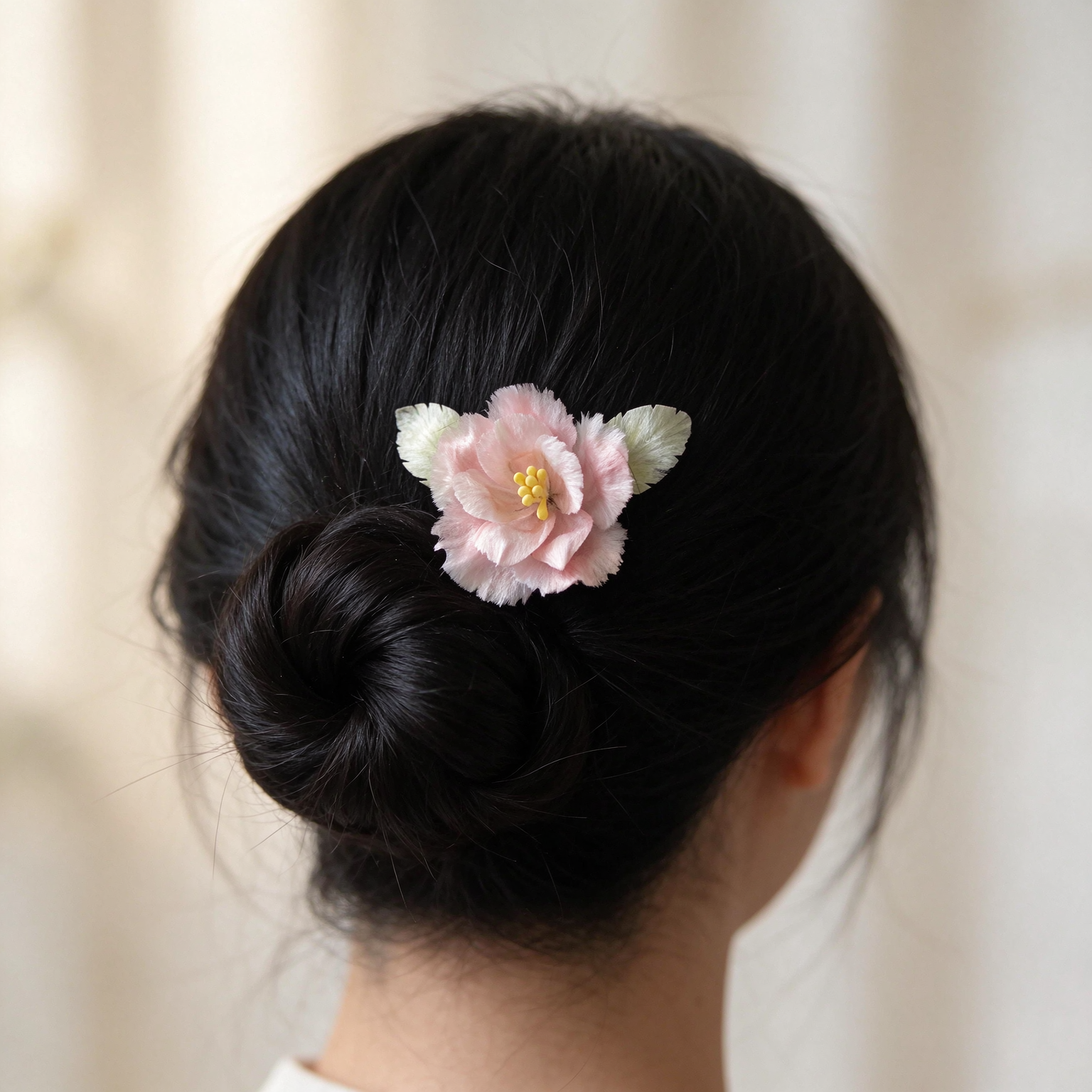
From the bench
The pink hairpin was made on November 18 in Guang'an, from natural mulberry silk. The petals came out covered in short fuzz, so I changed the method six times before one worked. Four hours to make, six hours to dry. The five petals that failed are the reason the sixth one looks like a flower.
What does a failed petal teach you?
The failures are not waste. They mark the routes that do not work, and the successful petal exists because the others were ruled out. That work does not appear in the product photo, but it decides how the piece feels in the hand.
If you are learning: you may not need six attempts. You might make something wearable on the first try, or only understand the problem on the third. But if your goal is a petal that looks real, you will meet fuzz, and there is no way around it.
Do not rush to twist tighter. Look at where the fuzz is coming from first.
How can you tell if a petal has the problem?
If it looks acceptable from the front but goes pale and chalky in backlight, that is not a color problem. The surface fibers are standing up.
Stop. Do not add more force. Find the small patch where it starts, and change one movement at a time.
The difference between a piece that looks handmade and one that looks expensive is often this single invisible layer of smoothness. The ronghua craft page explains the material behind it, and the six problems beginners hit covers the rest of the first-flower failures.
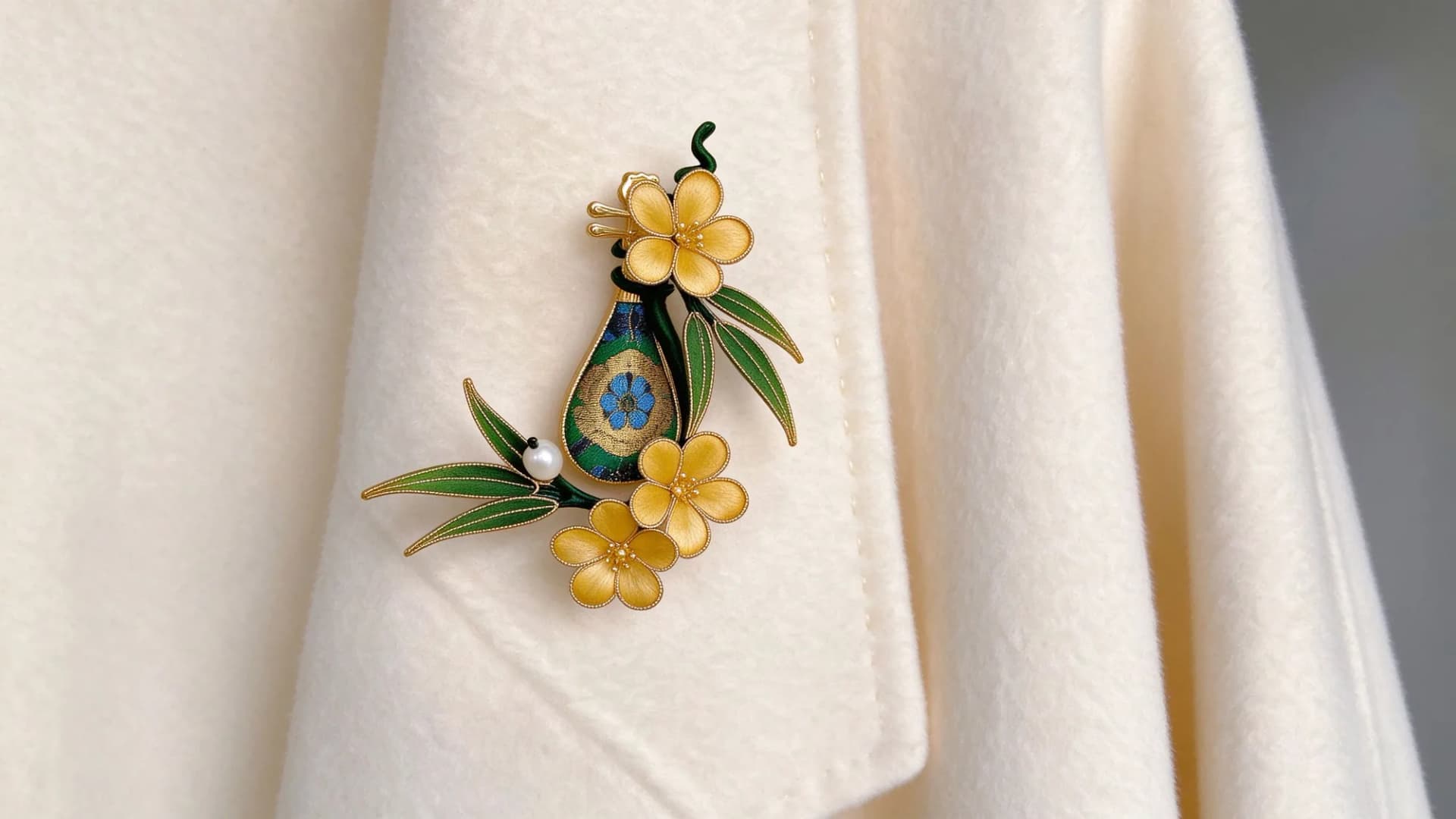
If you would rather buy the finished result, the phoenix brooch and the hydrangea hairpin are made with the same material — and if you are still deciding whether to make one yourself, start here.
Frequently asked questions
Why do my ronghua petals look fuzzy?
Usually the fibers have been lifted rather than the silk being bad. The five common causes are twisting the cord against its own direction, a sharp wire end or tool, dry skin catching the fiber, a dull trim, and static in dry air.
Should I twist the cord tighter when it starts to fuzz?
No. Tightening is often what causes the fuzz, because it twists against the direction the cord was made. Stop, find where the fuzz starts, and change that one thing instead.
How do you tell fuzz from a bad dye job?
Turn the petal into the light. Fuzz scatters the light and makes the surface look chalky at an angle while the front looks fine. A dye problem is even across the petal from every angle.
How long does a hand-shaped ronghua hairpin take?
This one took four hours to make and six hours to dry. Most of the four hours was not construction — it was testing, looking and undoing, which is normal when the shape is new.
Is it normal to ruin several petals on a new design?
Yes. A new idea changes the process, not just the shape: thinner silk, a looser twist, a trim closer to the edge. Each of those raises the risk of fuzz, so the first attempts are how you find the one that works.