What's Inside a Chanhua DIY Kit? Contents, Tools and Time
What's inside a chanhua DIY kit?
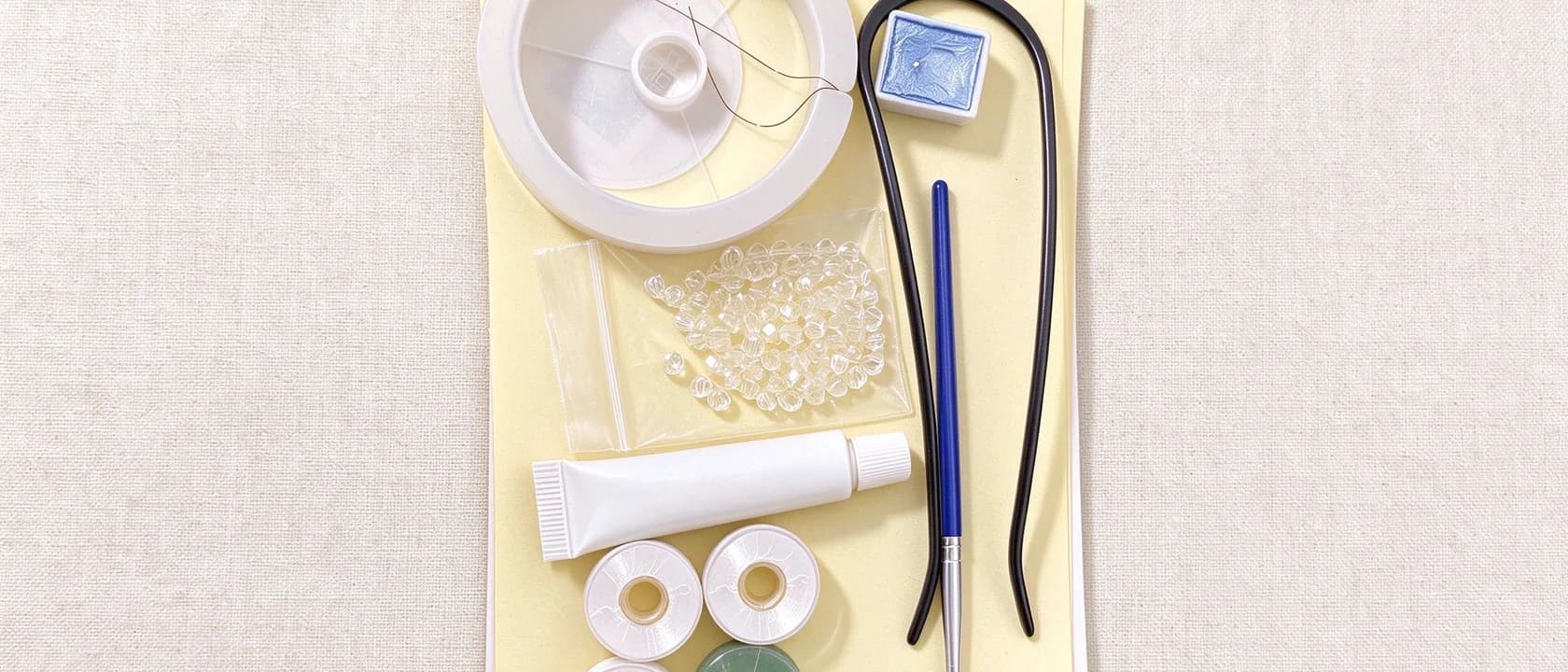
A chanhua DIY kit contains six things: pre-shaped copper wire petals, dyed mulberry silk thread, a hairpin or brooch blank, clear-drying flexible glue, pearl stamens for the centre, and small embroidery scissors. Nothing else is strictly required, and the first flower takes four to six hours plus a day for the glue to cure.
If you have never made one before, it helps to know what chanhua is before opening the box — the craft is easier to learn once you understand why the petals are built on wire.
What is in the box, item by item?
| What's in the kit | What it does | If it were missing |
|---|---|---|
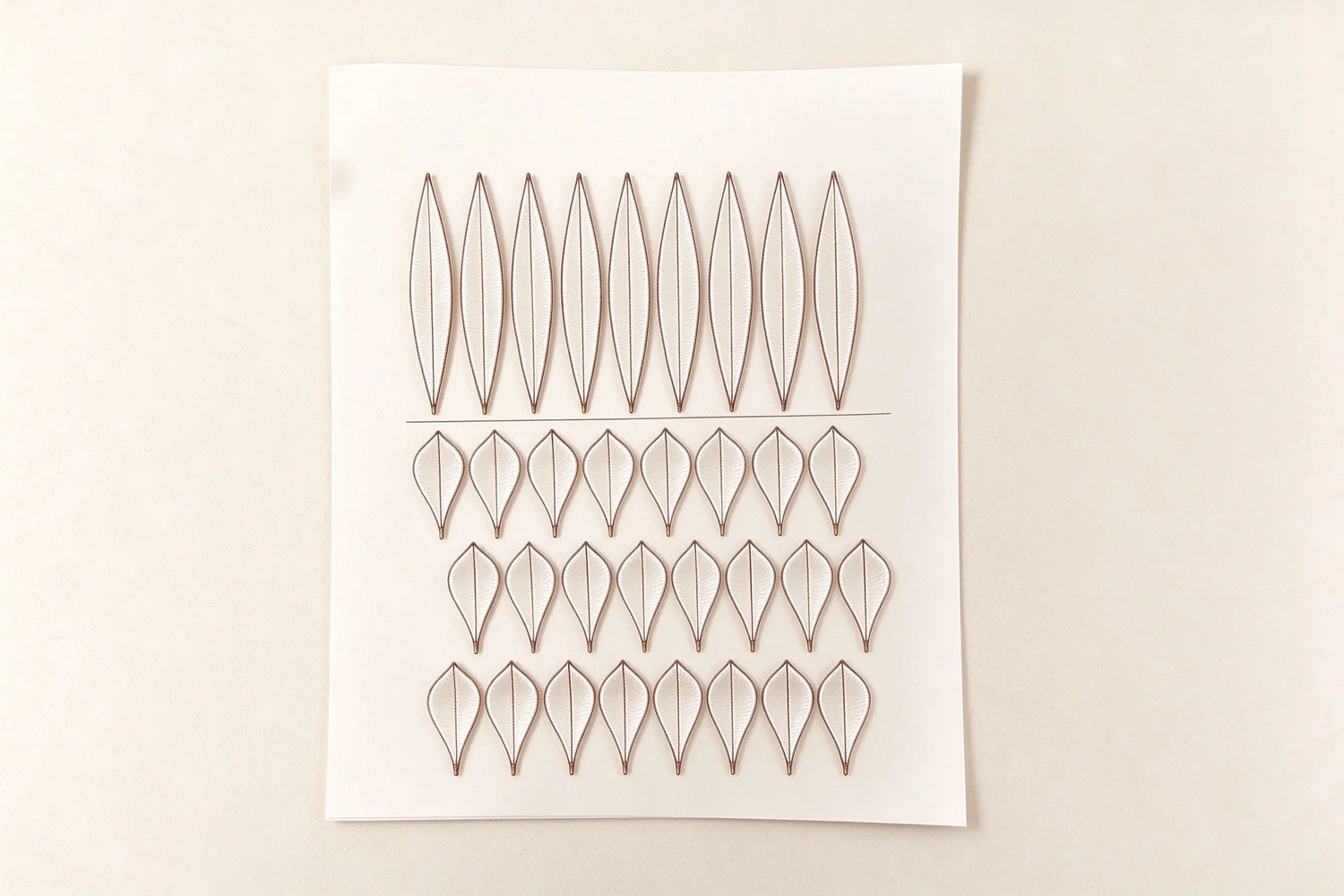
| Shaped wire petals | The skeleton of each petal; silk is wrapped around it | You would have to bend and shape copper wire first, which is a separate skill |
| Dyed mulberry silk thread | The visible surface of the flower | Cheap polyester frays and will not lie flat against the wire |
| Hairpin or brooch blank | What the finished flower is mounted on | The flower would have nowhere to attach |
| Clear-drying flexible glue | Holds the centre, the stamens and the final binding | Rigid glue cracks the moment the petal flexes |
| Pearl stamens | Covers the point where all the petals meet | A bare centre makes the flower look unfinished |
| Embroidery scissors | Trims thread ends close to the wire | Household scissors crush the wrap instead of cutting it |
Which part of the kit is the actual skill?
The shaped wire. That is the honest answer, and it is why kits exist at all.
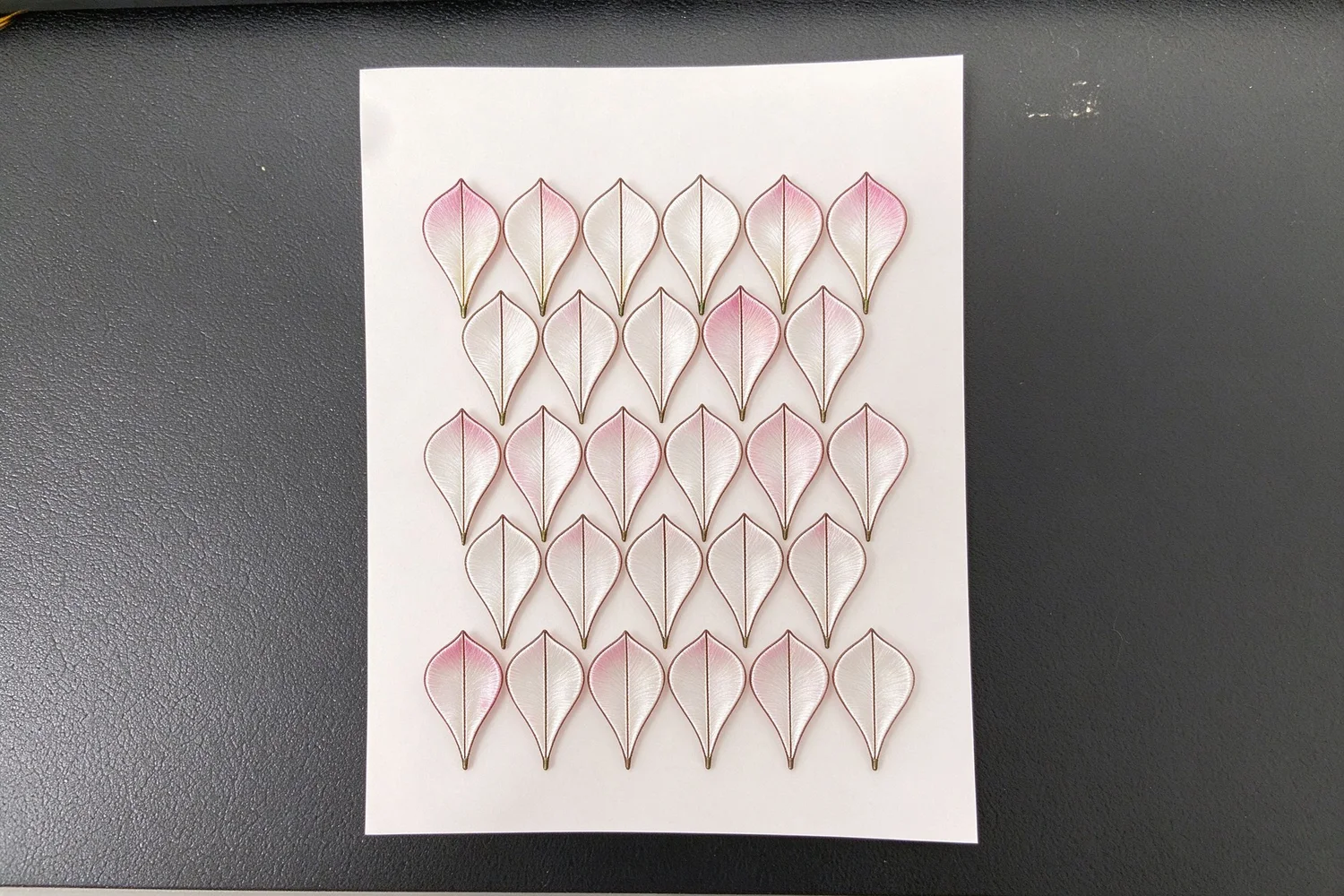
In chanhua, the wire frame is the shape — it decides whether you end up with a peony or a jasmine. Bending and shaping that frame by hand is a craft of its own, and it is the step most likely to defeat a beginner on day one. A kit removes it by handing you the frames already formed, so the only thing left to learn is the motion that defines the craft: wrapping silk thread flat around wire, turn beside turn, with no gap and no overlap.
That single motion is genuinely difficult for the first two petals and close to automatic by the eighth.
What is not in the kit?
Three things, and none of them are expensive:
- Tweezers. A fine straight pair is how you tuck the last thread ends under the wrap instead of leaving a visible knot.
- Good light. You need to hold each finished petal against a lamp. If you can see bare wire through the thread, the petal will look wrong on the finished piece and it is faster to rewrap it now than to notice later.
- A flat, clear surface. Losing one small petal to a cluttered desk is the most common way a first kit ends up unfinished.
Scissors, glue and thread are all in the box.
How long does each stage take?
| Stage | First attempt | After three flowers |
|---|---|---|
| Sorting petals and planning colour | 15 min | 5 min |
| Splitting the silk thread | 10 min | 3 min |
| Wrapping 6–8 petals | 2.5–3.5 h | 1.5–2 h |
| Shaping the petals | 30 min | 15 min |
| Assembly and mounting | 45 min | 25 min |
| Glue curing | 24 h | 24 h |
The curing time is not optional. A flower that shifts while the glue is still soft will sit crooked permanently, and no amount of reshaping later fixes a leaning centre.
Which kit should you start with?
Kits differ mainly in petal count and in how much colour blending they ask of you.
| If you want | Choose | Why |
|---|---|---|
| The shortest first project | Hydrangea Hairpin Kit | Fewer petals and a forgiving round silhouette |
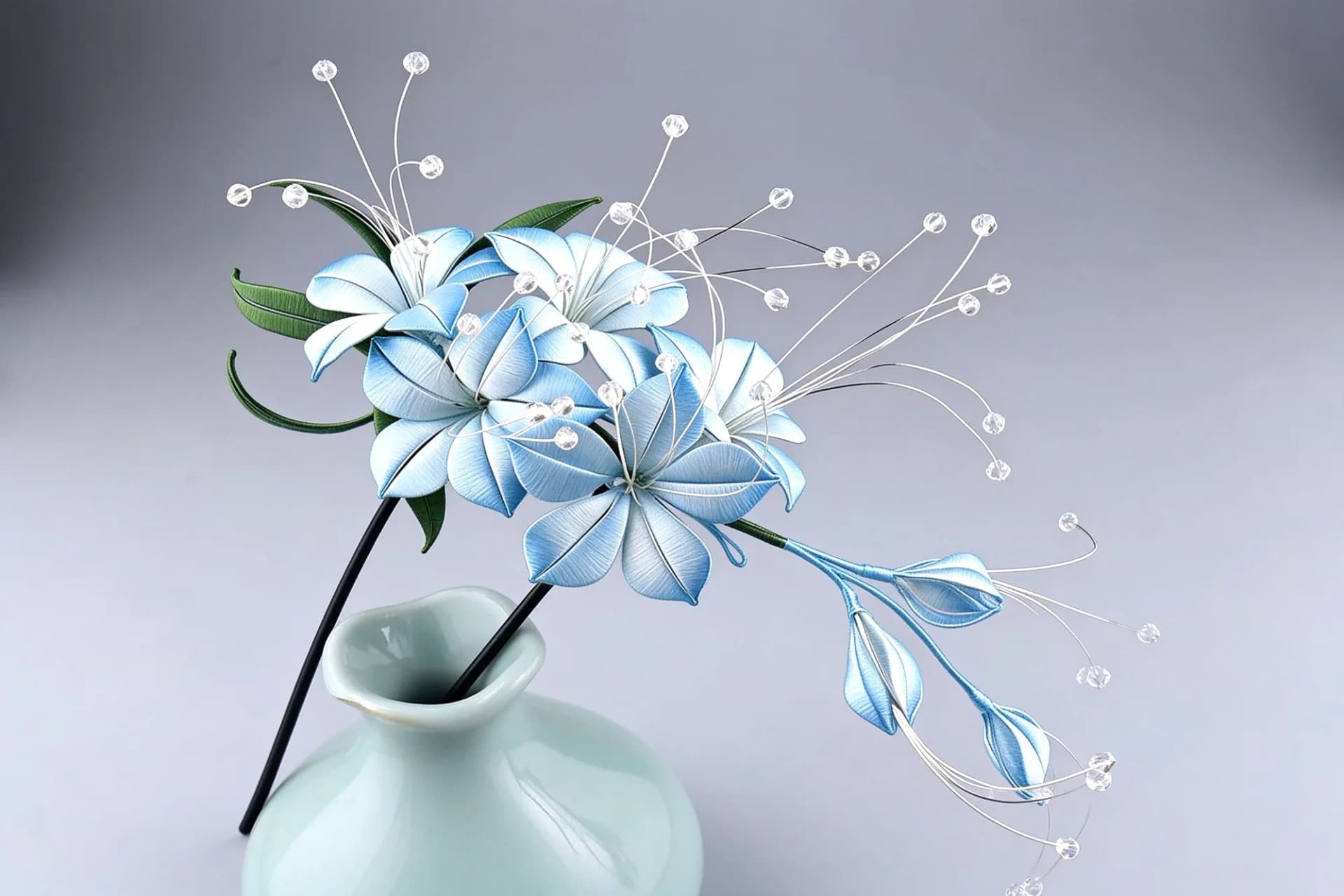
| A small, wearable everyday piece | Blue Trailing Jasmine Hairpin | Light enough to wear all day, slim enough for a low bun |
| Something striking for a gift | Blue Phoenix Brooch Kit | More shaping, more presence, and the most photographed of the set |
Once you have made one, the second is dramatically faster — the peony hairpin tutorial walks through every step in the same order the kit instructions do.
What should you do with the finished piece?
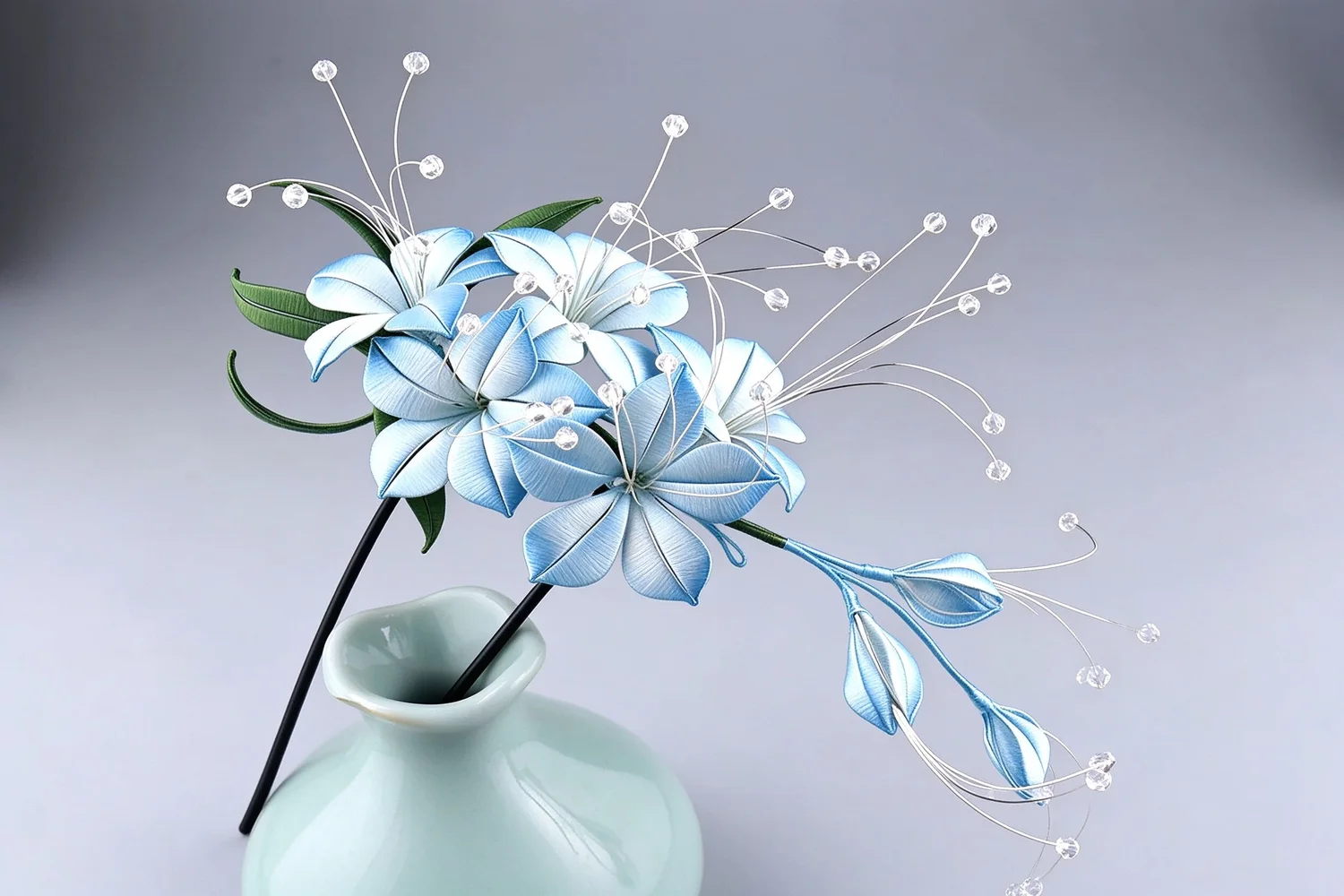
Keep it in the box it arrived in, or a fabric pouch. Silk dislikes water, direct sun and hairspray, in that order. If the petals flatten, reshape them with your fingers — the thread holds whatever curve you give it.
If you are still deciding between the two silk flower crafts, chanhua vs ronghua compares what each one actually asks of your hands and your time. And if you would rather wear someone else's work first, browse the finished pieces.
Frequently asked questions
What is actually inside a chanhua DIY kit?
A standard kit contains shaped copper wire petals, dyed mulberry silk thread, a hairpin blank or brooch base, clear-drying flexible glue, pearl stamens for the flower centre, and a small pair of embroidery scissors. The pattern and the pre-shaped wire frames are what separate a kit from loose materials.
Do I need to buy anything extra?
Usually only tweezers for tucking thread ends, and a flat work surface with good light. A lamp you can hold the petal up against is the one tool people underestimate: it is how you see bare wire showing through the wrapping before it becomes a problem.
How long does the first flower take?
Four to six hours of hands-on work for a six- to eight-petal hairpin, plus a full day for the glue to cure. Most people split it across two evenings, which is easier than it sounds because the wrapping motion improves quickly.
What is the difference between a chanhua kit and a ronghua kit?
A chanhua kit teaches you to wrap silk thread flat around a wire frame, so the frame comes ready-made. A ronghua kit teaches velvet work, which means the silk velvet has to be prepared and trimmed, and the kit is usually larger and more expensive for the same size flower.
Can I reuse the tools for a second piece?
Yes. Scissors, tweezers and glue all carry over, and thread is sold separately by colour, so a second flower only needs new petals and thread. That is why the price per finished piece drops sharply after the first one.