How to Make a Chanhua Trailing Jasmine Hairpin (Step-by-Step)
How do you make a chanhua trailing jasmine hairpin?
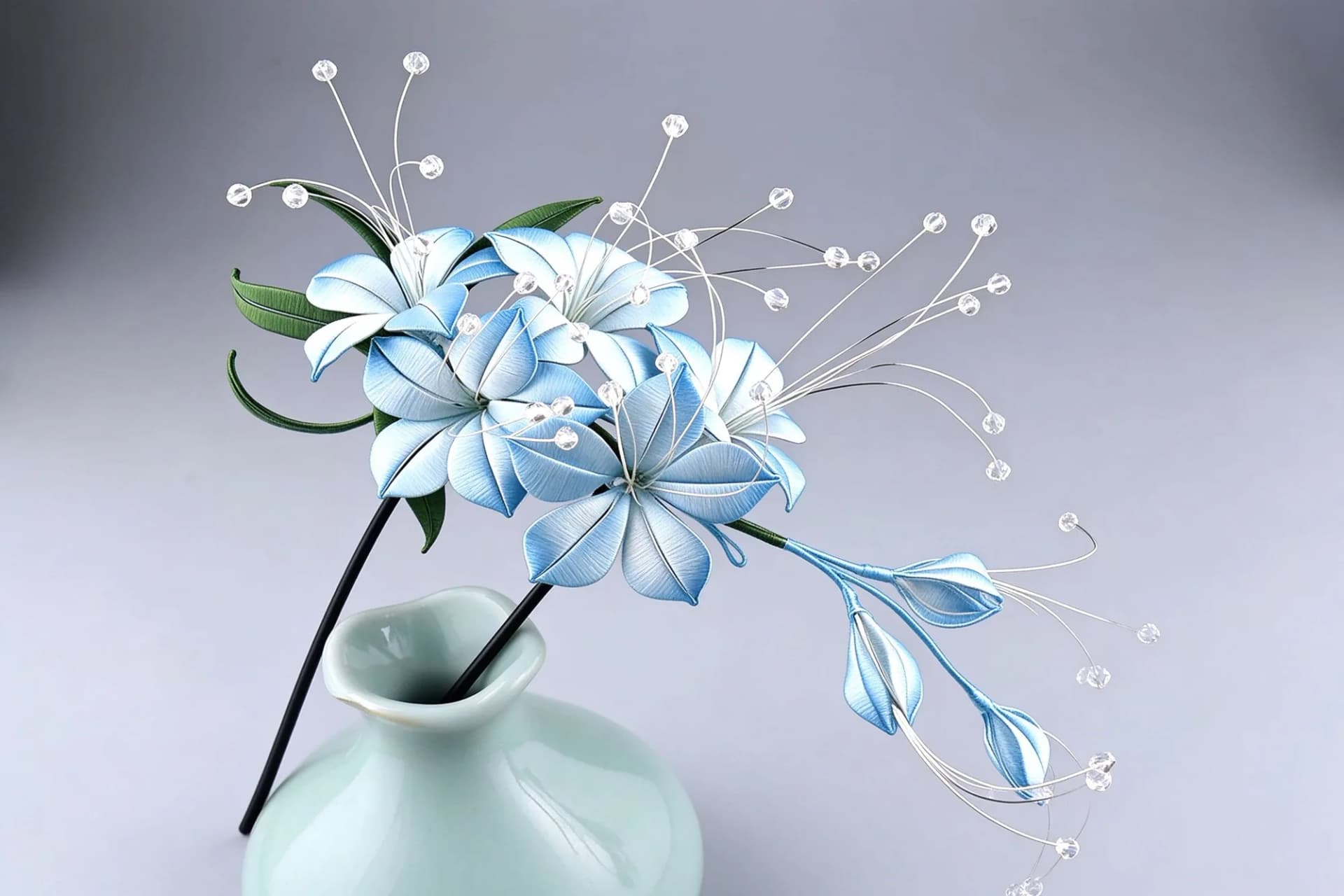
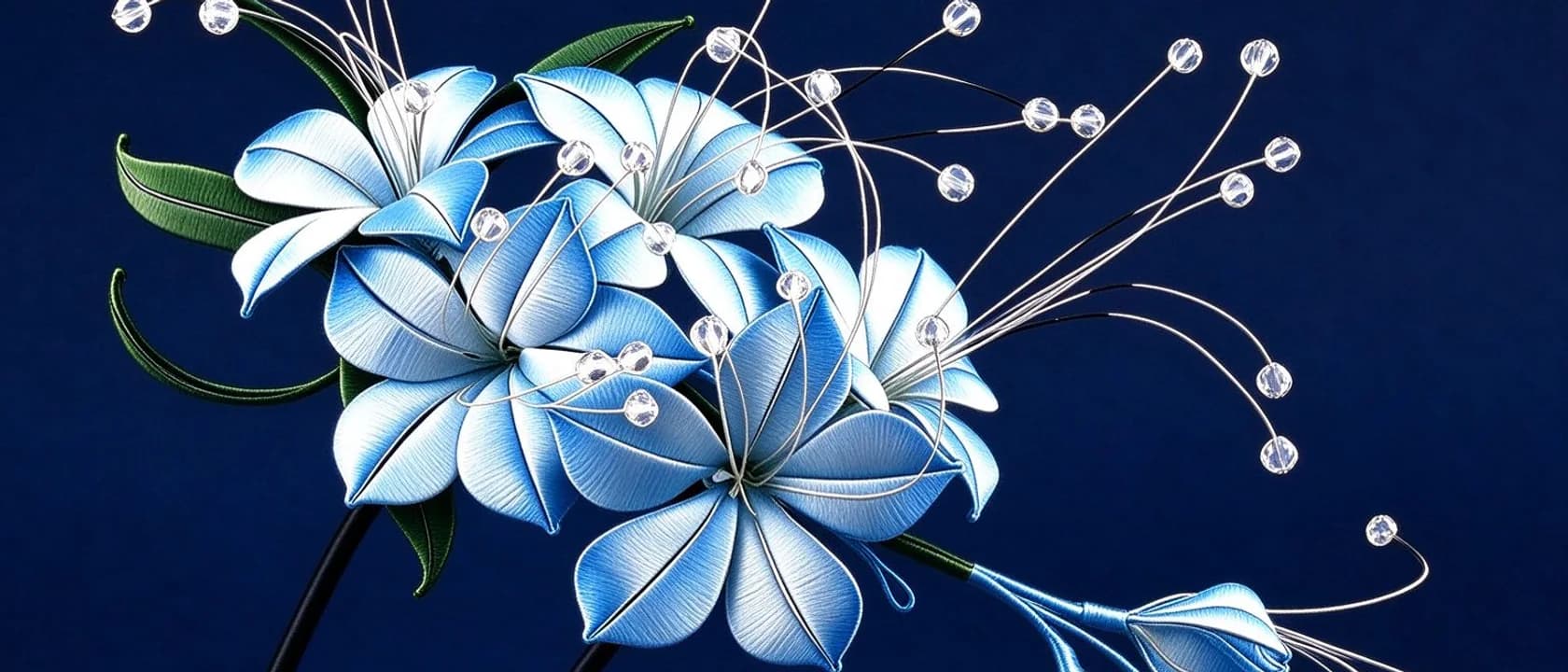
A chanhua trailing jasmine hairpin is a single 15 cm stem carrying a line of small blue blooms, each one wound separately and then mounted along the wire. It takes six to nine hours for a first piece — longer than a round hairpin of the same size, because the work is spread along a much longer line instead of gathered into one flower head.
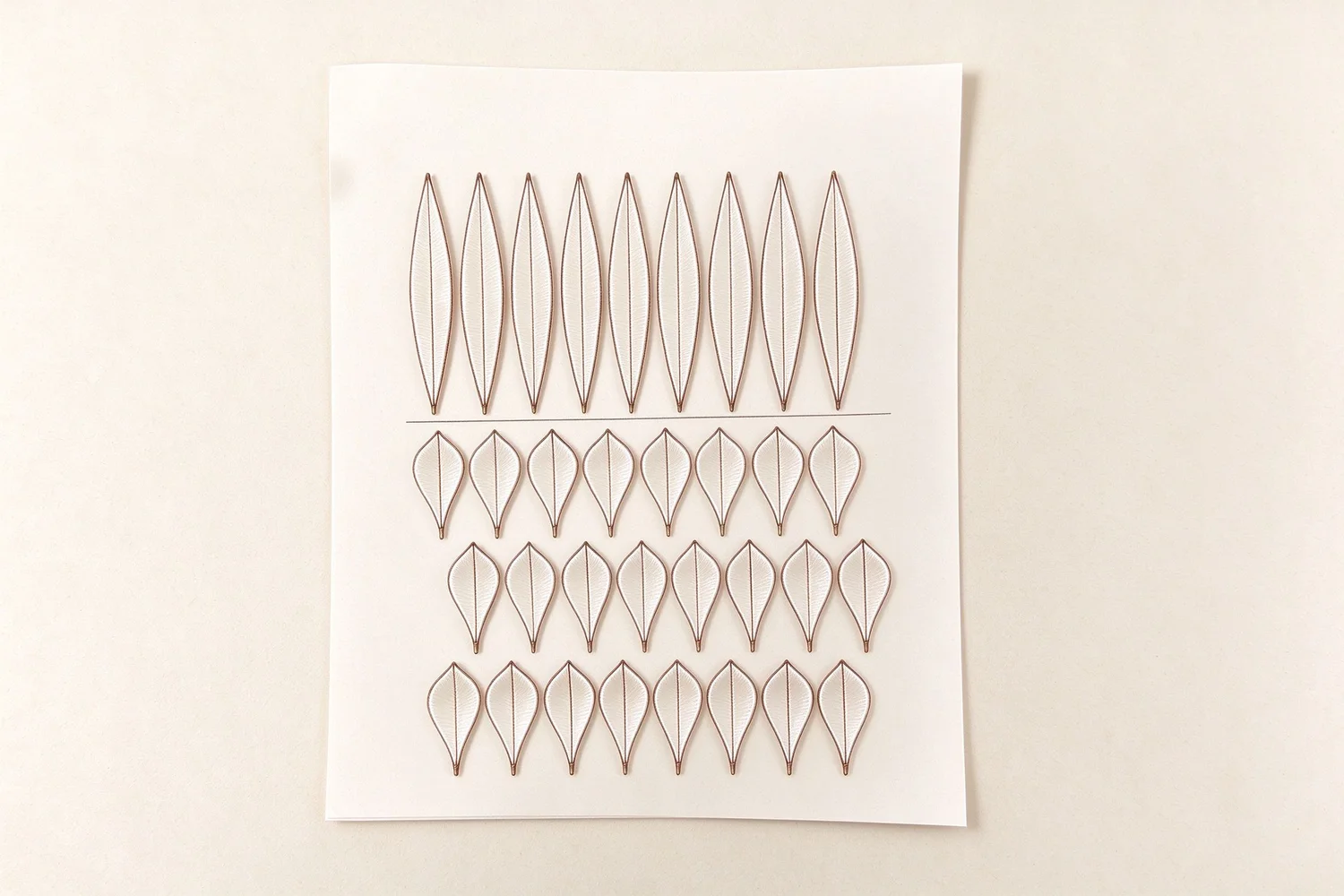
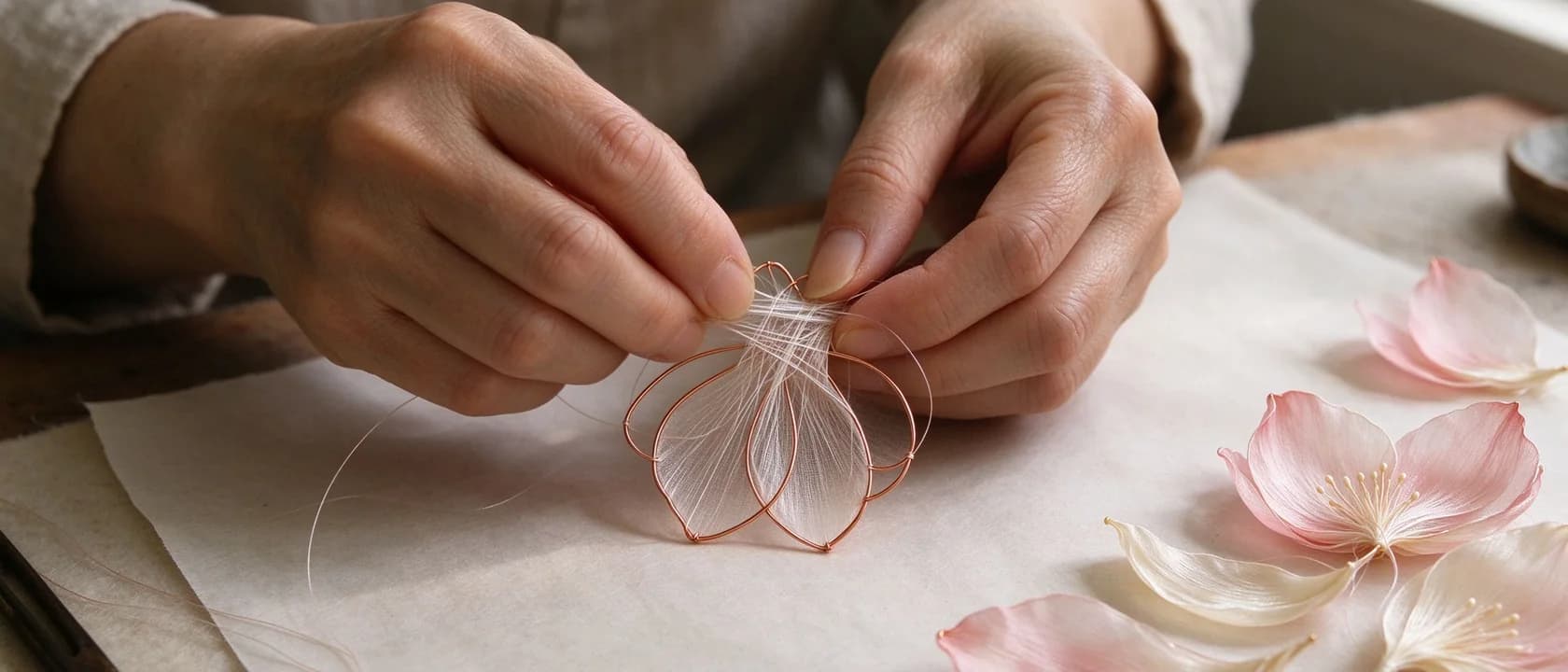
The wrapping motion is the same one every chanhua piece uses, so how to wrap silk thread around a wire frame is the five-minute primer if the technique is new to you.
Why is a trailing design harder than a round bloom?
Because the work is linear, and a line shows every inconsistency.
| Round bloom (peony, hydrangea) | Trailing jasmine | |
|---|---|---|
| Structure | Many petals gathered into one head | One long stem with blooms along it |
| Where mistakes hide | Inside the cluster | Along the length, next to the neighbouring blooms |
| Winding time | 2.5–3.5 h | 4–6 h |
| Balance | Centerd by nature | You have to build the balance in |
| Finished length | About 8 cm | About 15 cm |
A round flower forgives a slightly uneven petal because the eye reads the whole cluster. A trailing stem is read as a sequence, so a tight bloom sitting next to a loose one is immediately obvious.
What do you need?
| Item | Note |
|---|---|
| Small bloom wire frames | Supplied in the kit; twelve to sixteen for a 15 cm stem |
| Blue dyed silk floss | The kit ships one blue colorway |
| Central stem wire | Heavier than petal wire, because it carries the whole piece |
| Paper templates | Keeps the blooms consistent along the stem |
| Hairpin base, 15 cm | A stick, or a fork if your hair is fine |
| Glue, scissors, tweezers, a lighter, a cylindrical pen | The pen is for curling petals, not for glue |
Step 1: Wind every bloom before you mount anything
Make all twelve to sixteen blooms first. Each one is a small four- or five-petal flower, and at the beginning a single bloom takes about eight minutes.
Resist the urge to mount as you go. Blooms mounted one at a time end up spaced by how fast you worked rather than by how they look, and the stem reads as uneven as a result.
Step 2: Sort the blooms into a line before you bind them
Lay the finished blooms along the stem wire and move them until the spacing looks right — roughly 8 to 10 mm apart, with the lowest bloom the largest and the top ones slightly smaller.
This is the step that decides whether the finished piece reads as a growing stem or as beads threaded on a wire.
Step 3: Bind from the base upward
Start at the base and work up, binding each bloom with two tight turns of thread and sealing the end with a flame before moving to the next.
Working upward matters for a practical reason: you can hold the finished part of the stem in your non-dominant hand and let the unwound wire hang free. Working downward means handling the blooms you have already attached.
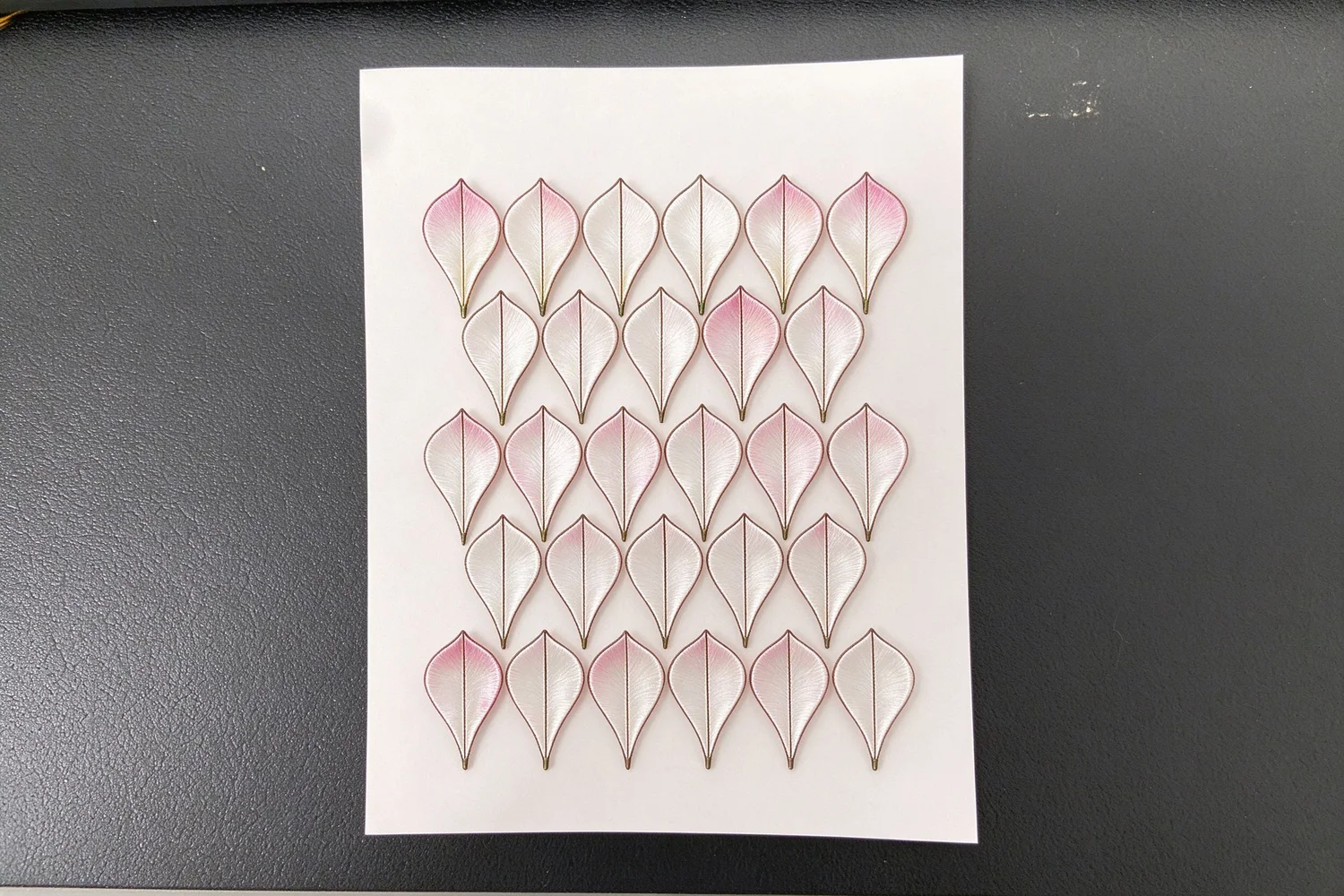
Step 4: Check the balance before the last bloom
Hold the stem between finger and thumb at the point where it will sit on the pin and let it hang. If it tilts, the weight is off to one side.
Fix it now, while one bloom is still loose: either move the offending bloom slightly along the stem or rotate it so its heavier edge faces the opposite way. A trailing piece that tilts will always tilt — the pin cannot correct a stem that is out of balance.
Step 5: Mount it and hide the binding
Bind the finished stem to the hairpin base at its balance point, then cover the binding with a short wrap of matching silk in the same color as the petals. Let the glue cure for a full day before wearing it.
How long does each stage take?
| Stage | First attempt | After three pieces |
|---|---|---|
| Sorting frames and planning spacing | 15 min | 5 min |
| Winding 12–16 blooms | 3–4 h | 2–2.5 h |
| Spacing and binding | 1.5–2 h | 1 h |
| Balance check and mounting | 30 min | 20 min |
| Glue curing | 24 h | 24 h |
That is six to nine hours hands-on, which matches the figure on our product page — the same range our studio quotes for this design.
Where does it sit in a wardrobe?
Trailing pieces suit styles that gather hair up and back, because the stem needs somewhere to lie. A low bun, a half-up twist and a loose chignon all work; a high ponytail does not, because there is nothing for the stem to rest against.
If you are matching this to an outfit, the blue reads best against cream, grey, black and deep green. The guide to choosing a first piece covers length and attachment if you are deciding between this and something shorter.
The Blue Trailing Jasmine Hairpin kit covers the full build. If a 15 cm stem is longer than you want to wear, the Hydrangea Hairpin Kit is about 8 cm and takes four to seven hours, and the Lily of the Valley Brooch Kit turns the same technique into something you pin to a jacket instead. For the symbolism behind the flower, the Chinese intangible heritage guide explains what jasmine and the other blooms mean.
Frequently asked questions
How long does the trailing jasmine take to make?
About six to nine hours for a first piece. It is our longest single stem and every small bloom is wound separately, so it takes longer than a round hairpin of the same size. You can stop at any point; the wound silk holds its shape.
What do I need besides what is in the box?
Scissors, a lighter, a cylindrical pen and a flat table. The lighter seals the thread ends so the silk does not fray, and the pen barrel is what you shape the petals around - the small brush in the kit is too thin for that.
Will a 15 cm hairpin be too long for my hair?
Fifteen centimetres is a statement length. It needs a bun with enough width for the pin to pass through, so it suits medium to thick hair best. In fine hair, a two-prong fork holds more securely than a single stick.
Why does the stem flop to one side?
Because the blooms are heavier on one edge. Wind the stem so the weight sits along the line of the pin rather than off one side, and check the balance in your hand before you bind the last bloom.
Can I make it shorter?
The stem is wound as one piece, so shortening it means cutting the wire and the wrap at that point will loosen. If you would rather have a small piece, the hydrangea hairpin is about 8 cm and is built the same way.