Silk Flowers for a Winter Wedding: What Actually Works
Do silk flowers work for a winter wedding?
Better than fresh ones, in the specific conditions a winter wedding creates. Fresh flowers are grown for warmth; a winter wedding asks them to sit in near-freezing air for photographs, then walk into a room at twenty-two degrees. Silk sits through both and looks the same at the end of the night.
That is not a claim that silk is always better. In June, a garden bouquet of real stems beats anything made by hand. In December, the calculation changes.
Why do fresh flowers struggle in winter?
Three separate problems, and they arrive in sequence.
The first is cold. Most cut flowers are damaged below about four degrees: the cell walls rupture, the petals go translucent and the stem stops taking up water even after it is back indoors. Twenty minutes outside for photographs is enough to start it.
The second is condensation. Moving from cold air into a warm room coats the petals in a fine film of water, which spots dyed blooms and softens the ones that were already bruised.
The third is availability. A winter wedding is asking for flowers that are out of season, which means imports flown in at their most expensive and least fresh. The bouquet costs more and lasts less than the same bouquet in May.
What does silk do instead?
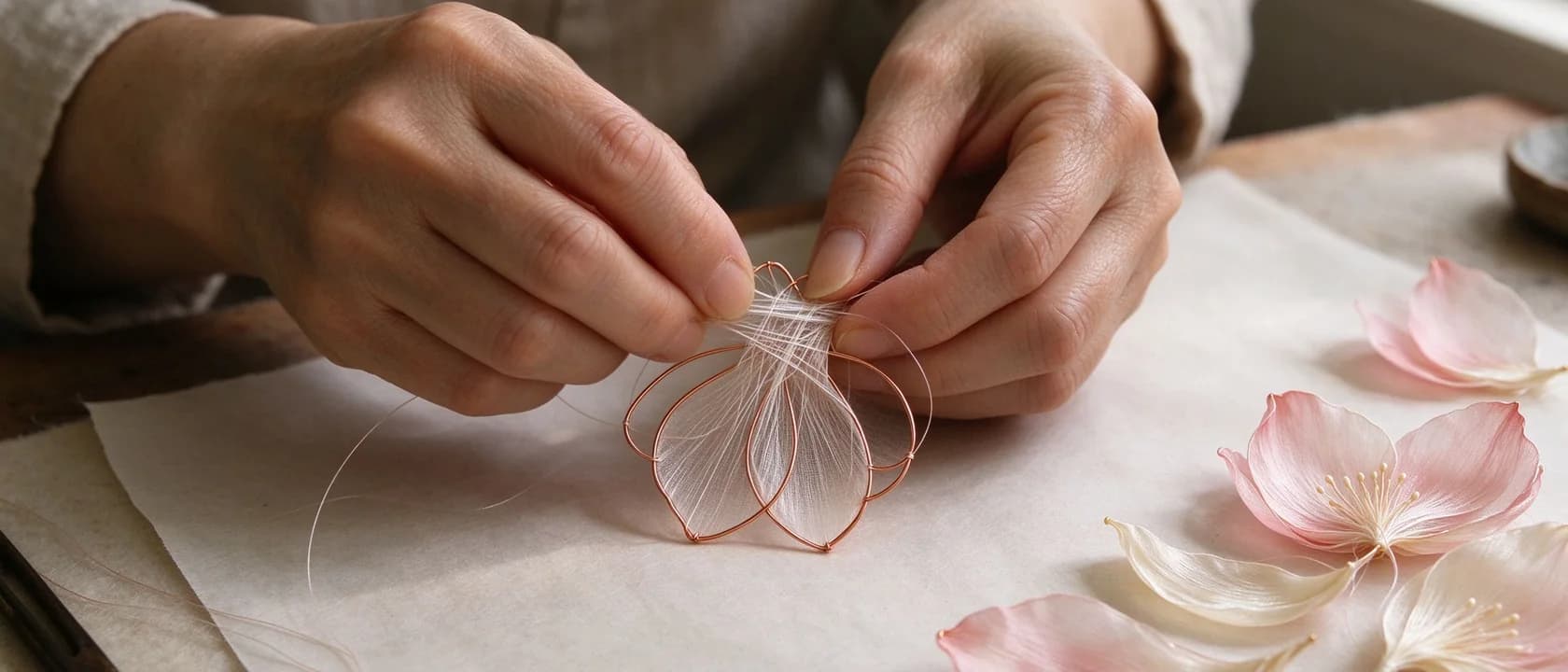
Nothing happens to it. Silk floss does not freeze at any temperature a wedding takes place in, does not bruise, and does not spot when it comes indoors. The color is in the fiber rather than on the surface, so condensation does not lift it.
| Fresh flowers in winter | Hand-wound silk | |
|---|---|---|
| After 20 minutes outdoors | Bruised, translucent edges | Unchanged |
| Moving into a heated room | Condensation, spotting | Unchanged |
| End of the evening | Drooping | Unchanged |
| Cost in December | Highest of the year | Same as any month |
| After the wedding | Into the bin | Onto a coat, or into a box |
The one thing silk cannot do is smell. If the scent of the bouquet matters to you, that is a reason to keep fresh flowers for the bride and use silk for everyone else.
Which colors work in winter light?
One color that still reads in shadow, plus ivory. Deep red, burgundy, forest green and ivory are the four that survive a December afternoon, because each has enough depth to stay visible when the light is flat.
Pale pink and lilac are the ones that disappoint. In low winter light they photograph grey, and against a white dress they disappear entirely unless the photographer uses flash - which then flattens the dress.
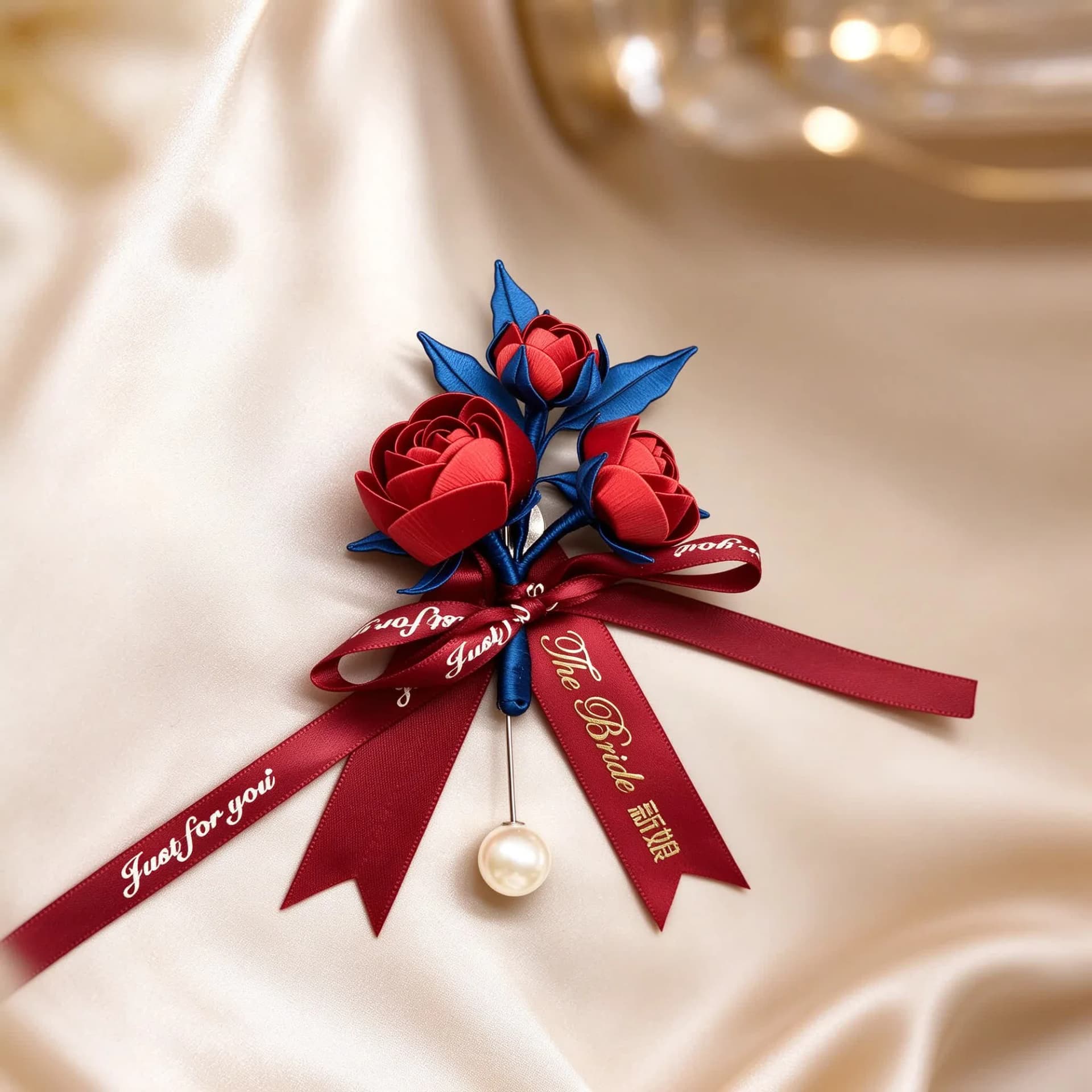
The rule that works for a whole wedding is the same one that governs a Christmas tree: two colors and one accent. Burgundy and ivory, with a small amount of gold, is the combination that photographs well in a church, in a hotel and outdoors in snow.
How many pieces do you actually need?
Fewer than a fresh-flower wedding, because silk pieces are worn rather than arranged.
| Who | What | How many |
|---|---|---|
| The couple | One boutonniere, one corsage or hairpiece | 2 |
| Parents | One each, smaller than the couple's | 2 to 4 |
| Bridal party | One each, in the accent color | As many as the party |
| Table | One small piece per two guests, or none | 0 to 5 |
The mistake is treating silk like fresh flowers and ordering a piece for every surface. A winter wedding reads as expensive when there are candles, greenery and a few worn flowers, not when every napkin has an ornament on it.
How do you pin a boutonniere in winter?
Through the lapel, from the inside, on the jacket the wearer keeps on. Winter weddings involve coats, and a flower pinned to a shirt disappears the moment the jacket goes on; a flower pinned to a coat disappears when it comes off indoors.
The practical solution is to pin it to the jacket lapel and accept that the coat will cover it outdoors, or to pin it to the coat for the outdoor photographs and move it to the jacket for the reception. Silk tolerates being moved; fresh flowers do not.
Wool grips a pin better than cotton, which matters more than people expect - a heavy silk flower on a smooth shirt will rotate as the wearer moves. The full method for both sides of the couple is in wedding boutonnieres and corsages.
What about the bride's hair?
Winter weddings usually mean an updo, because hair down plus a coat plus wind is a losing combination. An updo is also the best possible setting for a silk flower, because the flower has something to sit against rather than hanging in loose hair.
Set it low, at the back or just above one ear, and keep it smaller than the piece you would wear in summer - a winter outfit already has wool, a coat and often a veil competing for the same space. The collar and hairstyle logic is the same as for a qipao.
How do you keep the pieces safe through the day?
Carry them in a rigid box rather than a bag, and put them on last. Silk is more robust than fresh flowers but less robust than metal: a piece left loose in a handbag will arrive with a bent stem.
If the ceremony is outdoors and the reception is indoors, leave the box in the warm room rather than in the car. The risk is not cold but condensation on the way back out.
Why do silk wedding flowers make a better keepsake?
Because they are still the same object a year later. A fresh boutonniere is in a bin by the morning after; a silk one goes into a box, comes out on an anniversary, and can be worn again to somebody else's wedding.
That is also the argument for choosing one good piece over a set. A bride who keeps a single lily of the valley brooch has an object with a date attached to it. A box of six matching pieces has a box.
What suits a winter wedding best?
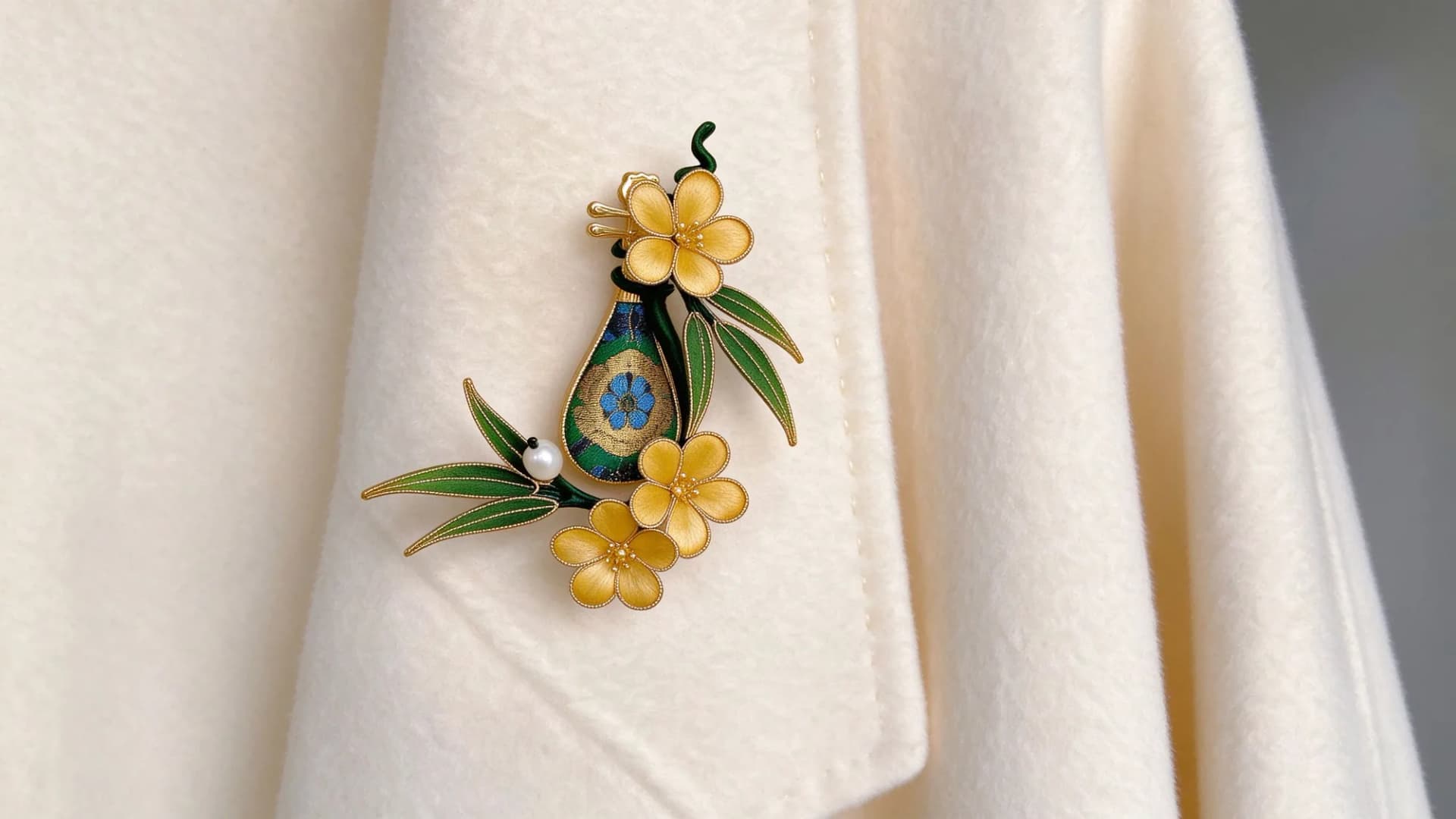
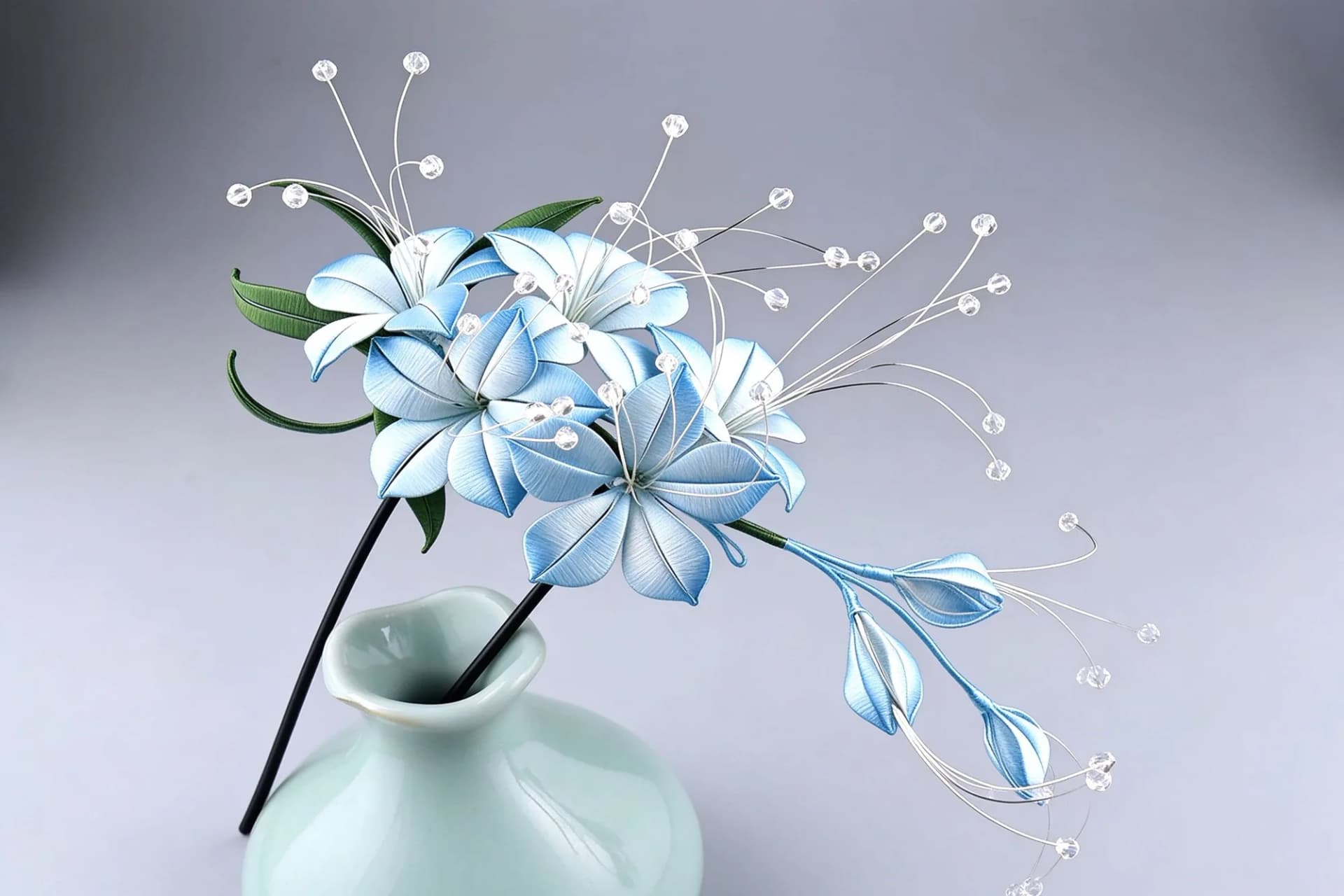
Small, dense, deep-colored pieces. A phoenix brooch works on a coat because its silhouette survives being seen at a distance in low light, and a hydrangea hairpin works in an updo because a cluster fills the space without needing height.
Avoid long sprays outdoors in wind, and avoid anything pale enough to vanish against snow. The chanhua craft page explains why the color sits in the silk rather than on it, which is the reason these pieces still look right after a day in the cold.
Frequently asked questions
Do real flowers freeze at a winter wedding?
They do not usually freeze solid, but they bruise. Cells damaged by cold go translucent and limp within hours, and a rose that spent twenty minutes on a snow-covered step for photographs will be visibly tired by the reception.
How many silk flowers does a winter wedding need?
Fewer than fresh flowers, because silk is worn rather than arranged. Two for the couple, two to four for parents, and one each for the bridal party covers most weddings; the rest of the decoration is candles and greenery.
What colours work in winter wedding photographs?
Deep red, burgundy, ivory and evergreen. Pale pinks and lilacs go grey in low winter light, and white disappears against a white dress in a photograph taken without flash. The rule is to choose one colour that still reads in shadow.
Can you pin a boutonniere to a wool coat?
Yes, and it holds better than on a shirt because wool grips the pin. Pin through the lapel from the inside so the fastening is hidden, and avoid pinning through a coat that will be taken off - the flower should sit on the jacket the wearer keeps on for photographs.
Do silk flowers look wrong next to fresh ones?
They look different rather than wrong, and the difference is mostly in how they catch light. Fresh petals are translucent; silk reflects in lines. If both are in the same photograph, keep the silk pieces as the worn flowers and the fresh ones in the bouquet, where the textures are not directly compared.