What Is Hanfu? A Beginner's Guide to Chinese Dress
What is hanfu?
Hanfu is the historical clothing of the Han Chinese: layered robes, skirts, and jackets worn as everyday dress for centuries before the twentieth century. Today it is worn again at festivals, weddings, and photographs — and it is not a costume, and not a qipao.
The word is a modern one. It was coined to describe the older clothing system as a whole, the way "kimono" describes a category rather than one garment. That is why two people wearing hanfu can look completely different and both be correct.
What is it not?
Three confusions are worth clearing up before anything else.
| Confused with | What it actually is |
|---|---|
| Qipao / cheongsam | A 1920s Shanghai garment, fitted, high-collared, with side slits. Much later than hanfu. |
| Kimono | Japanese dress, with its own construction, closures, and rules. Related historically, not the same. |
| Cosplay | A costume made to look like a specific character. Hanfu is clothing, reconstructed from historical forms. |
The practical difference is that hanfu has rules of cut and layering, not rules of plot. You are not dressing as anyone.
What are the main shapes?
Five categories cover most of what you will see, and most of what is sold.
| Shape | What it is | Good for |
|---|---|---|
| Ruqun | A short top over a skirt, tied at the waist | A first piece; easy to move in |
| Aoqun | A longer jacket over a skirt | Cooler weather; a more formal line |
| Beizi | A straight, open jacket worn over the top | Layering without heat |
| Mamianqun | A pleated skirt with flat panels at front and back | Weddings and photographs |
| Daxiushan | A wide-sleeved outer robe | Ceremony; the most theatrical silhouette |
If you are buying your first piece, start with a ruqun or an aoqun. Both are forgiving of body shape, both can be adjusted at the waist, and neither requires you to learn how to move in a wide sleeve.
How is it worn today?
Mostly the way people wear any clothing they care about: at festivals, at weddings, for photographs, and increasingly on ordinary weekends. The modern revival began in the early 2000s with small groups wearing it in public, and it has since become a normal sight in Chinese cities on holidays.
What changed is not the clothing but the occasion. A garment that was once daily dress is now chosen dress, which means the details matter more: the fabric, the fit at the shoulder, and what is worn in the hair.
How should the hair be worn?
Up, and with one clear ornament. Hanfu has a high, often crossed collar, and hair worn loose covers the line the garment is built around.
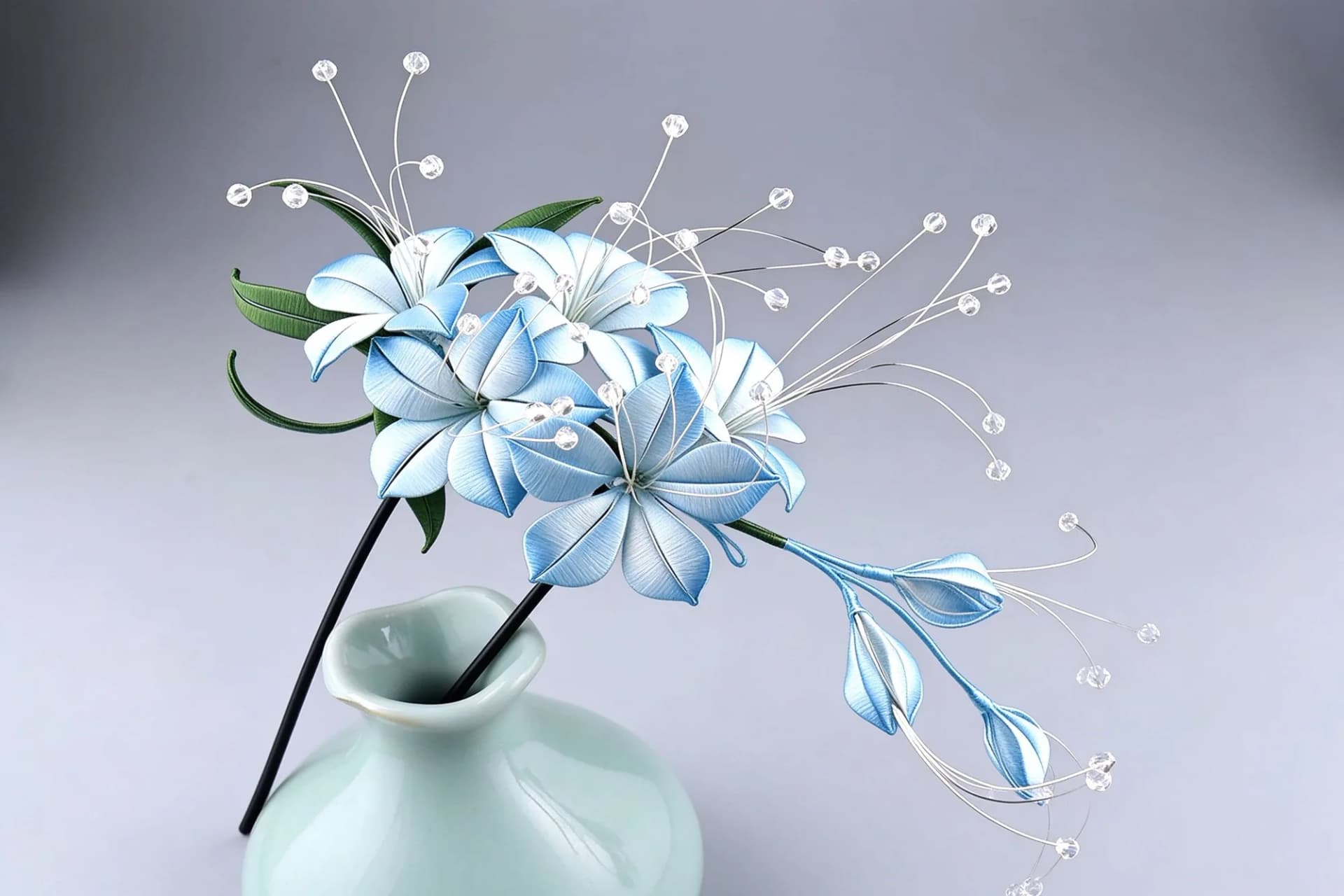
The traditional ornaments are hairpins, combs, and the dangling ornament called a buyao, which moves when the wearer walks. A silk flower hairpin sits in the same place a jade pin would, and it does the same job: it gives the eye one point of detail above the collar.
For a first outfit, the trailing jasmine hairpin is the easier choice, because a trailing line follows the shape of a bun. A cluster, such as the hydrangea hairpin, fills more space and suits a fuller updo.
What should you look at before buying?
Four things, in this order.
- Fabric. Cotton, linen, and silk read correctly in daylight. Shiny polyester satin reads as costume.
- The shoulder seam. Hanfu is cut with a wide body and narrow sleeve, and a shoulder that sits wrongly will never look right.
- The closure. Ties and hidden fastenings, not visible zippers down the front.
- The seller's vocabulary. A shop that can name the shape and the period is a shop that knows what it is selling.
Do not buy a set that includes every accessory. A single well-made hairpin will look better than a bundle of plastic ones, and it will still be usable when the outfit changes.
How does hanfu relate to the craft on this site?
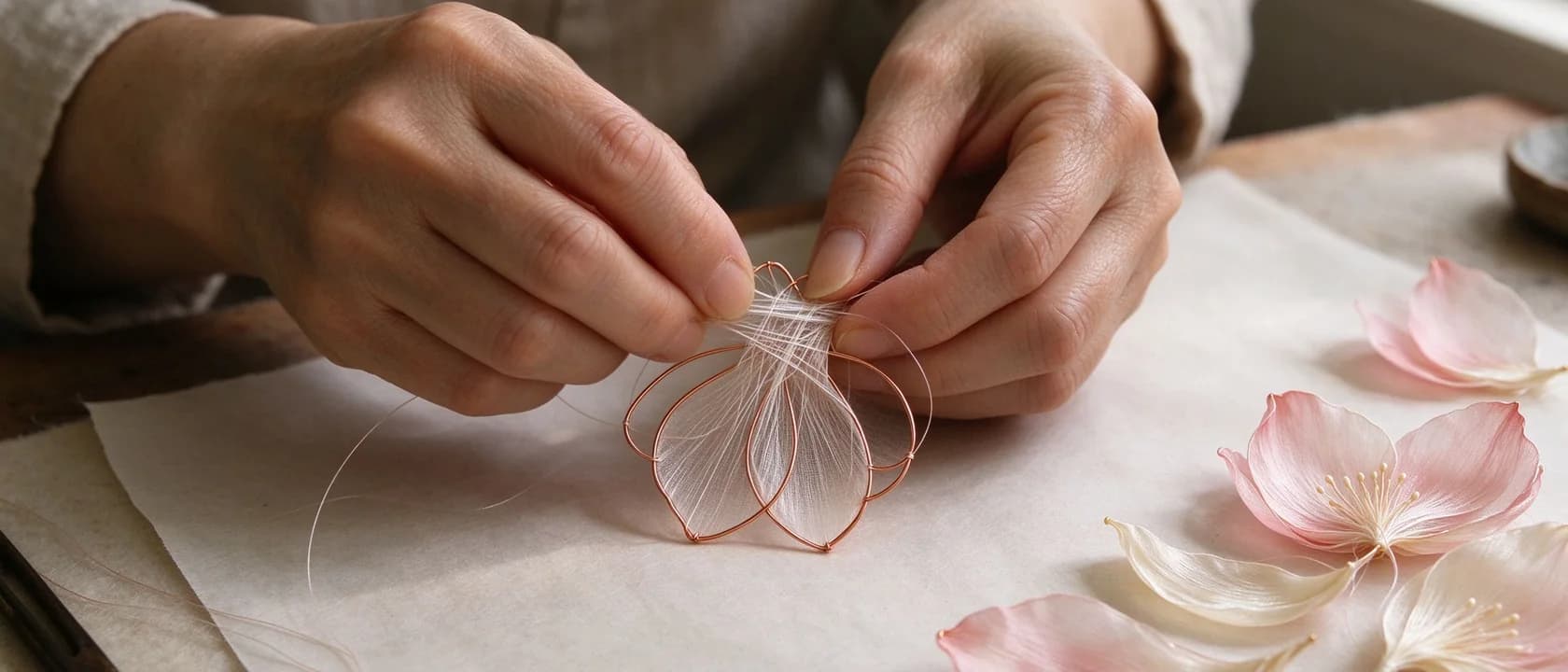
Chanhua and ronghua hair ornaments were made for exactly this kind of dressing: flowers for festivals, weddings, and the days that mattered. The historical context is on the chanhua craft page, and the way the ornaments are worn with modern clothes is covered in how to wear hanfu hair accessories in modern life.
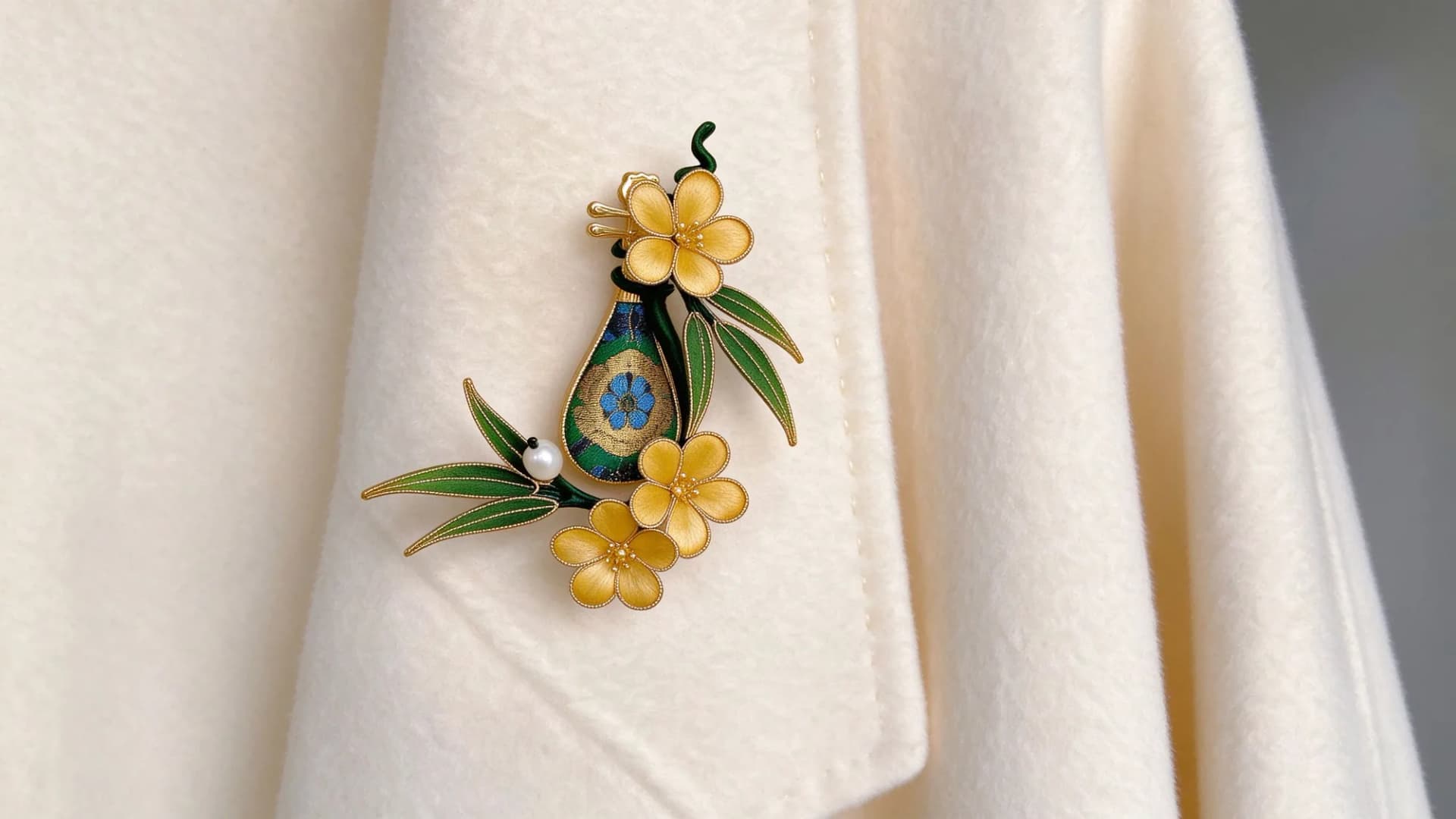
If you want the single most useful accessory for a first outfit, it is a flower hairpin rather than a full set of pins. The phoenix brooch is the alternative for people who will not wear their hair up.
What is the most common mistake?
Treating hanfu as a costume. That shows up in three ways: buying shiny fabric because it photographs brightly, wearing every accessory at once, and choosing a silhouette that cannot be walked in.
The clothing is not difficult. It is layered, tied, and forgiving. What it asks for is the same thing any clothing asks for — that you know what you are wearing and why.
Start with one shape, one fabric you can actually care for, and one ornament. Everything else can be added later, and it will look better when it is.
Frequently asked questions
Is hanfu the same as a qipao?
No. Hanfu refers to the historical dress of the Han Chinese, worn for centuries before the twentieth century. The qipao is a much later garment that developed in Shanghai in the 1920s. They belong to different periods and different silhouettes.
Can anyone wear hanfu?
Yes, with the ordinary care you would take with any culture's clothing. Learn what the garment is, avoid mixing sacred or ceremonial pieces into a costume, and buy from people who can tell you what you are buying.
Is hanfu the same as a kimono?
No. They are different traditions with different cuts, closures, and construction. Some historical exchange influenced both, which is why they can look related at a glance, but a kimono is Japanese dress and hanfu is Chinese.
What hair accessories go with hanfu?
Hairpins, combs, and dangling ornaments such as a buyao. The rule is one clear ornament at a time: a flower hairpin on an updo, or a brooch at the shoulder, rather than every piece at once.
How much should a first hanfu cost?
That depends on fabric far more than decoration. A first piece should be plain enough to wear more than once and made of a fabric you can wash or dry-clean without fear. Costume-grade satin looks wrong in daylight, and it is the most common first mistake.