What Is a Qipao? History and How It Is Worn Today
What is a qipao?
A qipao is a one-piece Chinese dress with a high mandarin collar, a fitted body, a closure that runs diagonally across the chest, and slits at the sides. It developed in Shanghai in the 1920s and is still the garment most people picture when they think of Chinese dress.
It is not the oldest Chinese clothing, and it is not hanfu. It is a twentieth-century city dress, and understanding that is the fastest way to wear it well.
Where did it come from?
The qipao grew out of the changpao, a long robe worn by Manchu women in the Qing dynasty. That robe was loose, straight, and floor length. In 1920s Shanghai, tailors cut it closer to the body, shortened it, and opened the sides so it could be walked in.
Shanghai at that moment was full of new things: department stores, film, advertising, women working in offices. The qipao became the dress those women wore, and by the 1930s it had a range that surprises people today — short sleeves and long, high collars and low, hemlines at the calf and at the ankle.
After 1949 it moved out of everyday use on the mainland and became formal and occasional dress. It was kept alive in Hong Kong, in Chinese communities abroad, and in tailoring shops, and it returned to the mainland as occasion wear from the 1980s onward.
What makes a dress a qipao?
Five elements, and a dress missing most of them is a fitted dress with a Chinese collar rather than a qipao.
| Element | What to look for |
|---|---|
| Mandarin collar | Stands up at the neck, usually 3–5 cm, closing at the throat |
| Diagonal closure | Runs from the collar across the chest to the right side |
| Pankou | Knotted fabric buttons, not plastic buttons or a visible zipper |
| Fitted body | Shaped at the waist, with darts or seams rather than stretch fabric |
| Side slits | Open at the hem, high enough to walk in |
The collar and the closure do most of the work. A dress can be any length, any sleeve, and any fabric, and still read as a qipao if those two are right.
How is it different from hanfu?
They belong to different centuries and different silhouettes. Hanfu is the layered historical dress of the Han Chinese, worn as everyday clothing for centuries before the twentieth century. The qipao is a modern city dress with a fitted body and no layering.
The confusion is common outside China because both are sold as "traditional Chinese dress". The hanfu guide covers the other side of that pair.
How is it worn today?
Three ways, mostly.
At weddings, as a second outfit for the bride or as guest dress. At festivals and formal dinners, often in silk brocade. And increasingly as an ordinary dress — a plain cotton or linen qipao with flats, worn the way anyone wears a dress.
What changed is the fabric and the styling, not the shape. A heavy brocade qipao with a gold collar is formal; the same pattern in a matte cotton is a summer dress.
How should a qipao fit?
Four checks, in the fitting room.
- The collar. It should stand without pressing into the throat. If it digs in when you turn your head, the collar is too tall or too tight.
- The shoulder. The seam sits at the edge of the shoulder, not past it. A dropped shoulder makes the whole dress look borrowed.
- The waist. Fitted, but you should be able to sit down without the closure pulling open.
- The slit. High enough to climb a stair, low enough that you are not adjusting it all evening.
A qipao is a fitted garment, and that means alterations are normal rather than a sign of a bad purchase. Taking in the waist and shortening the hem is routine.
What should be worn with it?
One ornament, at the head or the shoulder. The dress already has a collar, a closure, and usually a pattern, so the neckline is occupied.
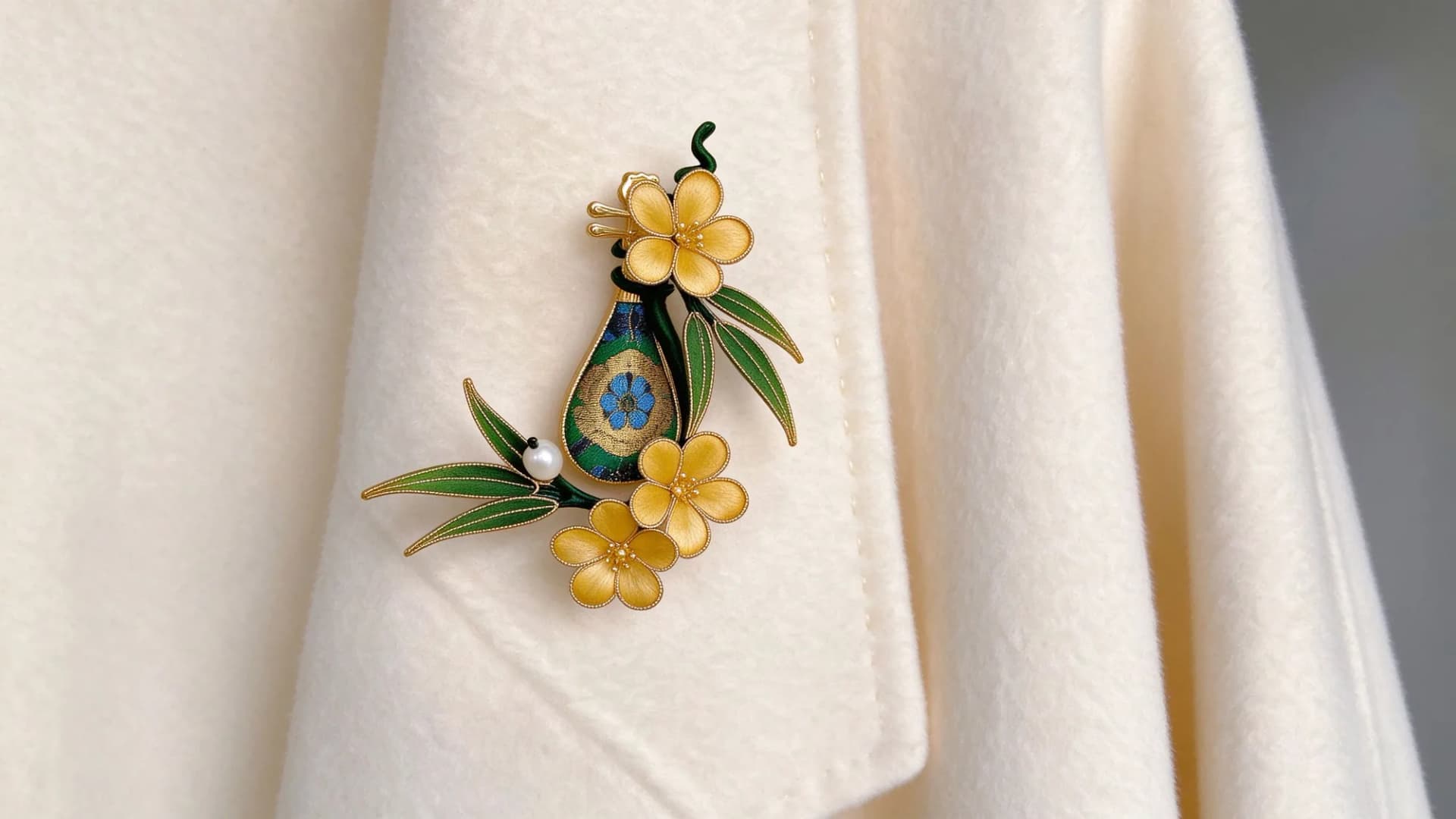
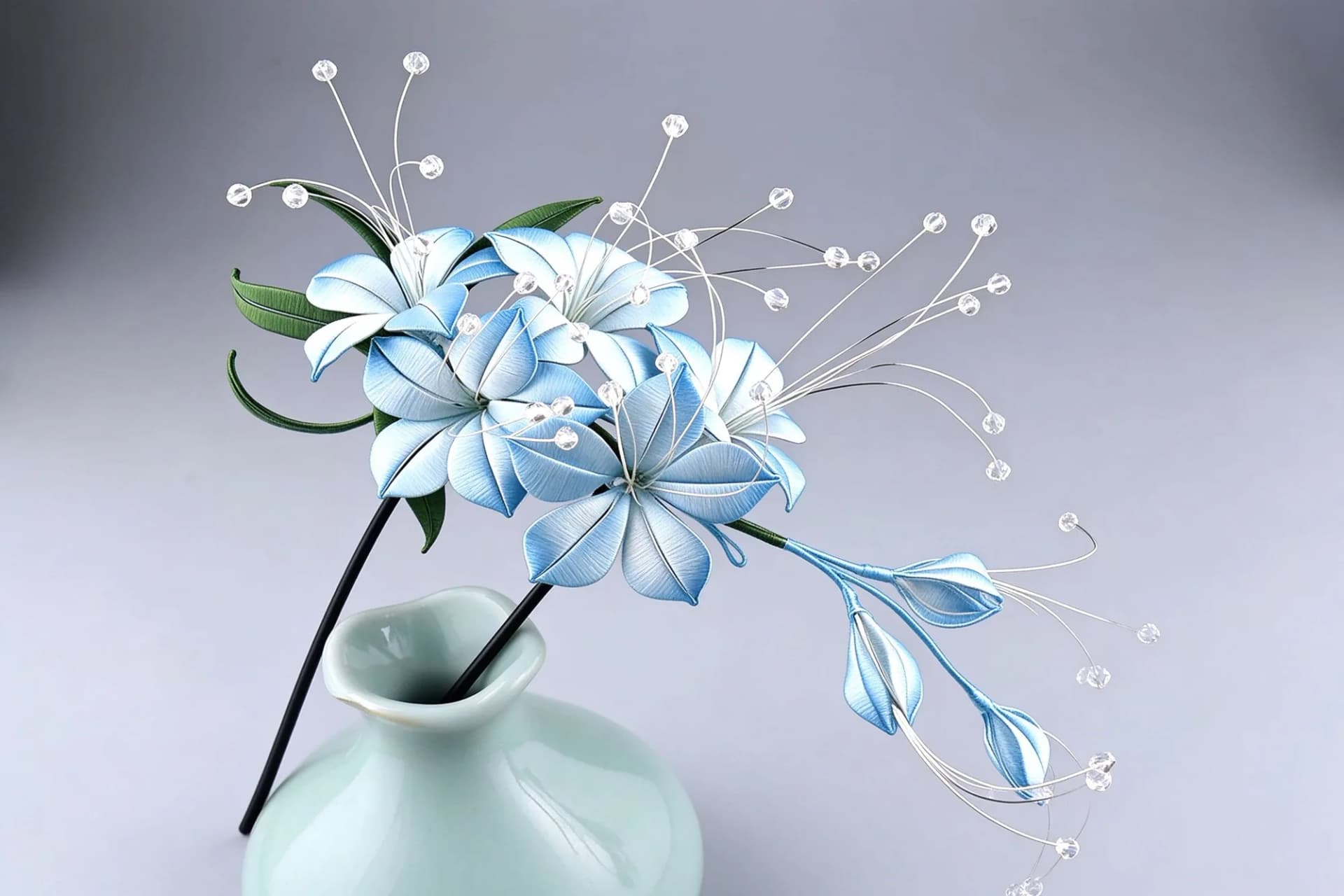
Hair worn up keeps the collar visible, which is the point of the collar. A silk flower hairpin set low, such as the hydrangea hairpin, gives the eye one place to stop. A phoenix brooch at the shoulder does the same job for anyone who will not wear their hair up.
The full styling logic — collar height, hairstyle, and what to avoid — is in what hair accessory goes with a qipao.
How should it be cared for?
Silk brocade should be dry-cleaned, hung on a padded hanger, and kept out of direct sun. Cotton and linen versions can be washed cold and hung to dry, but check the closure first: pankou are hand-knotted and can shrink or fray in a machine.
Store it folded with tissue at the collar so the stand does not collapse, and never hang a heavy brocade qipao by the shoulders for months — the weight pulls the shoulder line out over time.
What is the most common mistake?
Buying it as a costume. That shows up in three ways: a shiny fabric that photographs like satin but looks wrong in daylight, a fit so tight that the wearer cannot sit, and styling that piles on props instead of letting the dress be a dress.
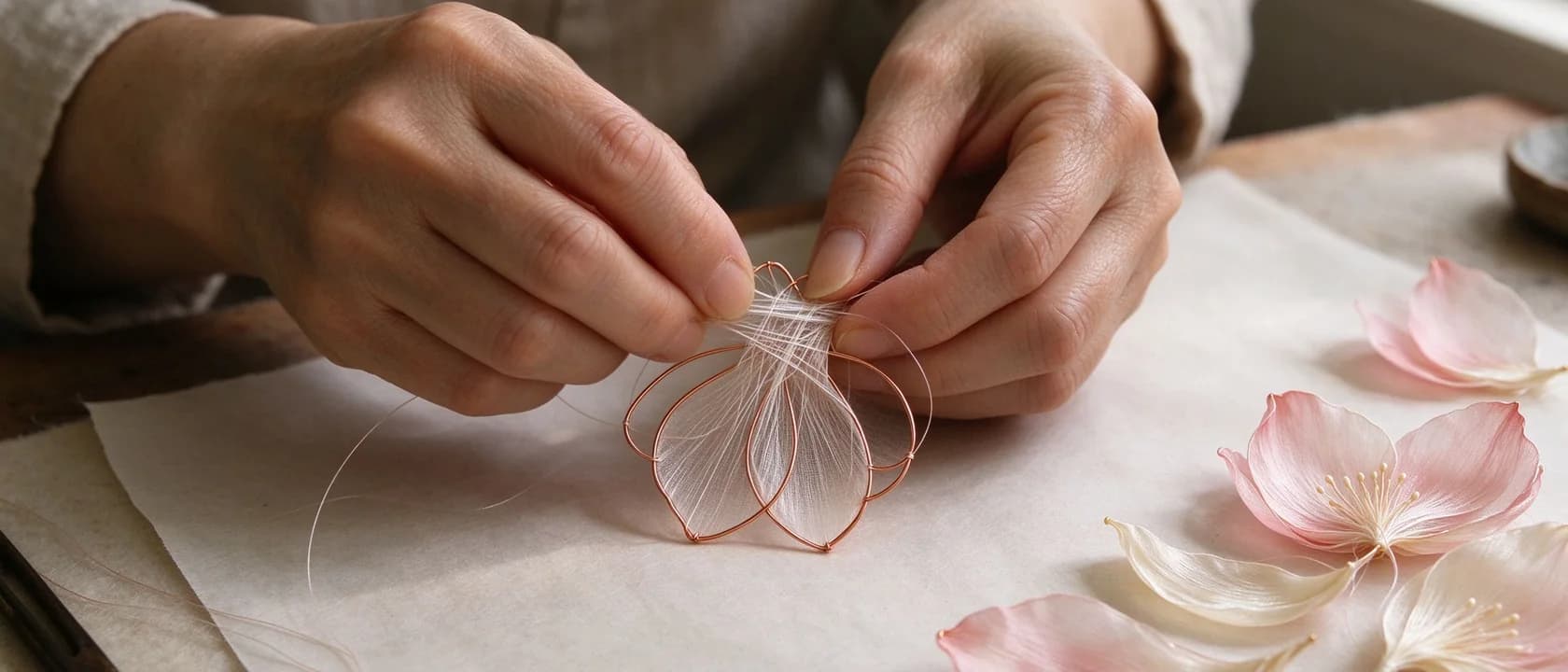
The qipao was made by tailors for women with jobs, trams, and stairs. It is clothing, and the chanhua craft page explains the kind of ornament that belongs with it: something made by hand, small enough to sit at the head or the shoulder, and quiet enough not to argue with the collar.
Frequently asked questions
Is a qipao the same as a cheongsam?
In English, yes. The two words are used for the same dress. Qipao is the Mandarin name and cheongsam comes from the Cantonese pronunciation of a different word for a long robe. Neither is more correct in English.
When was the qipao invented?
It developed in Shanghai in the 1920s, from a longer Manchu robe that was looser and less fitted. By the 1930s it had become the dress of urban Chinese women, and that decade is the one most people picture.
Can you wear a qipao if you are not Chinese?
Yes, with the same care you would take with any culture's clothing. Wear it as a dress rather than a costume, avoid pairing it with props that turn it into a caricature, and buy from makers who can tell you how it is cut.
What shoes go with a qipao?
Anything with a clean line. Low heels, flats, or a simple pump all work. The dress is already decorative at the collar and often in the fabric, so shoes should not compete. Avoid anything with heavy ornament at the ankle.
Should you wear a necklace with a qipao?
Usually not with a high collar. The collar closes at the throat, in the exact place a necklace would sit, so a chain on top of it looks added on. If the collar is low or open, a short necklace can work, but choose one or the other.