Chinese Gift-Giving Taboos: What Not to Give
What gifts should you avoid in Chinese culture?
Clocks, sharp knives, pears, umbrellas, white chrysanthemums and anything in a set of four. Each one is avoided for a reason that is phonetic rather than religious - the word sounds like something you would not wish on a friend - and the same logic tells you what to give instead.
This matters more than most etiquette guides admit, because a gift that lands wrong is rarely rejected openly. A Chinese host will thank you, put it away, and never mention it again. You will not be told what you did.
Why does a clock mean a funeral?
The Mandarin for "giving a clock" is song zhong, and the phrase for attending a funeral is almost the same sound. That is the whole objection. Nobody thinks the clock will cause a death; the gift simply arrives carrying a phrase nobody wants spoken at a celebration.
Watches sit in the same category for some families, and in practice the safest version is not to give anything that tells the time unless you know the recipient well and they have asked for it.
What else is avoided, and why?
| Gift | The problem | Give instead |
|---|---|---|
| Clock or watch | Sounds like attending a funeral | A scarf, tea, a craft object |
| Knives, scissors, sharp tools | Cutting the relationship | A good cutting board, or a kit that is clearly for craft rather than for the kitchen |
| Pears | Sounds like separation | Oranges, apples, grapes, a boxed assortment |
| Umbrella | Sounds like scattering apart | A fan, a scarf, a bag |
| White chrysanthemums | The flower of funerals | Red or gold flowers, or a mixed bouquet |
| Sets of four | Four sounds like death | Six, eight, nine, or a pair |
| Handkerchief | Associated with parting and crying | A small cloth pouch, or a notebook |
| Green hat for a man | Implies his wife is unfaithful | Any other color |
Two of these are more flexible than the rest. Sharp objects are fine if the context is obviously not about cutting a bond - a pair of good craft scissors inside a beginner's kit reads as a tool, not a threat. And white is only a problem when white is the whole gift; a white flower inside a red-and-gold arrangement is unremarkable.
Why are pairs and even numbers preferred?
Because a pair suggests completeness. Two of something says "you and yours"; one of something says "here is an object". This is the reason fruit, tea and pastries are given in boxes rather than loose, and why a single flower given as a gift can feel oddly thin to an older recipient.
Eight is the number people choose when they have a choice, because it sounds like prosperity. Six and nine are safe. Four is the one to avoid, which is why a price tag ending in four is awkward and why a set of four cups is less welcome than a set of six.
For a handmade piece, the pair rule has a practical version: a brooch and a hairpin in the same flower, or a single piece presented with a card and wrapped properly. The card is what turns one object into a complete gift.
What about color?
Red and gold are the safe pair. Red carries luck and celebration, gold carries wealth, and the combination is what every shop window in China uses in the weeks before New Year.
White and black are the colors of mourning when they dominate, which is why an all-white bouquet or a black box with black ribbon reads as a funeral arrangement to an older recipient even when the object inside is beautiful. Pale colors are not forbidden - they are simply read as quiet, and a quiet gift needs a warmer wrapper to balance it.
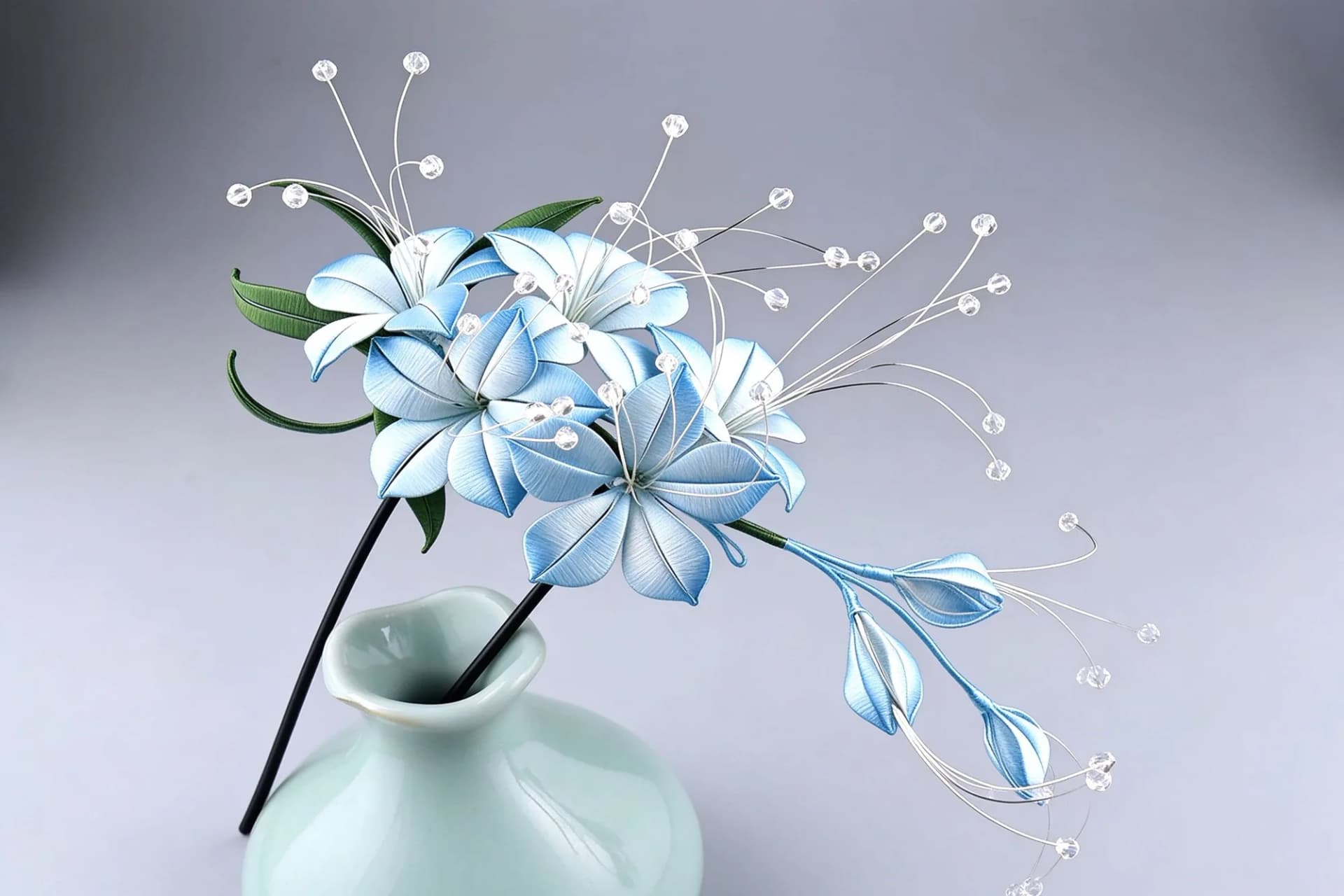
This is the one place where a Western instinct can go wrong with our own work. A white silk lily of the valley is a delicate, expensive-looking piece in Europe and a slightly funeral-adjacent one in China. The same flower in deep red, or paired with a gold card, reads completely differently - which is why the phoenix brooch is the piece people choose when the recipient is Chinese.
How should a gift be wrapped and presented?
Wrap it properly, in red or gold, and hand it over with both hands. Both hands is the detail people remember; a gift handed over with one hand while the other is in a pocket undoes a lot of good wrapping.
Do not write the price on the card, and do not announce what it cost. In a culture where gifts create obligations, naming the price tells the recipient how large a debt they now owe. The value should be legible from the object, not from the receipt.
If you are giving money, use a red envelope rather than a card or a plain envelope, and avoid amounts containing four. If you are giving to a child, the envelope goes to the parent first; handing money directly to a child is a small breach that parents notice.
What should you expect when you receive a gift?
Receive it with both hands, thank the giver, and set it aside. The traditional habit is not to open a gift in front of the person who gave it, because opening it immediately puts both people in the position of having to perform a reaction.
Younger families in cities often open gifts straight away now, and if your host does, follow their lead. If they do not, do not ask them to. The refusal is not coldness; it is the older etiquette still doing its work.
What is a good gift for a Chinese host?
Something from your own country that they cannot easily buy at home, in a pair if the object suits it, wrapped in red or gold. Tea, good chocolate, a bottle of wine, a small craft object, a beautifully made textile - all of these work because they are legible as "this came from somewhere else".
Avoid anything that reads as a status symbol with a price attached. A very expensive gift is not more polite than a considered one; it is more pressure. The ideal gift is one the host can use, show to a guest, and explain in a sentence.
If the host is interested in craft, a handmade piece does the job that a box of chocolates cannot: it has a story. The chanhua craft page is what makes that story speakable, and the flower symbolism guide explains why a peony, a lotus or a phoenix carries a meaning that a rose does not.
How does this apply to a Christmas or New Year gift?
The two holidays have different logics, and it is worth keeping them apart. Christmas is a Western holiday, and a Chinese recipient who celebrates it will expect a Christmas gift in the Western style - something personal, opened in front of you, often with a joke attached.
Chinese New Year is the one where the taboos bite. Red envelopes, pairs, food, and nothing that sounds like a funeral. If you are giving a craft piece for New Year, choose red or gold, wrap it in red, and give it before the holiday rather than on the day - the days before New Year are when gifts move.
For the gift that has to work in both directions, the Christmas gift guide covers the Western end, and gifts for crafters who have everything covers the person who already owns the obvious things.
Which of our pieces are safest as gifts?
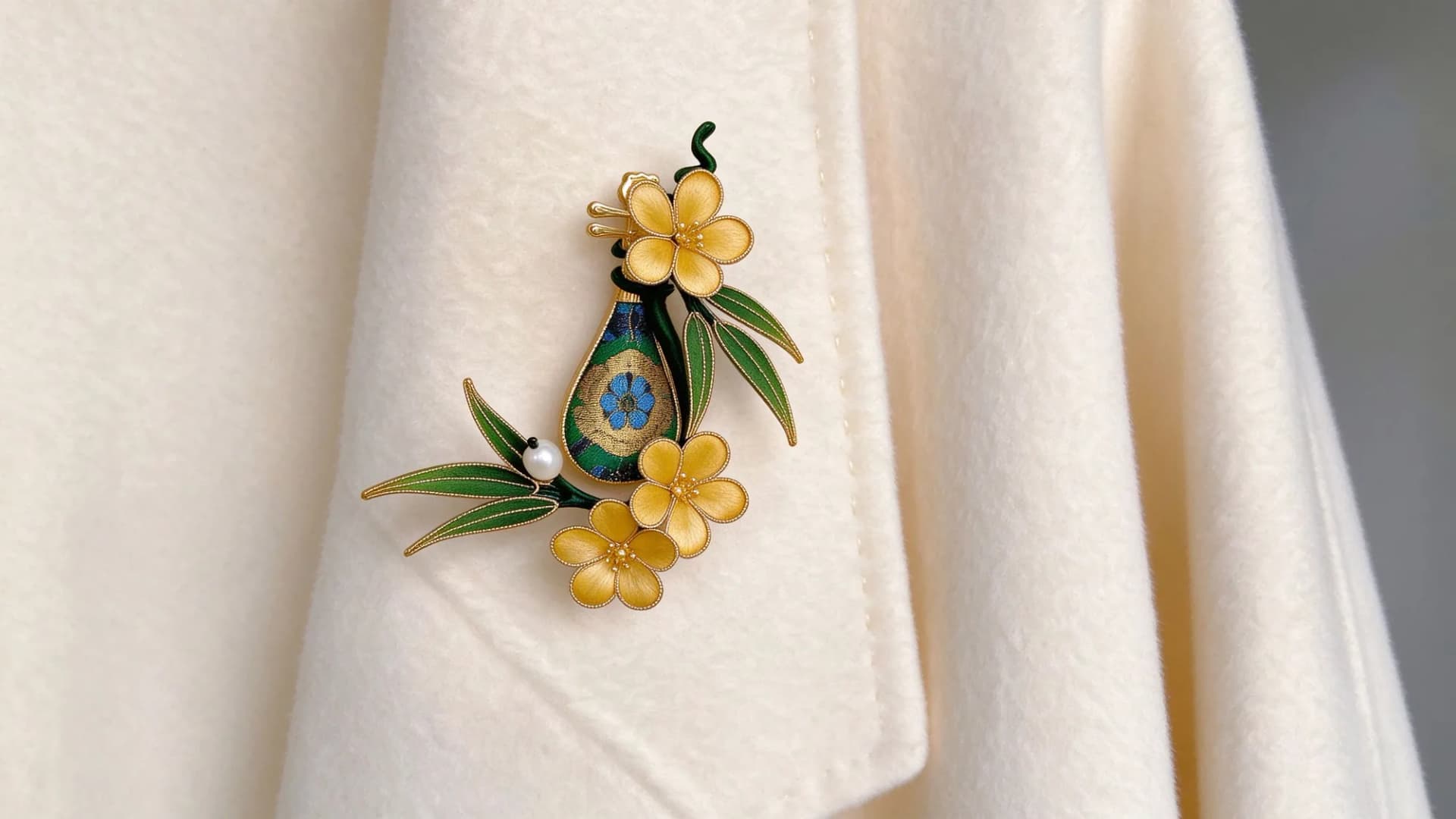
Red, gold and paired. The phoenix brooch is the safest single choice for a Chinese recipient, because the phoenix is a traditional auspicious motif and the color does the cultural work before anyone opens the box. The hydrangea hairpin works as a pair with a second piece, which is the version an older recipient will notice.
Avoid giving a single white flower to an older Chinese recipient unless you know the family well. It is not offensive - it is just the one reading you cannot control, and there is no reason to spend a gift on ambiguity.
Frequently asked questions
Why are clocks a bad gift in China?
Because the phrase for giving a clock, song zhong, sounds almost identical to the phrase for attending a funeral. The objection is to the sound of the words rather than to the clock, which is why the rule survives even among families who do not believe in any of the other taboos.
Are white flowers always inappropriate?
White chrysanthemums are, because they are the flower of funerals and mourning. White flowers in a mixed bouquet are fine, particularly with red or gold. The rule is about context and about the specific flower, not about the colour on its own.
Should you open a gift in front of the person who gave it?
Traditionally no. A host will often set the gift aside and open it after the guest has left, and that is politeness rather than dislike. If you are the guest, do not press them to open it; if you are the host, opening it in front of the giver has become common among younger families.
Is four really unlucky?
Four sounds like the word for death, so sets of four are avoided and prices ending in four are awkward. Eight sounds like prosperity and is the number people choose instead. Six and nine are also safe, and a pair is always better than a single item.
What is a safe gift for a Chinese host?
Something from your own country that they cannot easily buy locally, in a pair, in red or gold packaging. Tea, good chocolate, a small craft object or a good bottle of wine all work. The gift should look considered rather than expensive, because an expensive gift creates a debt the host has to repay.