How to Wrap a Handmade Brooch So It Arrives Intact
How do you wrap a handmade brooch?
Rigid box, tissue around the flower, pin closed through a piece of card, and a card that says what it is. Three minutes of work and about a pound of material - the point is not decoration, it is that the petals arrive the shape they left.
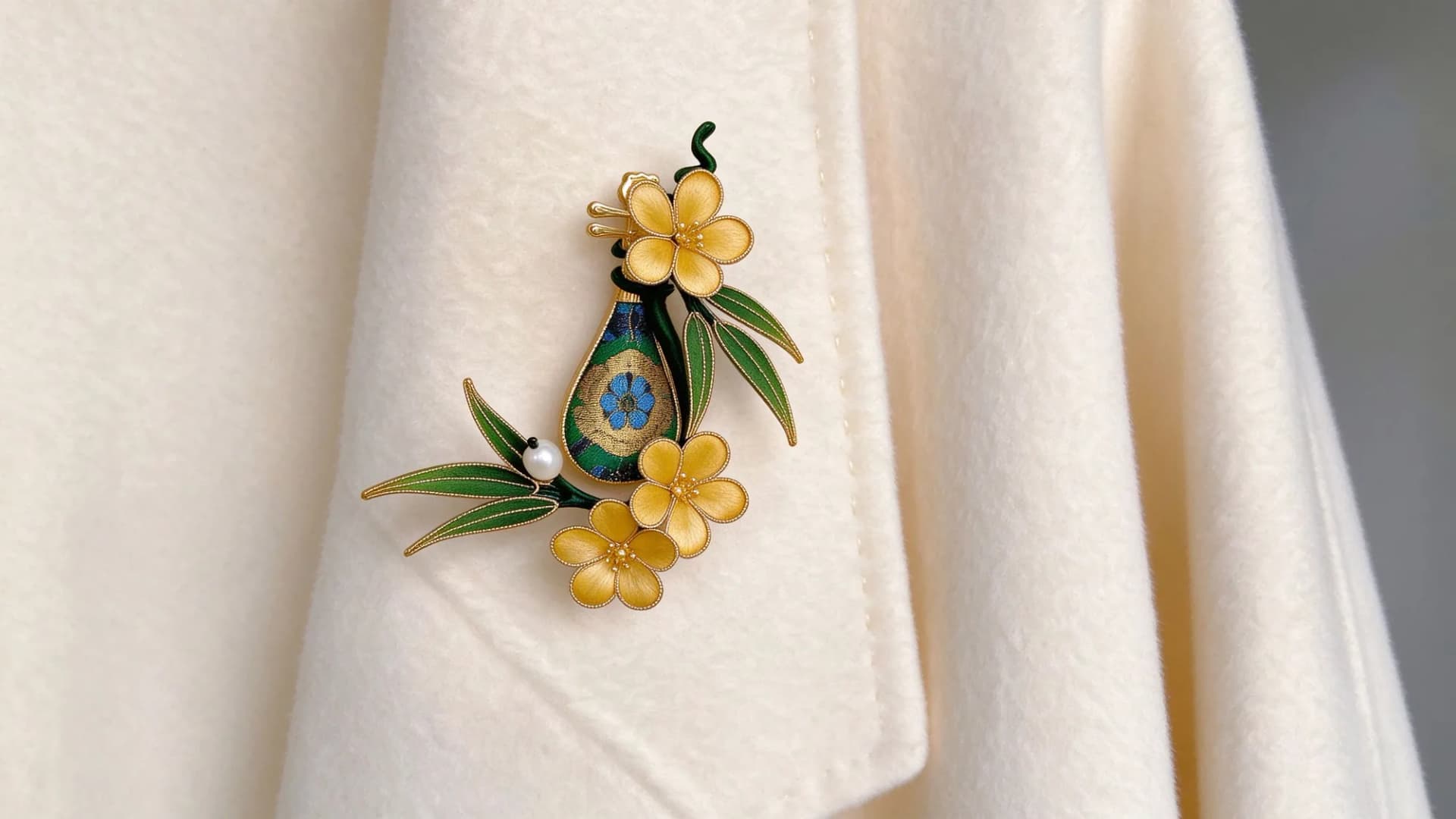
A brooch is the easiest handmade object to post badly and the easiest to post well, because the damage is almost never caused by impact. It is caused by pressure: something resting on a petal for six hours in a sorting depot leaves a crease that no amount of steaming will lift out of silk floss.
Why does a brooch need a box rather than a padded envelope?
Because a padded envelope protects the outside of the object and not the inside of it. Bubble wrap absorbs a drop; it does nothing about the weight of a hundred other parcels stacked on top, which is the actual condition of a parcel in transit.
A rigid box spreads that weight across its lid instead of concentrating it on one petal. The envelope can still be used, as the outer layer, but the box goes inside it.
What do you need?
| Item | Why it is there | A cheaper alternative |
|---|---|---|
| A rigid box, ideally 2-3 cm deeper than the brooch | Stops anything resting on the flower | A small sturdy carton, or a tin with a flat lid |
| Acid-free tissue paper | Cushions without pressing, and does not yellow silk | Plain white tissue, as long as it is unscented |
| A piece of card or foam | The pin goes through this, not through the petals | A strip of corrugated card |
| A cloth pouch | The second gift, after the box is opened | A cotton drawstring bag |
| A small card | Tells the recipient what they have | A handwritten note |
Avoid newspaper and printed magazine pages directly against the piece. The ink transfers onto pale silk, and it happens slowly - the recipient finds it a month later, not on the day.
How do you pack it step by step?
- Close the pin and push it through a strip of card slightly wider than the brooch. The card becomes a handle, and the pin can no longer touch the silk.
- Lay a bed of tissue in the box, rolled rather than crumpled, so it holds its thickness under pressure.
- Place the piece face up on the bed, with the card underneath. Nothing should be resting on the petals.
- Build a ring of tissue around the flower, not over it. The ring stops lateral movement; a layer over the top is what flattens.
- Close the lid and shake the box gently. If anything moves, open it and add tissue until it does not.
The fifth step is the one people skip, and it is the only one that tests whether the packing actually works.
Where does the flower shape get damaged?
Three places, and they are all preventable.
| Damage | Cause | Prevention |
|---|---|---|
| Flattened petals | Tissue or bubble wrap pressing directly on the face | Ring of tissue around the piece, nothing on top |
| Bent pin or finding | Brooch loose in the box | Pin through card, box filled to closing resistance |
| Creased stem or tail | Piece packed diagonally so a corner presses it | Box sized to the piece, not a large box half-filled |
The third one catches people who reuse an oversized box and assume more tissue is safer. More tissue is safer only if it is packed firmly; loose tissue compresses, and the piece then travels as if the box were empty.
Should the gift be wrapped before it is posted?
Wrap the box, not the piece. A brooch wrapped in paper and then posted arrives with creased wrapping paper and a good chance of a bent pin, because the wrapping paper becomes the only structure.
Pack the piece properly in its box, then wrap the box if it is going by hand. For posting, keep the outer layer plain and put the effort inside - that is the layer the recipient opens first and remembers.
What should the card say?
Two sentences are enough. The first should say what the object is, because a hairpin or a brooch made of silk floss is not obviously either: "Hand-wound silk flower, made in Guang'an, Sichuan." The second should say the one thing that keeps it alive: "Keep it out of direct sun and store it flat in the pouch."
A recipient who thinks it is costume jewelry will pin it to a coat, leave the coat on a radiator, and wonder why the petals have gone limp. A recipient who knows what it is treats it differently from the first minute.
What changes if the gift is posted abroad?
Two things: the box needs a little more room for humidity changes, and the card should avoid implying food or plant material. Silk floss and copper wire are not restricted, but a customs declaration that reads "silk flowers" invites a second look; "textile brooch" or "costume jewelry" is accurate and does not slow the parcel.
If the piece is going somewhere cold and damp, add a small silica packet in the box but keep it away from direct contact with the silk. The aim is to stop condensation inside the box during the flight, not to dry the piece out.
How does this compare with a kit as a gift?
A finished brooch is a gift that arrives complete; a kit is a gift that takes an evening. The comparison is set out in DIY kit or finished piece, and the short version is that a kit needs a recipient who wants to make something, while a finished piece needs only a recipient who will wear it.
If you are wrapping for someone who has everything, the gifts for crafters who have everything list covers the version where the wrapping matters as much as the object.
Which pieces are easiest to pack well?
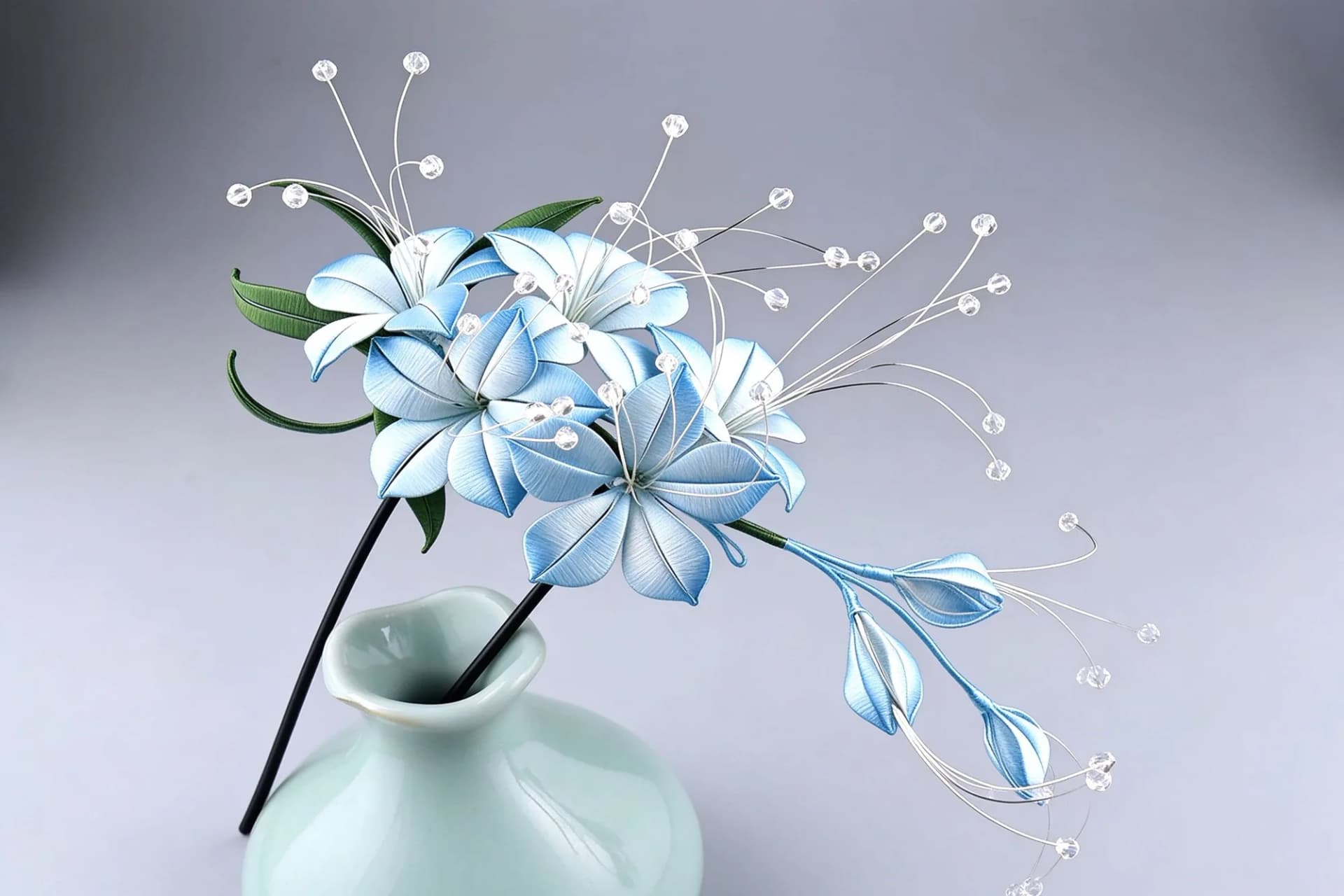
Flat, symmetrical pieces such as the lily of the valley brooch sit in a shallow box with no special arrangement. Pieces with a tail or a long stem, such as the hydrangea hairpin, need the box to be sized to the longest dimension so nothing bends around a corner.
The phoenix brooch is the one that needs the most care, because the tail is the part a recipient notices and the part most likely to be creased by a lid that is too low.
And if the wrapping is for Christmas, the piece can go straight from the box to the tree before it goes to a coat - the placement advice is in silk flowers on a Christmas tree.
What is the one rule?
Nothing touches the face of the flower. Every other instruction in this guide - the rigid box, the card, the ring of tissue, the shake test - exists to make that sentence true when the parcel is opened.
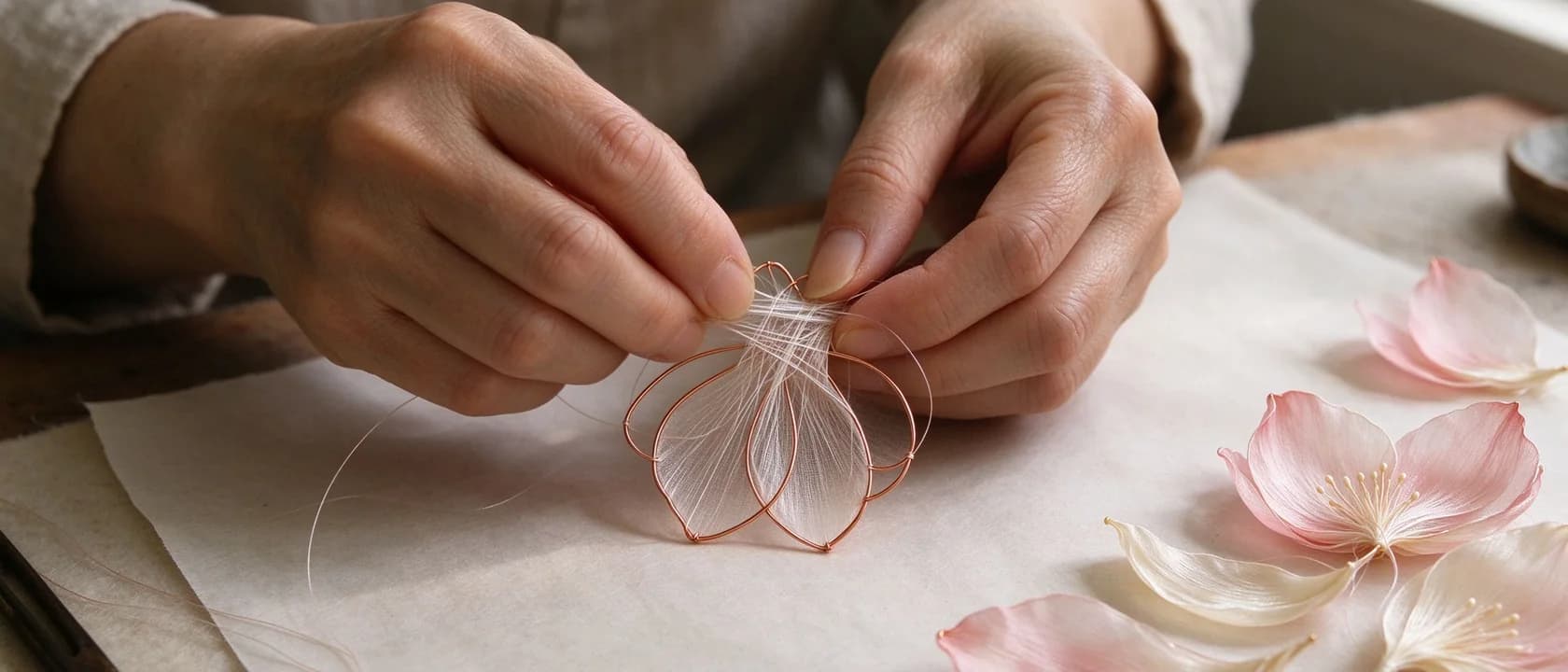
If you want to know what the recipient should look for to confirm the piece is hand-wound rather than factory-made, the chanhua craft page explains the thread lines and the wire edge that a glued flower does not have.
Frequently asked questions
Can you post a silk flower brooch in a padded envelope?
Not on its own. A padded envelope protects against a knock but not against pressure, and a parcel is under pressure for hours in a sorting machine. Put the brooch in a rigid box first, then the box in the envelope.
Where should the pin sit when you pack a brooch?
Closed, and pushed through a piece of card or foam rather than left loose. An open pin catches tissue paper, and a closed pin lying against a petal leaves a crease that does not come out.
Should you wrap a brooch in tissue paper or a cloth pouch?
Tissue for the journey and a pouch for afterwards. Tissue is there to stop movement, and it is thrown away on arrival; a pouch is a second gift and it is what the recipient keeps the piece in.
How do you stop the flower moving inside the box?
Fill the empty space until the box closes with light resistance. Loose tissue that compresses in transit is the usual failure; rolled tissue that holds its shape around the flower is what keeps it still.
What should you write on the card?
One sentence on what it is and one on how to look after it. A recipient who does not know the brooch is hand-wound silk will treat it like costume jewellery, and the first thing to go is usually the petal shape.